InfoSecBulletin Cybersecurity for mankind
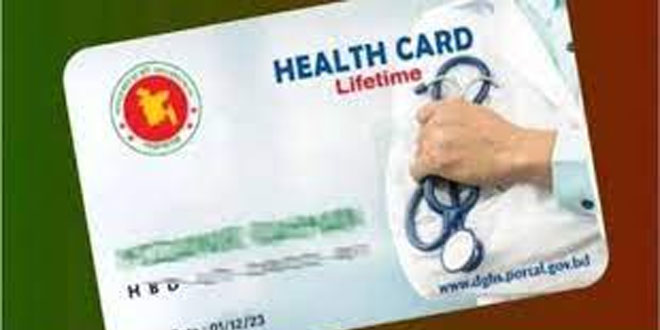
The government plans to implement digital health cards for all citizens. This will eliminate the need to keep physical prescription and test files, as all the information will be stored in a digital database.
DGHS is implementing a digital database to manage patient information more efficiently. Each patient will receive a health card, which will contain their doctor appointments, health conditions, and test results. Instead of carrying physical documents, patients can bring their health cards to hospitals, giving doctors easy access to their medical information.
PHP shares new RCE flaw (CVE 2026-115560) with no patch but mitigation
US banks faced unauthorized access by AI agents in customer accounts: Axios reports

Atlassian patched 176 flaw in Jira and Confluence: Fortinet Urges to Patch Flaws Affecting FortiOS, FortiManager

Hacker claim to access Rajasthan Police data: 70,000 records allegedly exposed

Update now! PHP2Shell: Critical PHP vulnerabilities patched

Trump says data centres should pay dividends to local community
Hackers Actively Exploiting Palo Alto VPN Flaw Via CVE-2026-0257

DeepSeek AI banned by U.S. Government; federal agencies must remove all related tools
CISA, NSA and NIST Publish New 10 AI Agent Control Guidelines
Claude AI Cracks 25-Year NSA Cryptography Number Mystery in Just 30 Minutes
To bridge the digital healthcare gap, a new website will be launched by DGHS for people to register and obtain health cards. Registration can also be done offline at government or private hospitals using NID or birth certificates. The process will be free of cost and each patient will be assigned a ‘Health ID Number’ to store their health data for life.
The Medical Information Services (MIS) of DGHS is implementing the project. The health card will be linked to an individual’s NID or birth certificate, creating a complete health profile.
Professor Dr. Md. Shahadat Hossain, Director (MIS) of DGHS said, “The pilot project of digital health cards is expected to begin by January. There will be a unique profile with medical records of an individual against their designated health IDs.”
“For example, if a patient comes to Dhaka from another upazila for medical services, they would just have to provide their health card with the ID number and doctors will be able to see the necessary details. After linking all the government hospitals with health card facilities, we will also bring the private hospitals into the database,” he said.
“However, the whole process might take 5 to 7 years to be properly set in motion,” he added
Government hospitals have begun automating the project. The pilot project for health cards will begin in a few hospitals, starting with Gopalganj’s Muksudpur and Manikganj’s Singair Upazila. Eventually, the project will expand to other government hospitals across the country.
Private hospitals can connect their own automation software with ‘Shared Health Records’. For private hospitals that don’t have their own software or don’t want to develop new software, they can use a software provided on the Department of Health’s website to connect them.
Dr. Rayhan Islam Shovon, the Health and Family Planning Officer for Muksudpur Upazila Health Complex in Gopalganj, expressed, “We are actively advocating for the health card initiative within our hospital premises. We urge individuals to bring along a copy of their NID or birth certificate when visiting the health complex.”
Source: Daily star