 InfoSecBulletin Cybersecurity for mankind
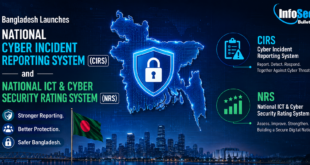
Bangladesh’s National Cyber Security Agency (NCSA) has launched two cybersecurity initiatives: the Cyber Incident Reporting System (CIRS) and the National Rating System (NRS). These aim to help manage cyber incidents better and improve the cybersecurity skills of organizations in the country.
These initiatives aim to build a system for reporting cyber incidents, central monitoring, and uniform cybersecurity checks for government and private organizations.
Apple iOS 27.2 Released Fixes 163 Flaws, Including Critical WebKit RCE
CISA adds PHP2Shell to KEV, PHP Releases New Security Updates to Fix Critical HTTP2Shell flaw

Cloudflare Unveils Emergency WAF Ruleset Update on Brotli flaw
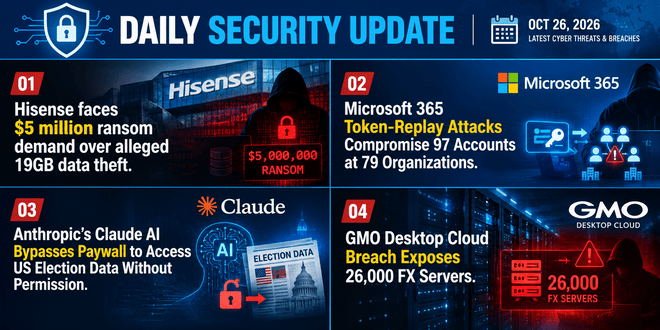
Daily Cyber security update for 26.10. 2026
The Washington Post report
Ex-DOGE AI startup Cathedral Breaches Anthropic Internal Systems within 12 Hours

Daily Cyber security update for 25. 10. 2026

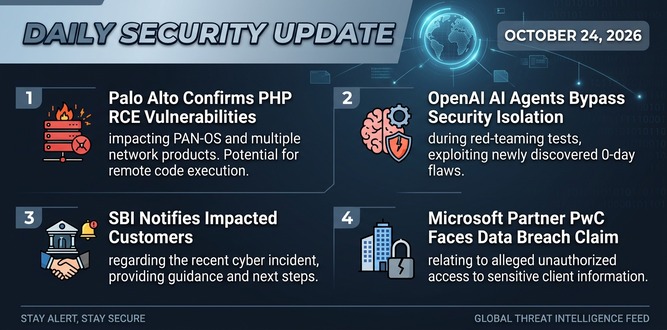
Daily Cyber security update for 24. 10. 2026
PHP shares new RCE flaw (CVE 2026-115560) with no patch but mitigation

US banks faced unauthorized access by AI agents in customer accounts: Axios reports

Atlassian patched 176 flaw in Jira and Confluence: Fortinet Urges to Patch Flaws Affecting FortiOS, FortiManager

Cyber Incident Reporting System (CIRS)
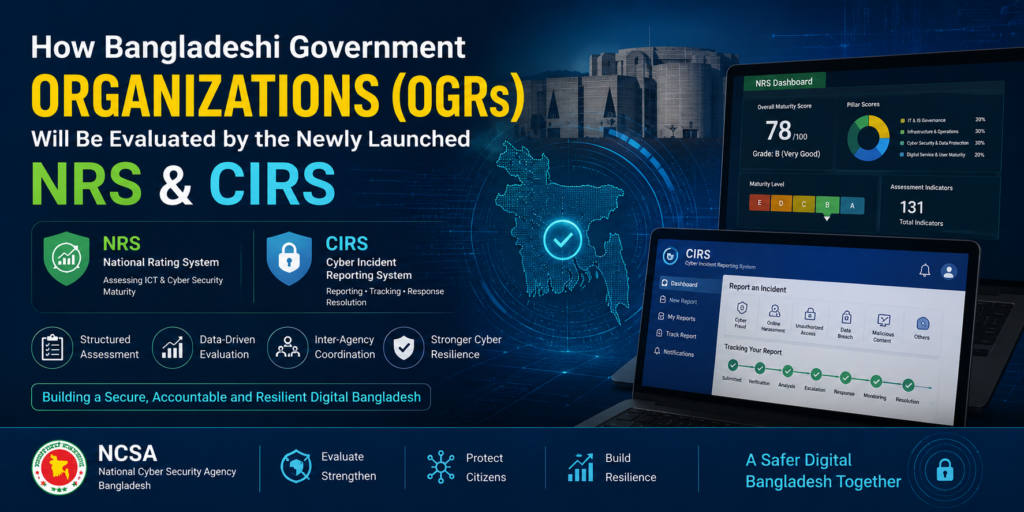
Cyber Incident Reporting System (CIRS) is a simple online platform for citizens, organizations, and approved users to report cyber events easily to (report.ncsa.gov.bd).
Users can send reports about cyber fraud, online harassment, unauthorized access, data breaches, harmful content, and other cyber issues according to the NCSA document. The platform lets users upload proof, add website or social media links, get a Complaint ID automatically, and check the status of their reports during the investigation.
Each submitted report follows a defined workflow that includes:
Complaint submission
Verification
Analysis
Escalation
Response
Monitoring
Resolution
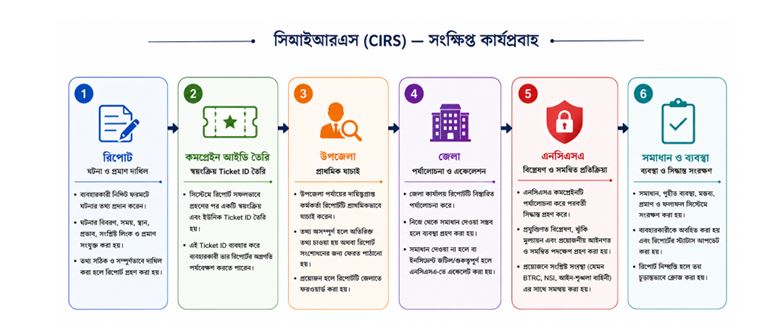
Reports can start at the Upazila level. If needed, they can go up to the District level. For complicated or important cases, they are sent to the National Cyber Security Agency (NCSA).
Dashboard and Inter-Agency Coordination
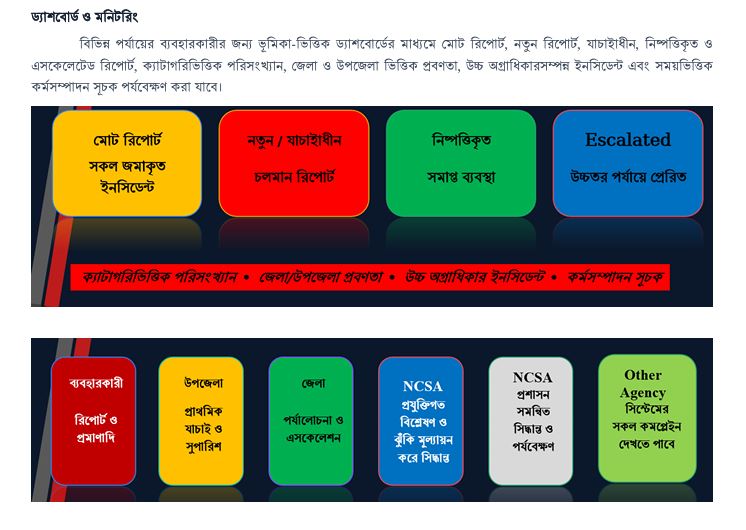
The CIRS platform includes role-based dashboards for monitoring:
Total reported incidents
New reports
Reports under verification
Resolved cases
Escalated incidents
Category-based statistics
District and Upazila trends
High-priority cyber incidents
Time-based performance indicators
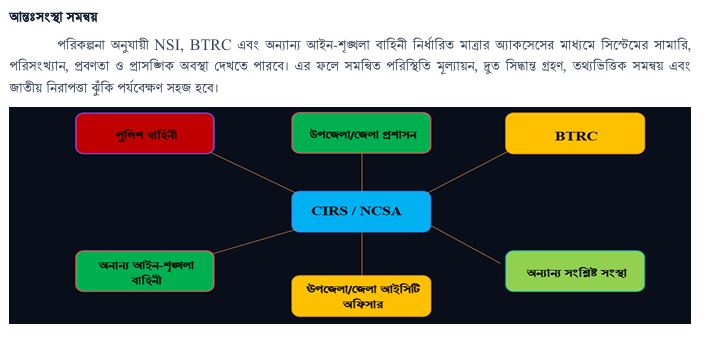
The framework also suggests sharing information among agencies like NSI, BTRC, and law enforcement to help with better decision-making and to understand the national cyber situation.
Future Roadmap for CIRS
The NCSA document outlines several future enhancements planned for the platform, including:
AI-based trend analysis
Risk scoring
Early warning capabilities
Intelligence-sharing modules
Fact-checking functionality to verify viral information and misinformation
Secure sharing of phishing indicators, malicious domains, and other threat intelligence
National Rating System (NRS)
NCSA has also unveiled the National Rating System (NRS) based on a framework that rates the maturity of ICT and cyber security.
The framework aims to create a standard way to assess ICT, information security, and cybersecurity skills in both public and private organizations in Bangladesh. It seeks to find strengths, weaknesses, and spots that need better cybersecurity.
Four Assessment Pillars:
Organizations will be evaluated across four weighted categories:
IT & Information Security Governance: 20%
Infrastructure & Operations: 30%
Cyber Security & Data Protection: 30%
Digital Service & User Maturity: 20%
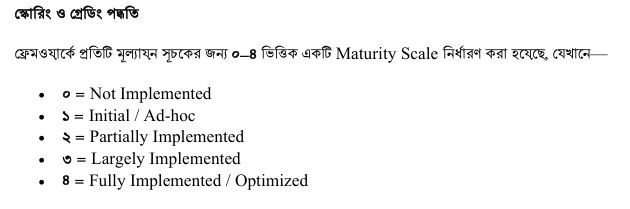
The framework uses a scale from 0 to 4 to check how well organizations are doing, from not started to fully developed and optimized.
131 Assessment Indicators
Organizations will be judged based on 131 assessment indicators. These indicators were created to match global standards, frameworks, and best practices in cybersecurity.
Overall scores will determine institutional grades, ranging from:
A – Excellent
B – Very Good
C – Good
D – Fair
E – Poor
Expected Benefits
The framework identifies several expected outcomes, including:
Establishing a national cybersecurity maturity baseline.
Identifying institutional risks and capability gaps.
Supporting IT audits and Vulnerability Assessment and Penetration Testing (VAPT) prioritization.
Assisting organizations with cybersecurity planning, budgeting, and workforce development.
Strengthening national cyber resilience and evidence-based policymaking.
Future plans involve using AI for automatic assessments, checking evidence automatically, dashboards for comparing different sectors, and advice based on risks for organizations.
Why It Matters
The Cyber Incident Reporting System (CIRS) and the National Rating System (NRS) are two key parts of Bangladesh’s growing cybersecurity setup. CIRS aims to make reporting incidents, working together, and responding better. NRS provides a standard way to measure and improve cybersecurity levels in organizations. If these plans are followed as described in the NCSA documents, they should help see cyber threats better, boost readiness, and help Bangladesh become more resilient digitally.
Bangladesh Launches (CIRS) and National ICT & Cyber Security Rating System (NRS)