InfoSecBulletin Cybersecurity for mankind
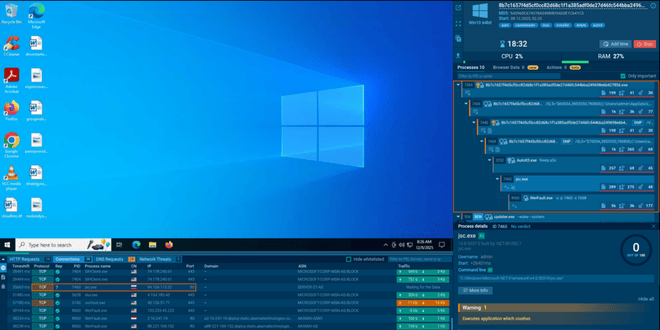
A dangerous malware loader dubbed CastleLoader poses a serious risk to US government agencies and critical infrastructure. First detected in early 2025, it has been used to gain initial access in coordinated attacks on federal agencies, IT firms, logistics companies, and essential infrastructure in North America and Europe.
Security researchers noted that one CastleLoader campaign affected around 460 different organizations.
Apple iOS 27.2 Released Fixes 163 Flaws, Including Critical WebKit RCE

CISA adds PHP2Shell to KEV, PHP Releases New Security Updates to Fix Critical HTTP2Shell flaw

Cloudflare Unveils Emergency WAF Ruleset Update on Brotli flaw

Daily Cyber security update for 26.10. 2026

The Washington Post report
Ex-DOGE AI startup Cathedral Breaches Anthropic Internal Systems within 12 Hours

Daily Cyber security update for 25. 10. 2026

Daily Cyber security update for 24. 10. 2026

PHP shares new RCE flaw (CVE 2026-115560) with no patch but mitigation

US banks faced unauthorized access by AI agents in customer accounts: Axios reports

Atlassian patched 176 flaw in Jira and Confluence: Fortinet Urges to Patch Flaws Affecting FortiOS, FortiManager

CastleLoader often uses social engineering, employing ClickFix methods to deceive victims with fake software updates or system verification alerts. When users respond to these fake messages, they unknowingly execute harmful commands that activate CastleLoader.
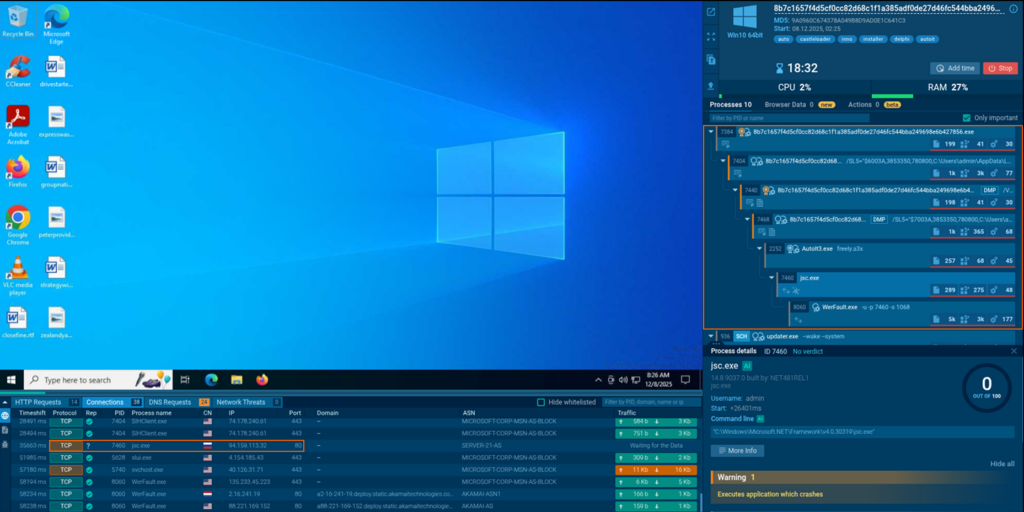
Any.Run analysts found that the malware has a complex structure aimed at avoiding modern security systems. The analysis showed that CastleLoader is not just a straightforward executable; it uses a complex method that makes each stage seem harmless at first glance.
This method helps the malware spread its harmful actions across several normal-looking processes, allowing it to go unnoticed. CastleLoader’s infection mechanism represents a masterclass in stealth and obfuscation.
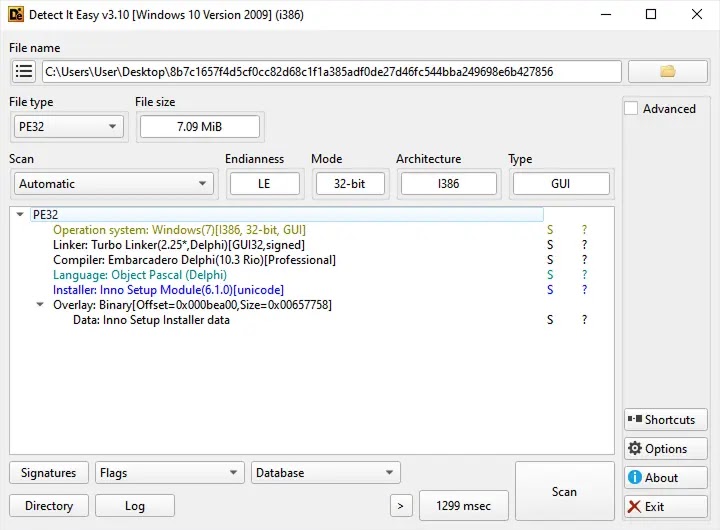
Malware is delivered as an Inno Setup installer file that includes components like AutoIt3.exe and a compiled AutoIt script named freely.a3x.
The AutoIt script starts the next phase by launching jsc.exe, a legitimate JScript.NET compiler, with the CREATE_SUSPENDED flag to pause it right after creation.
The malware uses a refined process hollowing technique to inject a complete PE executable into the jsc.exe memory space instead of executing in a suspended state. Click here to read the full report.