 InfoSecBulletin Cybersecurity for mankind

A serious SSRF flaw, called CVE-2026-20230, in Cisco Unified Communications Manager Server is now being used in attacks. Cisco put out security updates for the CVE-2026-20230 flaw on June 3. They warned that attackers could gain full control of the device.
“A vulnerability in Cisco Unified Communications Manager (Unified CM) and Cisco Unified Communications Manager Session Management Edition (Unified CM SME) could allow an unauthenticated, remote attacker to conduct server-side request forgery (SSRF) attacks through an affected device,” warned Cisco.
Critical Atlassian & IBM Flaws Expose Files and Enable Remote Code Execution

Citrix NetScaler SAML 0-Day Flaw Under Attack

Major Danish university breached, 200,000 users at risk

Microsoft’s X account hijacked to promote Clippy crypto scam

Critical cPanel, GitLab AI Gateway and Dell CSM Flaws Enable RCE And Admin Hijacking

Nearly 100,000 email addresses exposed in first AI-related data breach in Singapore

Hackers Exploit Zimbra Mail Servers: TeamViewer patched 5 critical flaws

Google Warns of Hackers Actively Exploiting Citrix 0-Day Flaws

CISA Warns Critical MikroTik RouterOS Flaw While Cisco SD-WAN Zero-Day Exploited in Attacks
Apple Zero-Day Exploited: Pentagon Data Breach Reportedly Exposes Sensitive Data of 3 Million People
The flaw was disclosed to Cisco by SSD Secure, who did not share any technical details at the time. Now, threat intelligence firm Defused warned that the flaw is now being actively exploited in attacks.
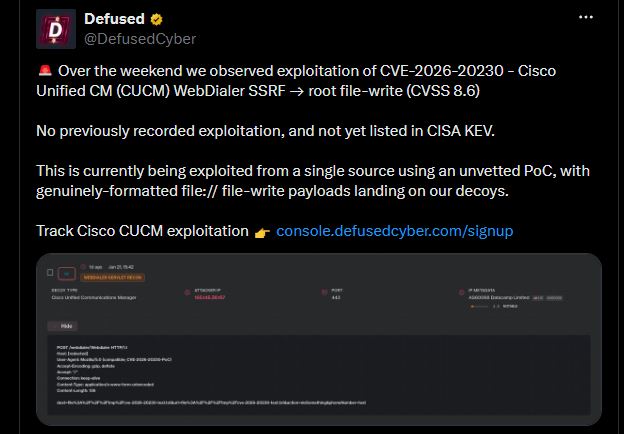
“Over the weekend we observed exploitation of CVE-2026-20230 – Cisco Unified CM (CUCM) WebDialer SSRF → root file-write (CVSS 8.6) No previously recorded exploitation, and not yet listed in CISA KEV,” Defused warned on X.
Defused says the attacks come from one IP address and use special file:// codes to make files on the device.
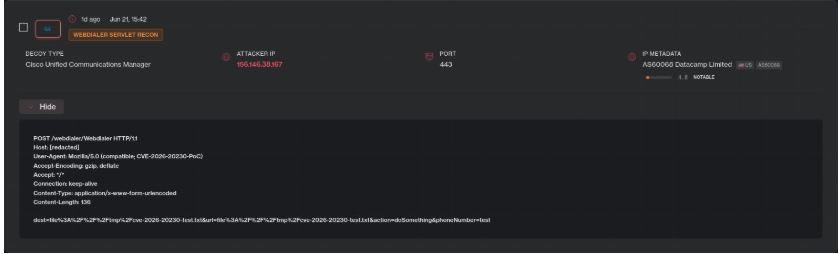
The flaw can be used in attacks to place webshells and get root access, but the example seen by Defused seems made to find weak devices by trying to save a text file called ‘/tmp/cve-2026-20230-test.txt’ on them.
After the problem was revealed, SSD Secure released a technical document about the issue. It explained how the weakness works and included a test example of the exploit.
The researchers discovered that a hacker without permission could misuse the Webdialer feature’s management of user URLs. This allows them to make the app write random files to the system using file:// links.