InfoSecBulletin Cybersecurity for mankind
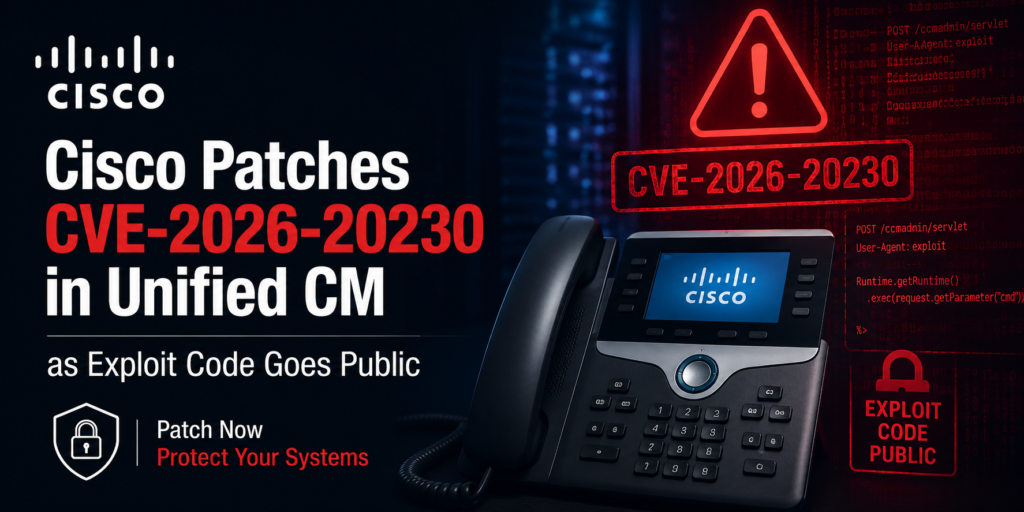
Cisco has fixed a flaw in Unified Communications Manager that allows an attacker on the network to write files to the system and then gain full access. It is known as CVE-2026-20230, and proof of concept exploit code is already available. Cisco’s PSIRT says they have not seen anyone use this flaw in attacks yet.
The flaw is a server-side request forgery. Unified CM and its Session Management Edition do not check some HTTP requests correctly, so a fake request can make the server write random files on the operating system. These files are the entry point. Cisco says they can be used later to gain root access, which is the highest permission on the system.
Anthropic unveils “OSS Scanner” Free AI Vulnerability Scanner for Open-Source Projects
Rise on RCE Exploits Targeting Hikvision Camera Flaw
FortiBleed Attack Compromised 80,000+ Devices, SonicWall Patches 4 SMA1000 Flaws CVSS 10

Critical Atlassian & IBM Flaws Expose Files and Enable Remote Code Execution

Citrix NetScaler SAML 0-Day Flaw Under Attack
Major Danish university breached, 200,000 users at risk

Microsoft’s X account hijacked to promote Clippy crypto scam

Critical cPanel, GitLab AI Gateway and Dell CSM Flaws Enable RCE And Admin Hijacking

Nearly 100,000 email addresses exposed in first AI-related data breach in Singapore

Hackers Exploit Zimbra Mail Servers: TeamViewer patched 5 critical flaws

The two steps cause the score and rating to be different. The CVSS base is 8.6: it counts the file write (which only affects integrity, not confidentiality or availability) but not the root access that comes after. Cisco still rated the advisory as Critical, since the final result is complete root access.
There is one good thing: the problem only happens when the WebDialer service is on, and WebDialer is off by default. This won’t help any setup that has turned it on.
To check, open Cisco Unified CM Administration and switch to Cisco Unified Serviceability. Under Tools > Control Center – Feature Services, look at the Cisco WebDialer Web Service status in the CTI Services section. Started means you are exposed.
Patching is the only real solution. For train 14, use 14SU6. For train 15, the complete Service Update (15SU5) will not be ready until September 2026, so for now, you can use the temporary COP patch or turn off WebDialer (uncheck it under Tools > Service Activation and save). An independent researcher with SSD Secure Disclosure found the bug.
Unified CM has been a constant source of serious problems. Last July, Cisco removed a hard-coded root SSH account that was left over from development (CVE-2025-20309, CVSS 10).
In January, it fixed an unprotected RCE in some of its voice products (CVE-2026-20045) that was already being used by hackers, prompting CISA to add it to its list of known exploits.
This fits the pattern: a request that should not have touched anything important, but it did. With a public PoC and the 15-train fix still months away, assume someone to change that file-write into a real attack before the fixes are widespread.