 InfoSecBulletin Cybersecurity for mankind
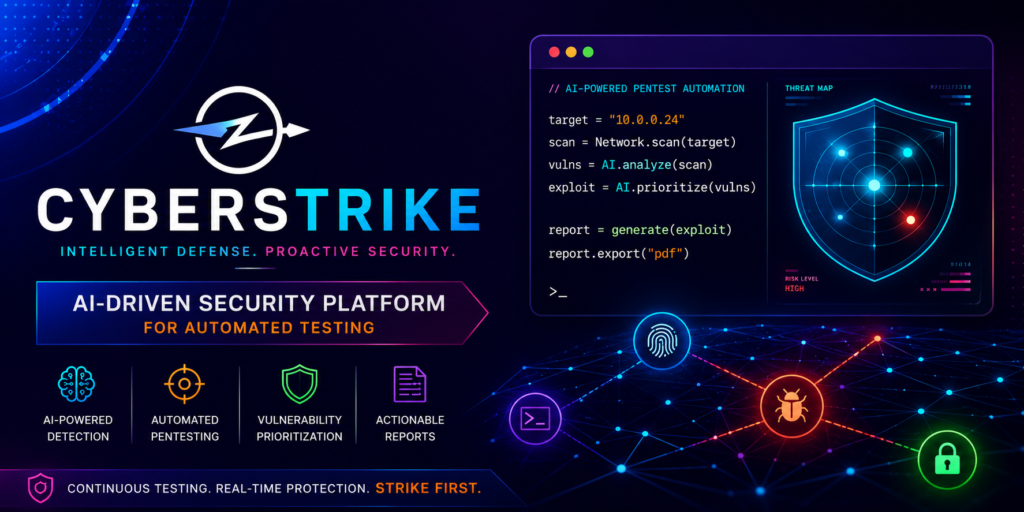
A new open-source project named CyberStrike aims to be the first AI tool made for offensive security. It can turn any subscription of Claude, GPT, or LLM into an independent red-team operator.
CyberStrike is not just a chatbot. It works as a tool that runs in a terminal. It helps find flaws and weaknesses, exploits them, and creates reports without needing a person to guide it all the time. This makes it useful for penetration testers, bug bounty hunters, and security teams wanting to improve their assessments.
Daily Cyber security update for 25. 10. 2026

Daily Cyber security update for 24. 10. 2026
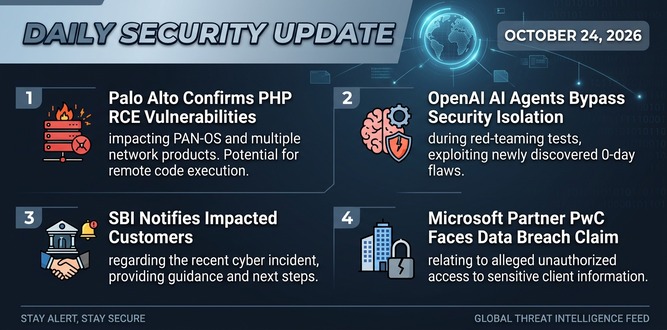
PHP shares new RCE flaw (CVE 2026-115560) with no patch but mitigation

US banks faced unauthorized access by AI agents in customer accounts: Axios reports

Atlassian patched 176 flaw in Jira and Confluence: Fortinet Urges to Patch Flaws Affecting FortiOS, FortiManager

Hacker claim to access Rajasthan Police data: 70,000 records allegedly exposed

Update now! PHP2Shell: Critical PHP vulnerabilities patched

Trump says data centres should pay dividends to local community

Hackers Actively Exploiting Palo Alto VPN Flaw Via CVE-2026-0257

DeepSeek AI banned by U.S. Government; federal agencies must remove all related tools

Getting started requires a single command, npm i -g @cyberstrike-io/cyberstrike@latest && cyberstrike, which launches a terminal interface that asks for an LLM provider and API key on first run.
The real change is in what the developers call the intelligence layer. This system adds OWASP testing methods, vulnerability patterns, and attack-chain reasoning to every model interaction.
This means the underlying AI does not need built-in security knowledge; CyberStrike provides security knowledge by organizing data, monitoring context, detecting providers automatically, and managing tools smartly.
The platform has more than 150 AI providers and 5,300 models. This includes Anthropic, OpenAI, Google, Amazon Bedrock, Azure, and offline options like Ollama and LM Studio for secure environments.
CyberStrike AI-Powered Security Platform
CyberStrike ships with 13 or more specific agents. These include special tools for testing web applications based on the OWASP WSTG guide, mobile testing that follows MASTG and MASVS, cloud security based on CIS benchmarks, and checking internal networks for Active Directory and lateral movement.
There are over 7,600 security skill files with Ed25519 signatures. They cover attack methods like JWT abuse, SSRF, SSTI, and GraphQL exploitation. They also include post-exploitation techniques for AWS, Azure, Kubernetes, Windows, and macOS.
A special part is the included Chromium browser named HackBrowser. It records live HTTP traffic while testers manually explore a target or automatically scan it using different accounts.
This traffic supports eight parallel proxy sub-testers. They look for problems like IDOR, bypassing authorization, mass assignment, and errors in business logic. Each tester uses a three-step confirmation method to prevent wrong alerts.
The Bolt part of the platform lets security tools work on remote servers instead of a local laptop. It uses Ed25519 key pairs to manage many toolkits and attack points from one terminal.
CyberStrike works with an MCP system that has 176 extra tools. These tools help with cloud checks, GitHub security, CVE information, and OSINT searches. It also has a web interface that can be accessed remotely using Cloudflare Tunnel, ensuring no open ports and secure encryption.
CyberStrike uses the AGPL-3.0 license. It is free for personal and open-source use. There is a paid license available for businesses. You can install it using npm, Homebrew, Scoop, or a curl script. This makes it easy to set up on macOS, Windows, and Linux.
The project clearly says it is only for approved security tests. It follows its ethical use rules and code of behavior while welcoming community support for agents, skills, and MCP servers.