InfoSecBulletin Cybersecurity for mankind
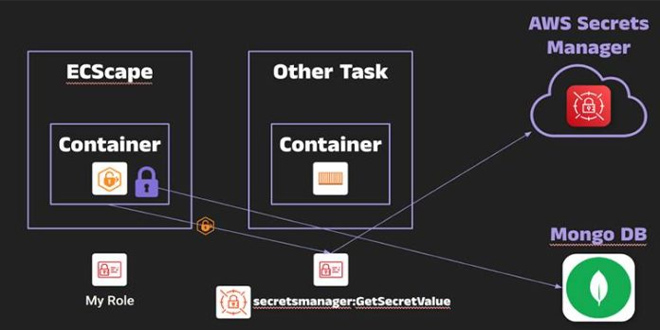
Security researchers disclosed a cirtical flaw in Amazon Elastic Container Service (ECS) that enables harmful containers to steal AWS credentials from other tasks on the same EC2 instance.
The attack, dubbed “ECScape,” exploits an undocumented internal protocol to impersonate the ECS agent and harvest privileged credentials without requiring container breakout.
Daily Cyber security update for 25. 10. 2026

Daily Cyber security update for 24. 10. 2026
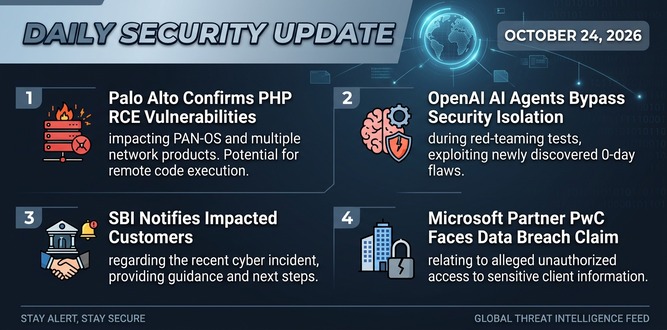
PHP shares new RCE flaw (CVE 2026-115560) with no patch but mitigation
US banks faced unauthorized access by AI agents in customer accounts: Axios reports

Atlassian patched 176 flaw in Jira and Confluence: Fortinet Urges to Patch Flaws Affecting FortiOS, FortiManager
Hacker claim to access Rajasthan Police data: 70,000 records allegedly exposed
Update now! PHP2Shell: Critical PHP vulnerabilities patched
Trump says data centres should pay dividends to local community
Hackers Actively Exploiting Palo Alto VPN Flaw Via CVE-2026-0257
DeepSeek AI banned by U.S. Government; federal agencies must remove all related tools


Vulnerability Overview:
The ECScape attack takes advantage of a basic mistake in how ECS handles IAM credentials on shared EC2 instances.
Running multiple containers with varying privilege levels on the same host can lead to security risks. A low-privileged container could exploit the ECS Agent Communication Service (ACS) protocol to access credentials from higher-privileged tasks.
The vulnerability was discovered by security researcher Naor Haziz during development of an eBPF-based monitoring tool.
While investigating how ECS tasks retrieve metadata, Haziz observed that the ECS agent receives task credentials via a WebSocket connection to AWS’s control plane with a suspicious “sendCredentials=true” parameter.
AWS advises ECS users to take protective measures. Key strategies include not deploying high-privilege tasks with untrusted containers on shared instances, using dedicated hosts for critical services, or switching to AWS Fargate for isolated task environments.
Additional protections involve restricting IMDS access through the ECS_AWSVPC_BLOCK_IMDS setting, enforcing IMDSv2, and implementing least-privilege IAM policies.
Organizations should remove unnecessary Linux capabilities to reduce post-compromise risks.
The disclosure emphasizes key security aspects of container orchestration platforms and the need to grasp isolation boundaries in cloud environments.
While AWS has not indicated plans to modify the underlying architecture, the research emphasizes why Fargate’s micro-VM isolation provides stronger security guarantees for sensitive workloads.