InfoSecBulletin Cybersecurity for mankind

Cybernews reported that Elasticsearch cluster exposed billions of primary Chinese records, cantaining over 160 indices. The leaked data has the record of national citizen ID numbers to various business records. Cybernews dubbed it the massive leak is among the largest single Elasticsearch exposures ever recorded.
On January 1st 2026, the Cybernews research team discovered 8.73 billion Chinese records exposed online. The exposed data was on a large Elasticsearch cluster. Businesses use Elasticsearch for fast sorting, real-time searches, and scalability. Our team found a cluster with 163 indices containing billions of records.
Cloudflare Unveils Emergency WAF Ruleset Update on Brotli flaw

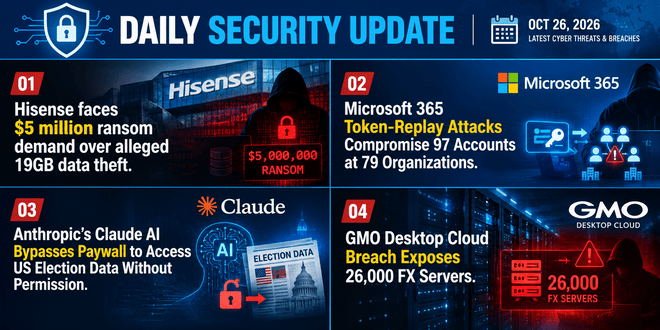
Daily Cyber security update for 26.10. 2026
The Washington Post report
Ex-DOGE AI startup Cathedral Breaches Anthropic Internal Systems within 12 Hours

Daily Cyber security update for 25. 10. 2026

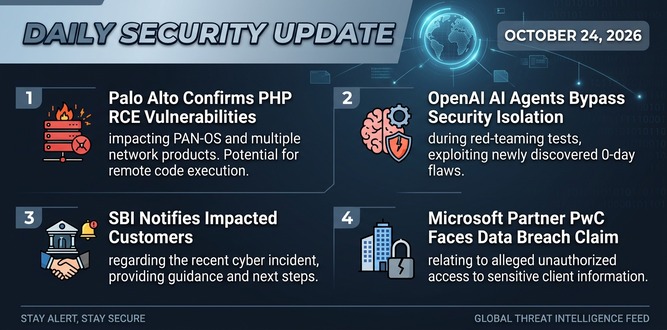
Daily Cyber security update for 24. 10. 2026
PHP shares new RCE flaw (CVE 2026-115560) with no patch but mitigation

US banks faced unauthorized access by AI agents in customer accounts: Axios reports

Atlassian patched 176 flaw in Jira and Confluence: Fortinet Urges to Patch Flaws Affecting FortiOS, FortiManager

Hacker claim to access Rajasthan Police data: 70,000 records allegedly exposed
Update now! PHP2Shell: Critical PHP vulnerabilities patched

A large data cluster was found in early 2026 and stayed accessible for over three weeks. There’s no evidence of misuse, but if our researchers discovered it, others could have as well.
“Despite the short exposure window, the scale of the dataset means that automated scraping during this period could have resulted in widespread secondary dissemination,” cybernews researchers said.
Bob Diachenko, a Cybernews contributor and cybersecurity researcher, discovered a significant data cluster. He noted that the metadata indicates data was imported as recently as late 2025.
“The presence of timestamps and import dates points to a long-running aggregation effort rather than a single historical breach,” the team explained.
The Cybernews report claim that leaked data includes personal identifiers, contact details, government IDs, online account information, and credentials at an unprecedented scale. The info categorize like personally identifiable information (PII), account and platform data, authentication data, as well as corporate and business records.
Researchers found the exposed cluster to be well-organized and segmented by data type, including phone-centric, ID-centric, and account-centric datasets.
“The infrastructure was hosted on a bulletproof hosting provider, commonly associated with high-risk or non-compliant data operations. Moreover, the dataset structure and scale suggest intentional aggregation, not accidental logging or misconfiguration by a single consumer service,” the researchers said.