 InfoSecBulletin Cybersecurity for mankind
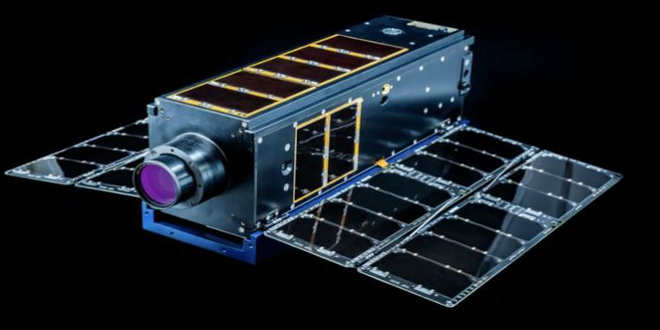
Moonlighter, a satellite designed to be hacked, has launched to the International Space Station. The satellite was launched on a SpaceX Falcon 9 rocket. It is part of the Hack-A-Sat competition, which is organized by the US Air Force and Space Force.
Moonlighter is a small satellite that weighs about 5 kilograms. Stowed, it is 34 cm x 11 cm x 11cm in size, and when fully deployed with its solar panels out, it measures 50 cm x 34 cm x 11 cm. It was built by the Aerospace Corporation in partnership with the US Space Systems Command and the Air Force Research Laboratory.
Hacker claim to access Rajasthan Police data: 70,000 records allegedly exposed

Update now! PHP2Shell: Critical PHP vulnerabilities patched

Trump says data centres should pay dividends to local community

Hackers Actively Exploiting Palo Alto VPN Flaw Via CVE-2026-0257

DeepSeek AI banned by U.S. Government; federal agencies must remove all related tools

CISA, NSA and NIST Publish New 10 AI Agent Control Guidelines

Claude AI Cracks 25-Year NSA Cryptography Number Mystery in Just 30 Minutes
Bypassing firewalls, AI Agents Accessed Indian ‘ Data Without Permission: CERT-In

MITRE ATT&CK v20 Unveils 9 New Attack Techniques On AI Exploits, MFA Bypass, and CAPTCHA Evasion

Hackers Exploit Fortinet Flaws to Deploy Stealthy PEERSTITCH Malware on FortiGate Firewalls

The satellite’s mission is to allow hackers to practice hacking in a real-world environment. Teams of hackers will try to remotely infiltrate and hijack the satellite while it is in orbit. This will help them to develop the skills they need to protect real-world satellites from cyberattacks.
ALSO READ:
After Microsoft outlook, Hacker group next target Chat GPT, who are behind?
The Hack-A-Sat competition is in its fourth year. This year, for the first time, hackers will be able to attempt to hack a live satellite in space. The final event will take place in August during the DEF CON hacking conference in Las Vegas.
The US government hopes that the Hack-A-Sat competition will help to raise awareness of space cybersecurity and encourage innovation in the field. Space systems are increasingly being targeted by cyberattacks, and the government is concerned about the security of these systems.
The Hack-A-Sat competition is part of a broader effort by the US government to improve space cybersecurity. The government is also working to develop new standards and regulations for space systems, and it is providing funding for research into space cybersecurity.
The Hack-A-Sat competition is a significant step forward in the effort to improve space cybersecurity. It will help to develop the skills needed to protect real-world satellites from cyberattacks, and it will raise awareness of the importance of space cybersecurity.
Here are some additional details about the Hack-A-Sat competition:
- The competition is open to teams of hackers from around the world.
- Teams will compete in a series of challenges, including:
- Infiltrating the satellite’s computer system
- Hijacking the satellite’s control systems
- Disrupting the satellite’s communications
- The top three teams will win a monetary price: $50,000 for first place, $30,000 for second, and $20,000 for third.
The Hack-A-Sat competition is a valuable opportunity for hackers to learn new skills and to help to improve the security of space systems.