InfoSecBulletin Cybersecurity for mankind

A coordinated phishing campaign has been uncovered targeting critical Bangladeshi infrastructure — particularly government organizations and law enforcement agencies. This attack leveraged compromised official email credentials to distribute fraudulent emails containing malicious attachments and deceptive login pages reported by BGD e-Gov CIRT.
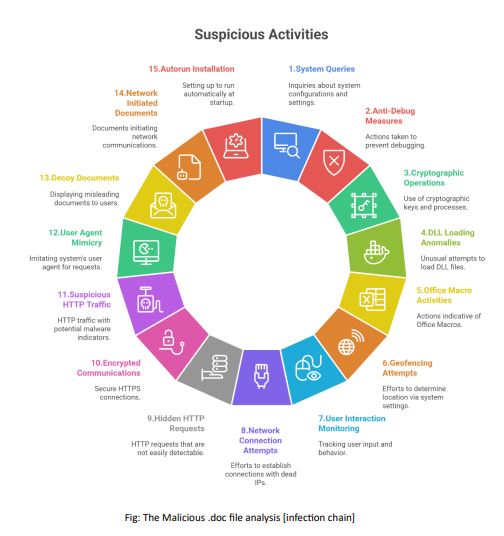
📌 Key Attack Techniques:
CISA adds PHP2Shell to KEV, PHP Releases New Security Updates to Fix Critical HTTP2Shell flaw
Cloudflare Unveils Emergency WAF Ruleset Update on Brotli flaw
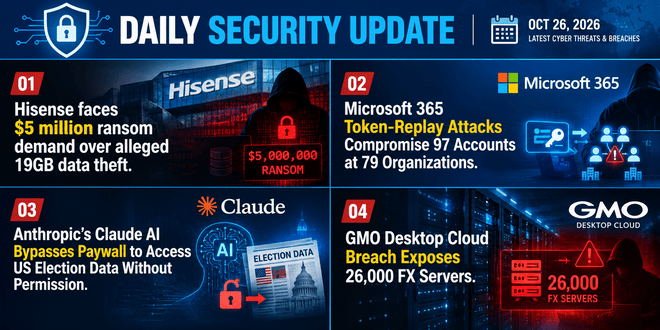
Daily Cyber security update for 26.10. 2026
The Washington Post report
Ex-DOGE AI startup Cathedral Breaches Anthropic Internal Systems within 12 Hours

Daily Cyber security update for 25. 10. 2026

Daily Cyber security update for 24. 10. 2026
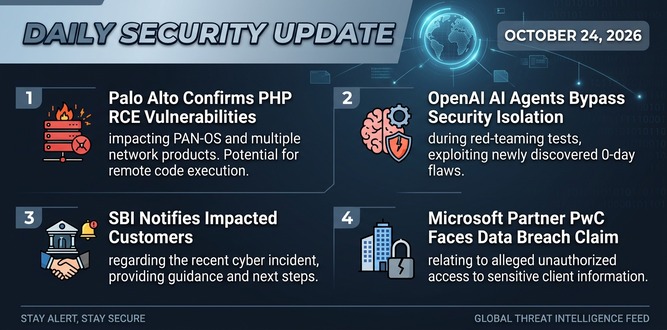
PHP shares new RCE flaw (CVE 2026-115560) with no patch but mitigation

US banks faced unauthorized access by AI agents in customer accounts: Axios reports

Atlassian patched 176 flaw in Jira and Confluence: Fortinet Urges to Patch Flaws Affecting FortiOS, FortiManager

Hacker claim to access Rajasthan Police data: 70,000 records allegedly exposed
Email Spoofing Using Trusted Accounts:
Attackers sent phishing emails from seemingly legitimate government or law enforcement addresses.
Malicious Links via Image Files:
Embedded phishing links within .jpeg or .png files disguised as attachments.
Password-Protected .docx Files:
Used to bypass filters; some contained Trojan droppers initiating infection chains.

Deceptive Domains & Hosting Abuse:
Example:
https://mail-baf-mil-bd-fils-cas-visit-to-chi[.]netlify[.]app
Mimics official military/government domains
Hosted on Netlify for SSL and trusted infrastructure abuse
Backend connected to attacker infrastructure
Credential Harvesting via Fake Forms:
HTML phishing forms collected user credentials under fake fields like “pdf” and “sweet”.
Evading Detection:
Hidden JavaScript loaders to mask login forms
Developer tools and right-clicks disabled
Use of misleading file extensions such as .ttt, .url, and .html
🎯 Primary Targets:
Law Enforcement Agencies
Government Organizations
🛑 Indicators of Compromise (IOCs):

Suspicious IPs:
18.208.88[.]157
45.95.161[.]15
88.119.161[.]40
173.239.196[.]4 / .157 / .158
Malicious Files:
Password-protected .doc files (Trojan)
Fake image viewers or .pdf loaders
Deceptive Domains:
mail.mofa.govnp[.]org
mx1.nepal.govnp[.]org
nitc.govnp[.]org
✅ Recommended Actions:
DO NOT click unknown links or open unexpected attachments.
Verify senders, even if using .gov or .mil domains.
Enable MFA across all critical systems.
Implement email filtering & sandboxing.
Educate staff on phishing red flags.
Report incidents or suspicious indicators to: [email protected]
CIRT alerts CII, Energy Sectors, Banks risk for a large-scale cyberattack