InfoSecBulletin Cybersecurity for mankind
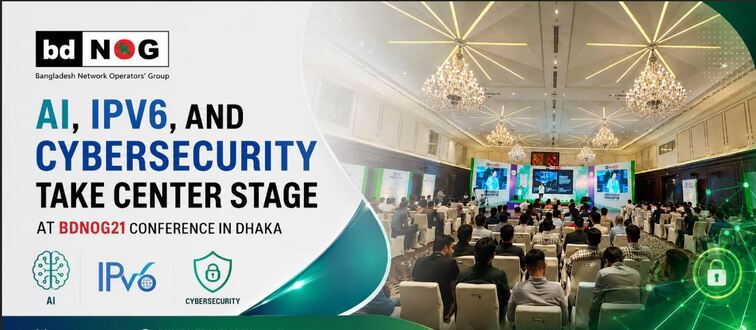
Bangladesh Network Operators Group (bdNOG) successfully hosts its 21 workshop and conferences
at Dhaka. The very four days long workshop includes IPv6 & Routing Best Practices, Advanced BGP, IXP Development, Network Operations & Security and Data Center Networking and more where network engineers, ISPs, IXPs, infrastructure experts, and the internet community joined for insightful technical sessions, workshops, and discussions.
An experienced trainer pull from home and abroad conduct the workshop and sessions with hands on
training on the selected topics.
US banks faced unauthorized access by AI agents in customer accounts: Axios reports

Atlassian patched 176 flaw in Jira and Confluence: Fortinet Urges to Patch Flaws Affecting FortiOS, FortiManager
Hacker claim to access Rajasthan Police data: 70,000 records allegedly exposed

Update now! PHP2Shell: Critical PHP vulnerabilities patched

Trump says data centres should pay dividends to local community

Hackers Actively Exploiting Palo Alto VPN Flaw Via CVE-2026-0257

DeepSeek AI banned by U.S. Government; federal agencies must remove all related tools

CISA, NSA and NIST Publish New 10 AI Agent Control Guidelines
Claude AI Cracks 25-Year NSA Cryptography Number Mystery in Just 30 Minutes

Bypassing firewalls, AI Agents Accessed Indian ‘ Data Without Permission: CERT-In
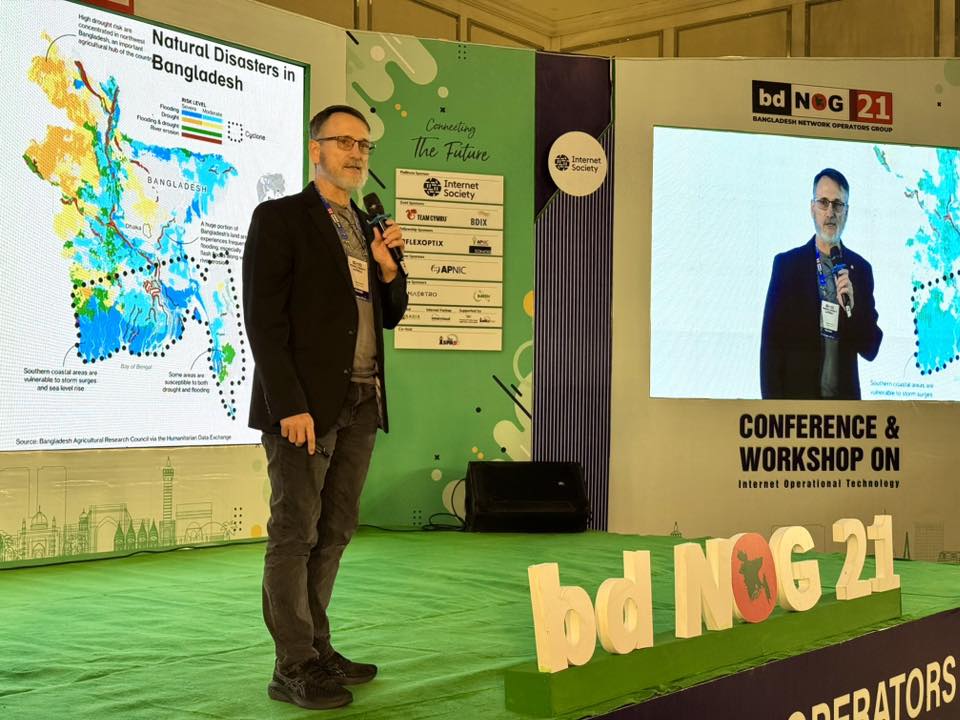
On the days of conference, Warren Finch from Internet Society presented on the topic “From Maps to Resilience: Using the Open Fibre Data Standard to Strengthen Network Infrastructure” where he described how important the Open Fibre Data Standard (OFDS) is for better understanding of fibre-optic networks around the world. He discussed how having standard data helps governments, operators, and researchers see network coverage, backups, and cyber safety more clearly. The talk also mentioned problems like old maps, different formats, and no checks on current fibre network documents. OFDS offers common formats, free tools, and ways to check data so it can be shared in formats like JSON, GeoJSON, and CSV. Supported by the Internet Society and global partners, the goal is to make the internet stronger and help improve infrastructure investments worldwide.
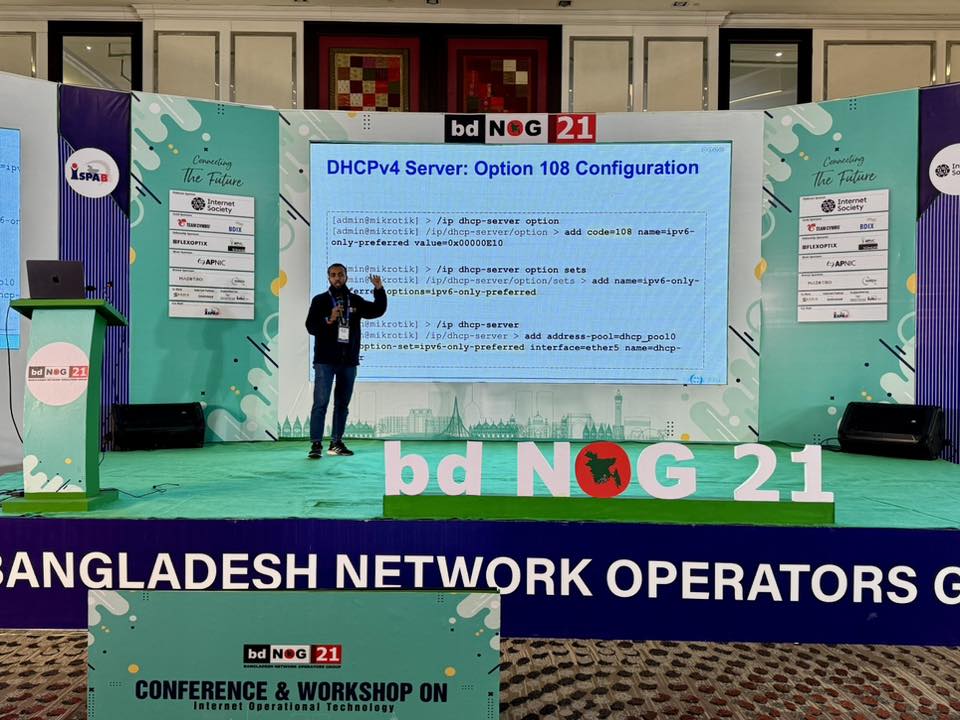
On the topic “IPv6-mostly Network Deployment”, Mohammad Abdul Awal from APNI technically presented a new way to improve traditional dual-stack networks to fix the problem of running out of IPv4 addresses. The method uses DHCPv4 Option 108 and NAT64 to connect IPv4-only, dual-stack, and IPv6-only devices on the same network. Capable devices skip needing a native IPv4 address but still provide normal user experiences through NAT64. This system works with modern operating systems like macOS 13.1+, iOS 15.7+, and Android 12. It greatly lowers IPv4 use and makes network troubleshooting easier. Overall, IPv6-mostly offers a smooth and step-by-step move to fully adopt IPv6 without struggles related to splitting networks.
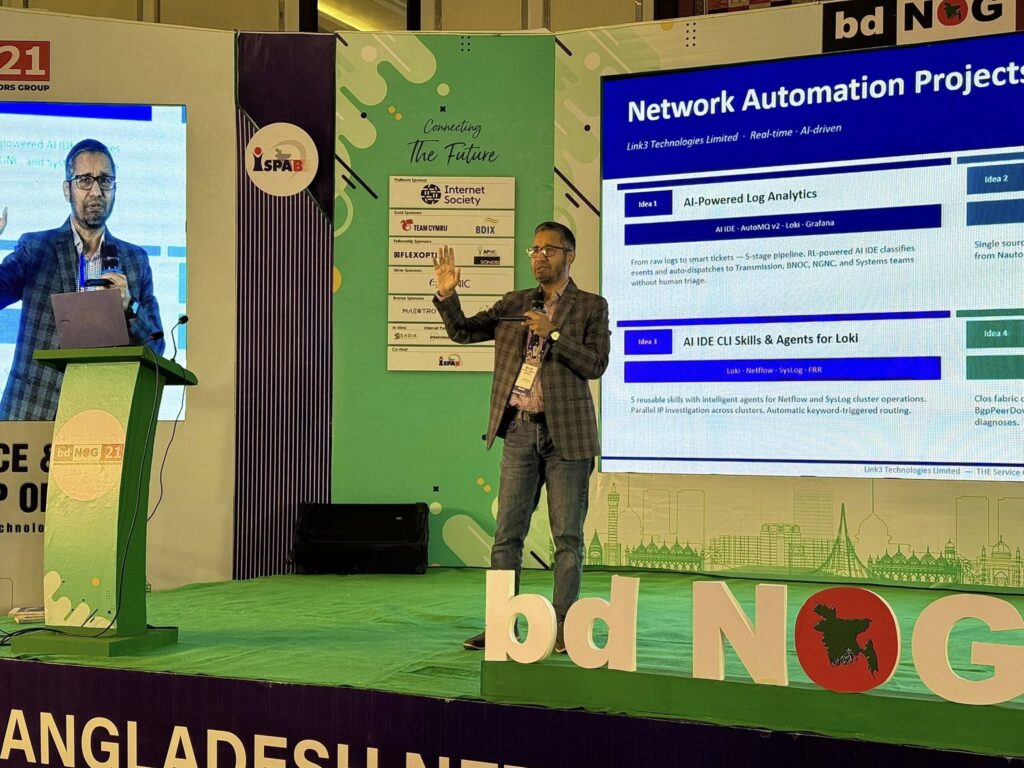
Mr. Rakibul Hassan from Link3 Technologies Limited delivered a talk called “Managing Network with LLMs – Leveraging the Second Brain.” He talked about how Large Language Models (LLMs) are becoming important in today’s network operations. The session looked at how AI systems can help network engineers with fixing problems, monitoring, automating tasks, and making decisions. He explained using LLMs as a “second brain” to make work easier and lessen the load on people in complex networks. The talk also covered real uses of AI in network management, like quick responses to issues and smart data analysis. The session emphasizes how adding AI to networking can change how we manage infrastructure and handle cybersecurity in the future.
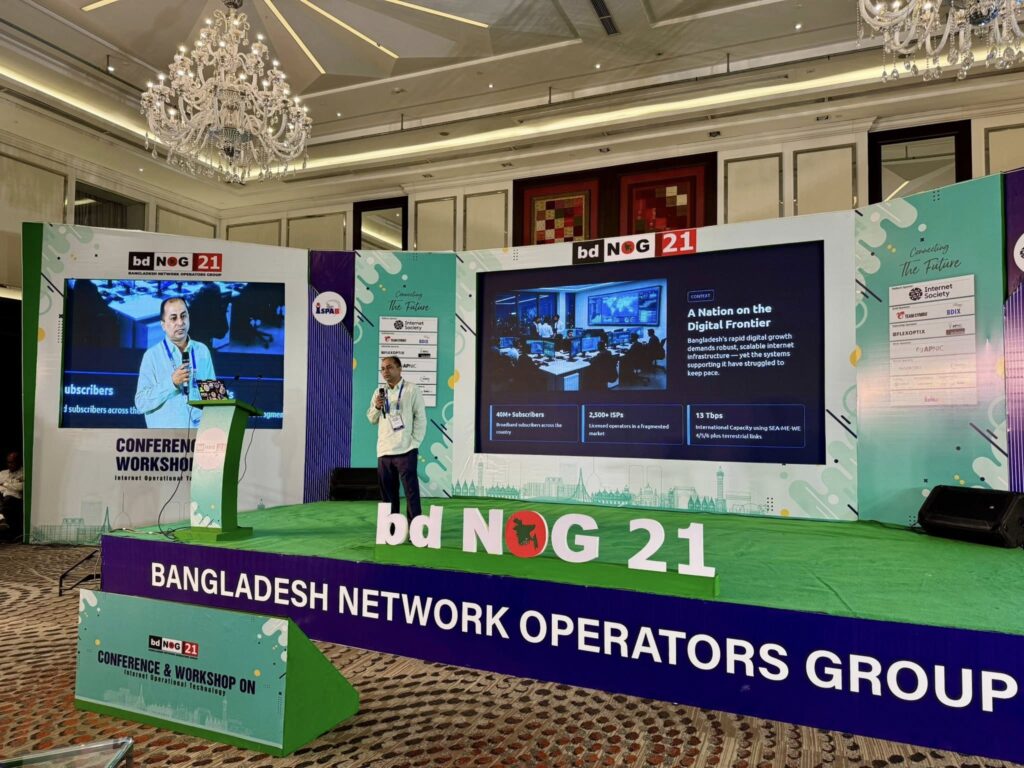
The keynote session dubbed “From Reactive to Autonomous Networks: AIOps for Scalable Internet Infrastructure in Bangladesh” showed how Artificial Intelligence for IT Operations (AIOps) is changing network management.
Md Manirul Islam, Director, Institute of Continuing Education, Associate Professor, Dept. of CSE, AIUB talked about how old ways of managing networks are becoming smarter and can monitor themselves and make quick choices. The talk looked at using AI and automation to make networks bigger, have less downtime, and work better for Bangladesh’s growing internet. He also pointed out how important it is to use data predictions, track things in real-time, and respond automatically to issues in big networks. The talk gave helpful ideas on how AIOps can build a strong and scalable internet infrastructure for Bangladesh.
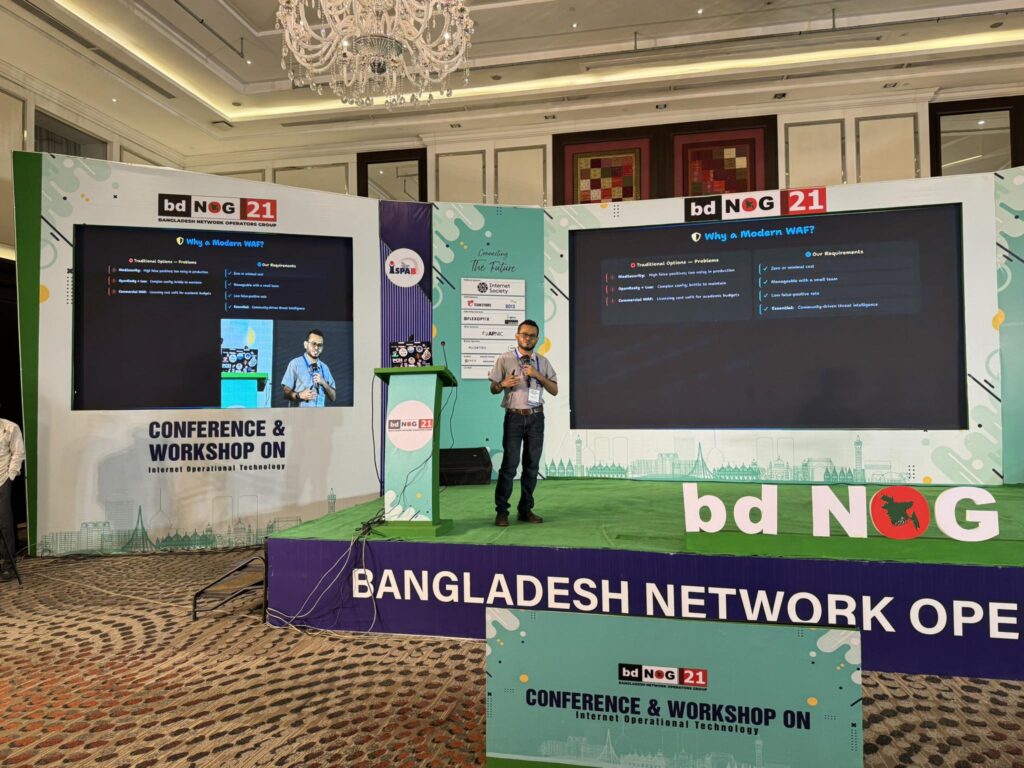
Engr Md Mahedi Hasan from the University of Dhaka delivered a talk on “A Practical Journey of Security Transformation.” The talk finds out the real problems organizations have when making their cybersecurity stronger and updating their security work.
He shared the methods for making security changes, like risk assessment, making rules, monitoring, and improving incident response. The talk also showed how important it is to keep adjusting to new cyber threats and how awareness, automation, and resilience help protect digital systems. Attendees learned useful ideas for creating a stronger and lasting cybersecurity plan.
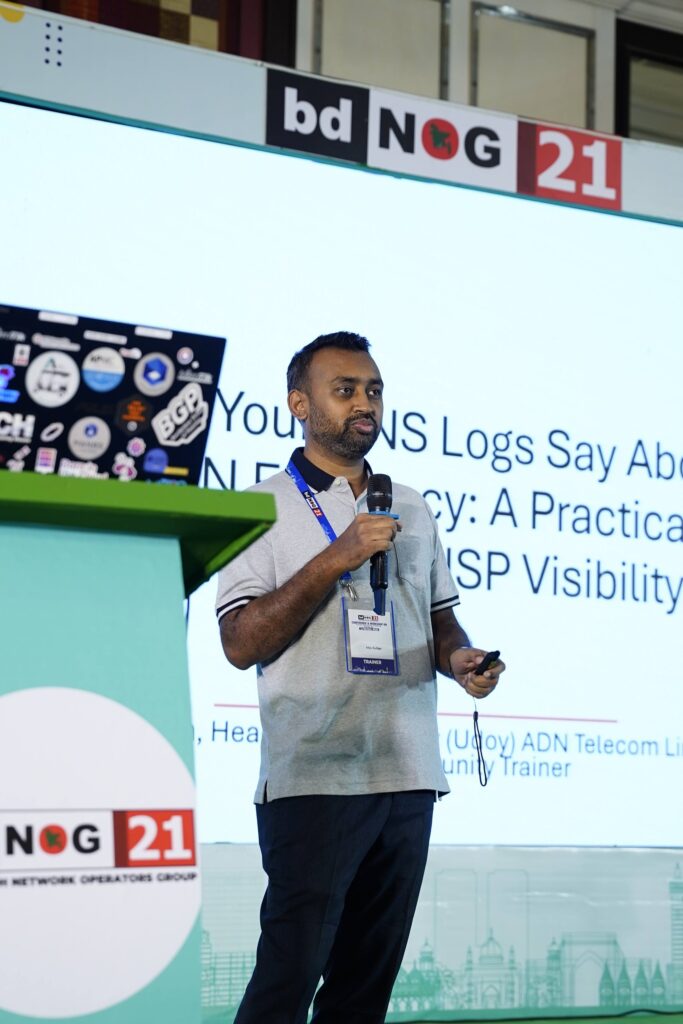
Abu Sufian from ADN Telecom Limited talks about ‘What Your DNS Logs Say About CDN Efficiency: A Practical Approach for ISP Visibility.’ He presents a way for Internet Service Providers (ISPs) to check how well Content Delivery Networks (CDNs) work by looking at DNS logs. He shows how to create an affordable system using open-source tools like PowerDNS, Python, ClickHouse, and Grafana. By collecting and sorting IP addresses from DNS requests, providers can see if data is coming from local, vendor, or global caches. This helps network operators measure delays and loading times while finding ways to improve traffic and CDN deals. In the end, the system gives a clear view of where traffic is directed to enhance user experience.
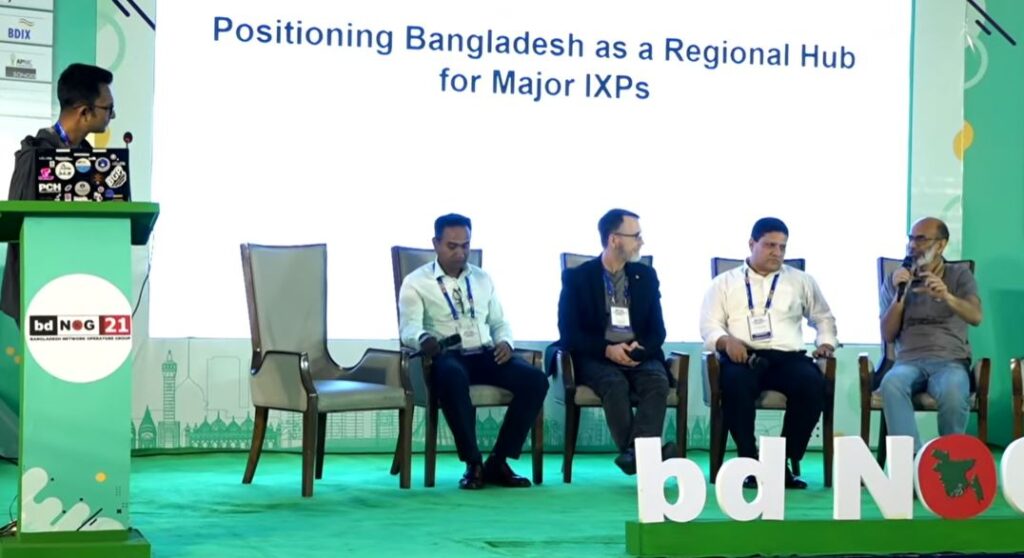
The panel discussion on “Making Bangladesh a Regional Hub for Major IXPs” aimed to improve the country’s internet systems and connections with nearby areas. Experts talked about why it’s important to add more Internet Exchange Points (IXPs).
This would help reduce delays, make better use of bandwidth, and draw in international content providers. They said, Bangladesh is well-placed on the map and needs help from policies, investment, and teamwork among partners, building strong IXP networks can make digital systems better and make Bangladesh a central point for internet access in the region.
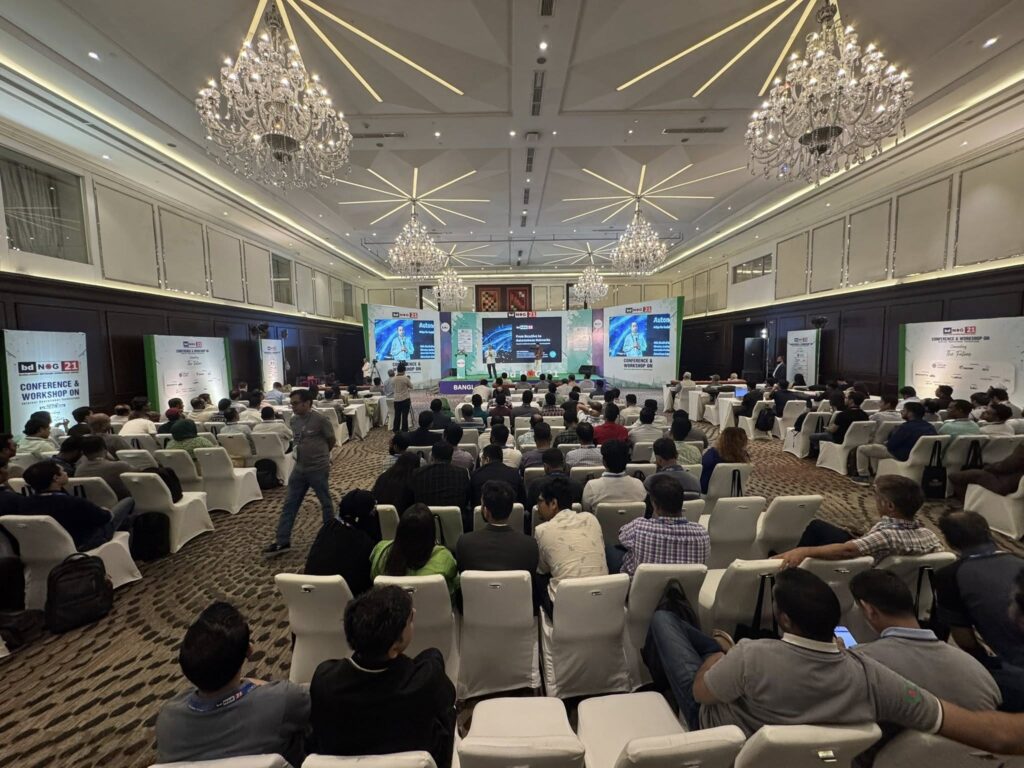
bdNOG21 workshop and conference ended with many local and international experts joining in. This showed how Bangladesh is becoming important in building internet infrastructure worldwide. The sessions focused on the future of networking by using IPv6, AI tools, better security methods, and efficient traffic control. The event highlighted a common goal of creating a bigger, safer, and better-connected internet for Bangladesh as well as other places.
Related news: