InfoSecBulletin Cybersecurity for mankind

A new cybercrime ad is catching attention in the security world. It talks about a botnet that doesn’t just get into computers; it makes them rented AI tools for other criminals to use.
The system named Mycelium is sold on a hidden website as a bundle for hacking into computers and renting their processing power. Its tools are similar to other botnets. They offer ways to exploit, use encrypted control channels, steal credentials, and spread through networks.
Claude AI Cracks 25-Year NSA Cryptography Number Mystery in Just 30 Minutes

Bypassing firewalls, AI Agents Accessed Indian ‘ Data Without Permission: CERT-In

MITRE ATT&CK v20 Unveils 9 New Attack Techniques On AI Exploits, MFA Bypass, and CAPTCHA Evasion
Hackers Exploit Fortinet Flaws to Deploy Stealthy PEERSTITCH Malware on FortiGate Firewalls

Hacker stole Meta GitHub repos; Stole Source Code

Urgent patch! Zoom,NVIDIA and IBM Patch 41 Security flaws

Microsoft patches record braking 1411 flaws; 2 zero days

Anthropic unveils “OSS Scanner” Free AI Vulnerability Scanner for Open-Source Projects

Rise on RCE Exploits Targeting Hikvision Camera Flaw

FortiBleed Attack Compromised 80,000+ Devices, SonicWall Patches 4 SMA1000 Flaws CVSS 10

The seller says we should not just use hacked machines for spam or attacks. He talks about a system that looks at each device’s power, graphics, saved passwords, and active AI accounts.
Researchers at Flare found a listing and say it is the first time they saw a botnet sold as an artificial intelligence service instead of a regular attack tool. The team says that while none of the methods are new, putting them together in one organized platform is strange and worrying.
Mycelium Framework
Mycelium is a program that works on both Windows and Linux. It is written in C++ and can run on different types of computers.
It has a plugin style design, so the operator can add or change features like stealing browser data, scanning networks, or using exploit modules without having to rebuild the malware.
Communication between infected computers and the user depends on a secure channel using internet relay chat technology. This system allows one person to control many hacked devices while keeping commands secret from security tools.
The seller lists many attacks aimed at popular business software, like email servers, virtual tools, and web apps. This means the botnet is made to access company networks widely, increasing risk for businesses.
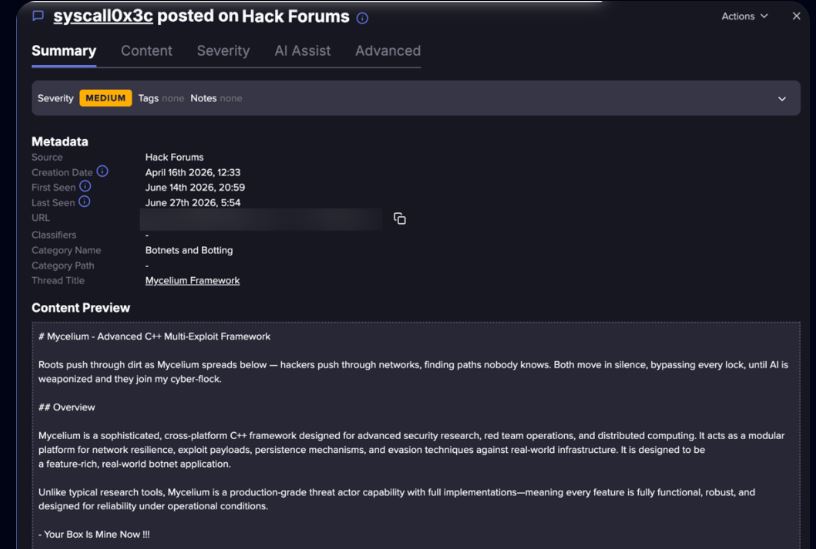
An image in the underground post shows the seller promoting the product to buyers, including its features and prices.
Turning Stolen Machines Into AI Workers
Once a machine is compromised, the system puts it into a group based on what it can do. A device with a stolen top-level AI account might be used for important jobs, while a machine using a basic local AI model could manage lots of phishing messages or spam.
The seller says these AI machines can study a person’s writing and old messages to create believable fake messages. If criminals get stolen access to messaging apps, they can send fake messages that look like they are from trusted contacts.
The ad says the system can check for new security issues, try to create harmful code with AI, and then automatically test and share that code.
Flare says that even if some parts are stretched for advertising, everything mentioned can really be done today. Flare says security teams should look for strange patterns instead of just one warning.
Track how AI models are used on servers. Watch for strange encrypted data leaving machines that don’t usually connect with others. Also, pay attention to unexpected high usage of processors or graphics cards.