InfoSecBulletin Cybersecurity for mankind
Two Chinese nationalists who previously excelled in Cisco’s training academy are now leading attacks on the company’s devices. These devices, pivotal in many network infrastructures, are being targeted by Yuyang and Qiu Daibing. They were identified as key operators behind the notorious Salt Typhoon campaign.
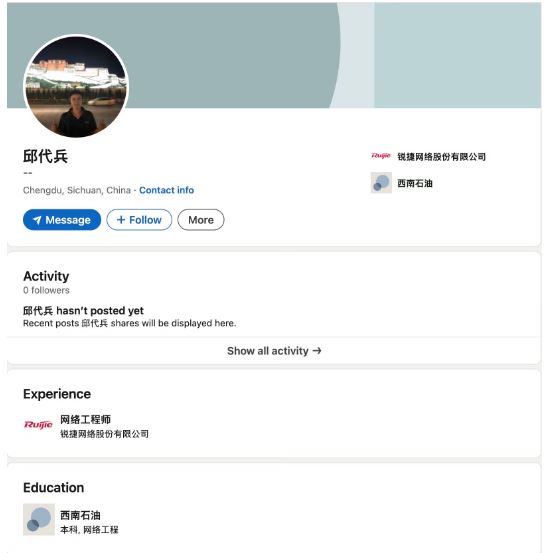
In 2012, Yuyang and Qiu Daibing took part in the Cisco Network Academy Cup at Southwest Petroleum University in China. Qiu’s team placed third nationally, while Yu’s team was second in Sichuan province.
Contract and server dispute brought down Bangladesh’s digital payment

Critical Atlassian & IBM Flaws Expose Files and Enable Remote Code Execution

Citrix NetScaler SAML 0-Day Flaw Under Attack

Major Danish university breached, 200,000 users at risk

Microsoft’s X account hijacked to promote Clippy crypto scam

Critical cPanel, GitLab AI Gateway and Dell CSM Flaws Enable RCE And Admin Hijacking

Nearly 100,000 email addresses exposed in first AI-related data breach in Singapore

Hackers Exploit Zimbra Mail Servers: TeamViewer patched 5 critical flaws

Google Warns of Hackers Actively Exploiting Citrix 0-Day Flaws

CISA Warns Critical MikroTik RouterOS Flaw While Cisco SD-WAN Zero-Day Exploited in Attacks
Their education through Cisco’s program covered many of the devices they would later exploit, including Cisco IOS and ASA Firewalls. The Cisco Network Academy started in China in 1998 and has trained more than 200,000 students.
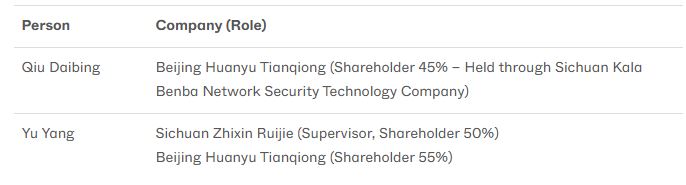
In 2024, Yuyang and Qiu Daibing emerged as co-owners of companies named in a Joint Cybersecurity Advisory published by the United States and more than 30 allied nations, highlighting their influence over the compromised devices.
SentinelOne Labs reports that its Salt Typhoon operation affected over 80 telecom companies globally. Intercepting unencrypted communications among US presidential candidates, key staff, and China policy experts.
Hackers also compromised CALEA systems that telecom companies use to intercept criminal communications. The devices involved in this campaign, reported in September 2024, are part of one of the biggest intelligence collection efforts in the last decade.
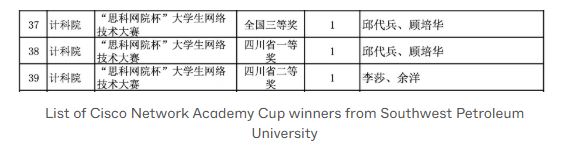
The data suggests this is not just some weird name collision and a case of mistaken identity. A database of 1.2 billion Chinese last names from 1930 to 2008 compiled by Bruce H.W.S.Bao at East China Normal University finds the last name “Qiu” (邱) is used by 0.27% of China’s population.
A second database of 30,282,623 first names from 1920-2019 shows a frequency of the first name “Daibing” (代兵) at a rate of 0.000845%. In other words, there are approximately 3,194 “Qiu Daibings” in China, or 0.000228% of the population. Yu Yang is a much more common name, so is less useful for trying to de-duplicate these characters.