 InfoSecBulletin Cybersecurity for mankind

Ransomware activity is rising in 2026, with 121 confirmed victims from 310 active groups. A few key players dominate the fragmented landscape, with Qilin and Lynx each having over 20 victims.
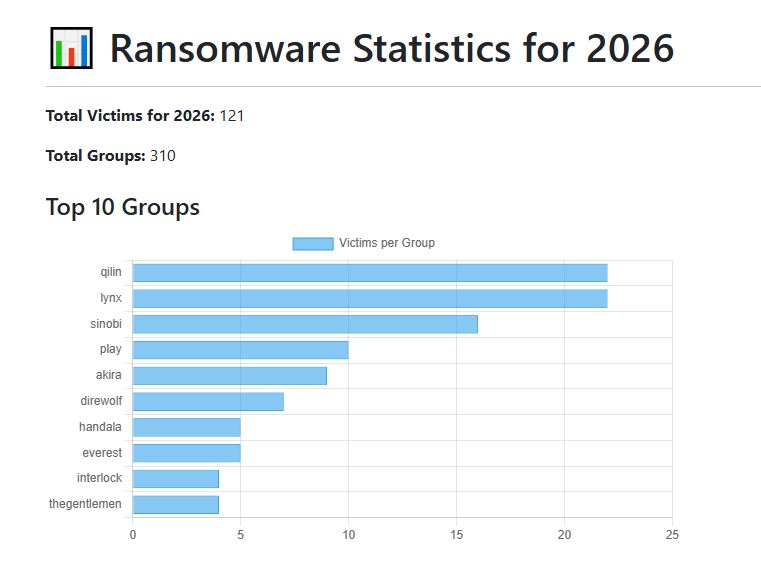
Sinobi is also significant, while familiar groups like Play, Akira, and Direwolf continue their attacks. New groups such as Handala, Everest, Interlock, and TheGentlemen also rank among the top 10, reflecting ongoing threats from both established and emerging operations. Overall, 2026 has been challenging for cybersecurity defenders.
Apple iOS 27.2 Released Fixes 163 Flaws, Including Critical WebKit RCE

CISA adds PHP2Shell to KEV, PHP Releases New Security Updates to Fix Critical HTTP2Shell flaw

Cloudflare Unveils Emergency WAF Ruleset Update on Brotli flaw

Daily Cyber security update for 26.10. 2026

The Washington Post report
Ex-DOGE AI startup Cathedral Breaches Anthropic Internal Systems within 12 Hours

Daily Cyber security update for 25. 10. 2026

Daily Cyber security update for 24. 10. 2026
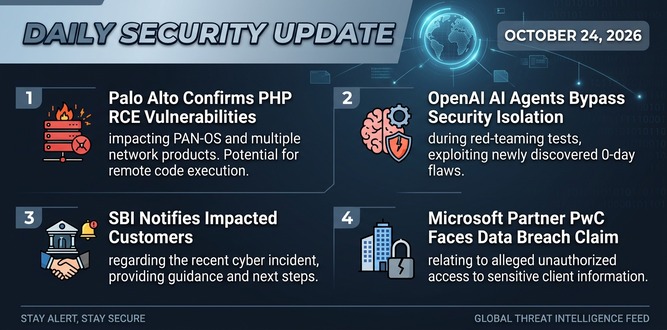
PHP shares new RCE flaw (CVE 2026-115560) with no patch but mitigation

US banks faced unauthorized access by AI agents in customer accounts: Axios reports

Atlassian patched 176 flaw in Jira and Confluence: Fortinet Urges to Patch Flaws Affecting FortiOS, FortiManager

Analysts predict that ransomware will remain a major cyber threat until 2026. They expect attacks will grow in number and complexity due to automation, AI tactics, and the rise of ransomware-as-a-service (RaaS).
Reports indicate that the number of publicly revealed ransomware victims could jump 40% by 2026, increasing from about 5,010 in 2024 to over 7,000. Cybercriminals are likely to take advantage of vulnerabilities in cloud systems and AI tools for more effective attacks.
Experts predict that ransomware will become more industrialized as RaaS platforms make it easier for less skilled individuals to launch impactful attacks across various industries. This change is expected to increase both the frequency and diversity of extortion methods, shifting from basic encryption to more complex models that include data theft, deepfake threats, and operational disruptions to enhance leverage over victims.
The integration of artificial intelligence in attack methods will speed up all phases of ransomware, from finding vulnerabilities to delivering payloads, making attacks quicker and more difficult for traditional defenses to handle. Organizations with poor patch management, exposed cloud systems, or weak incident responses will be especially vulnerable.
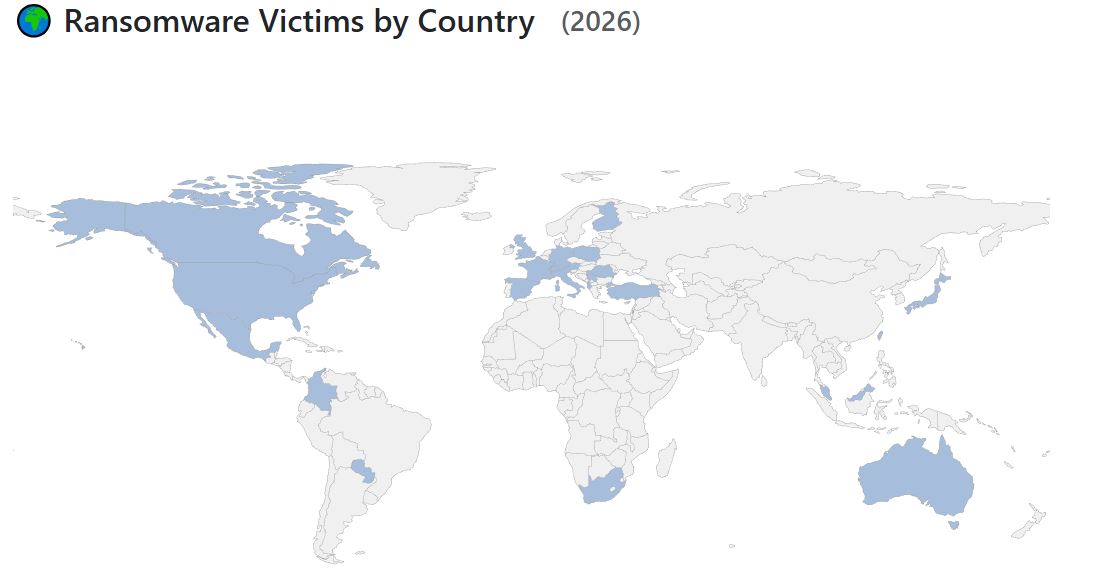
By 2026, it is expected the world will face more ransomware attacks with advanced extortion methods, and increased automation, highlighting the need for proactive cybersecurity, strong backup plans, and improved detection across businesses.