InfoSecBulletin Cybersecurity for mankind

SIEM systems are essential for detecting suspicious activity in enterprise networks, enabling real-time responses to potential attacks. However, the Picus Blue Report 2025 indicates that organizations only detect 1 in 7 simulated attacks from over 160 million simulations, highlighting a serious gap in threat detection and response.
Many organizations think they are effectively detecting threats, but many go unnoticed, leaving networks vulnerable. This detection gap gives a false sense of security as attackers may already have access to sensitive systems and data.
Cloudflare Unveils Emergency WAF Ruleset Update on Brotli flaw

Daily Cyber security update for 26.10. 2026
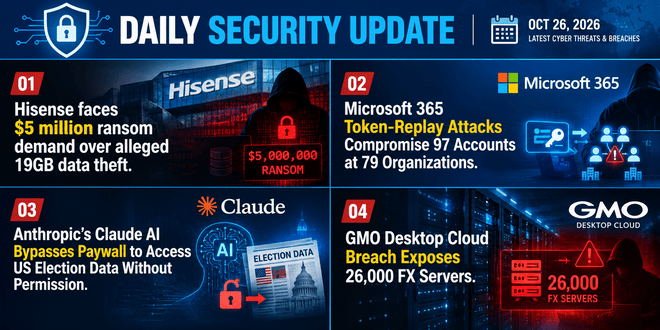
The Washington Post report
Ex-DOGE AI startup Cathedral Breaches Anthropic Internal Systems within 12 Hours

Daily Cyber security update for 25. 10. 2026

Daily Cyber security update for 24. 10. 2026
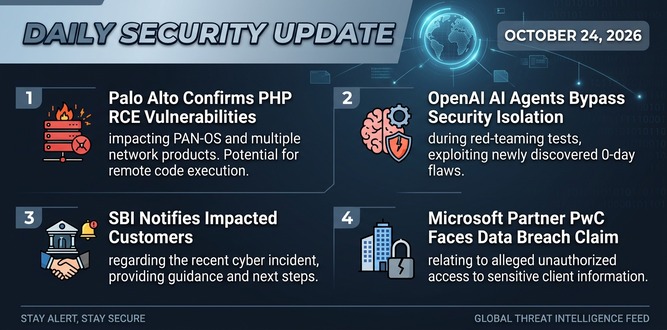
PHP shares new RCE flaw (CVE 2026-115560) with no patch but mitigation

US banks faced unauthorized access by AI agents in customer accounts: Axios reports

Atlassian patched 176 flaw in Jira and Confluence: Fortinet Urges to Patch Flaws Affecting FortiOS, FortiManager

Hacker claim to access Rajasthan Police data: 70,000 records allegedly exposed
Update now! PHP2Shell: Critical PHP vulnerabilities patched

Why are these systems still failing despite the time, money, and attention invested? The Blue Report 2025 addresses key issues with SIEM rule effectiveness.
Log Collection Failures: The Foundation of Detection Breakdowns
SIEM rules function like security guards that monitor network traffic for suspicious behavior. They follow predefined instructions to spot threats, like unauthorized access or abnormal traffic. If an event matches a rule, it triggers an alert for quick response from security teams.
For SIEM rules to be effective, they must analyze reliable and complete logs. The Blue Report 2025 found that log collection issues are a major reason for SIEM rule failures. In 2025, 50% of detection rule failures were due to log collection problems. Inadequate log capture can lead to missing critical events, resulting in fewer alerts, a false sense of security, and undetected malicious activity. Without accurate data, even the best rules fail, leaving organizations vulnerable to attacks.
Log collection challenges often arise from missed sources, misconfigured agents, and incorrect settings. For instance, many setups do not log essential data or experience log forwarding issues, which stops important logs from reaching the SIEM. This lack of critical telemetry greatly hinders the SIEM’s capacity to detect malicious activities.

Misconfigured Detection Rules: Silent Failures
Logs can be collected correctly, yet detection rules may still fail due to misconfigurations. In 2025, 13% of rule failures were due to configuration problems like incorrect thresholds and poorly defined references. These issues can lead to missed critical events or false positives, reducing the SIEM system’s effectiveness.
For example, overly broad or generic rules can lead to an overwhelming amount of noise, which often results in important alerts being buried in the signal, missed entirely, or mistakenly ignored. Similarly, poorly defined reference sets can cause rules to miss important indicators of compromise.
Performance Issues: The Hidden Culprits of Detection Gaps
As SIEM systems manage increasing data, performance problems can arise. In 2025, the report indicated that 24% of detection failures were due to these issues, including resource-heavy rules and inefficient queries. Such problems can hinder detection and slow response times, complicating security teams’ efforts during attacks.
SIEM systems often have difficulty handling large data volumes, particularly when rules aren’t optimized. This results in slow queries, delayed alerts, and strained resources, hindering the organization’s real-time threat detection.

Three Common Detection Rule Issues
Let’s take a closer look at the three most common log collection issues highlighted in the Blue Report 2025.
Log source coalescing severely affects SIEM rule effectiveness. When event coalescing is enabled for sources like DNS, proxy servers, and Windows logs, it can lead to data loss. Important events may be compressed or discarded, leaving analysis incomplete. This makes it easy to overlook critical threat behaviors and decreases the effectiveness of detection rules.
The common issue is missing log sources, causing 10% of rule failures. This occurs when logs don’t transmit data due to network issues, misconfigured forwarding agents, or firewall blocks. Without these logs, the SIEM cannot capture important events, leading to undetected alerts.
Delaying cost-effective test filters leads to detection failures. Broad or inefficient detection rules cause the system to process too much data without proper filtering, slowing performance and risking missed key events. The report shows that 8% of detection failures are linked to this, emphasizing the need for better filtering.
Continuous Validation: Ensuring SIEM Rules Stay Effective Against Evolving Threats
Detection rules are crucial for SIEM systems but need continuous validation to stay relevant. As adversaries evolve their tactics, SIEM rules may become ineffective if not regularly tested against real threats.
The Blue Report 2025 highlights that ongoing testing is essential, as even optimized SIEM systems can be vulnerable to attacks. Continuous validation helps security teams move beyond static configurations and ensures their detection capabilities are effective against new threats. This proactive strategy bridges the gap between theoretical protection and real-world effectiveness.
Simulating adversary behaviors helps security teams assess if their detection rules are effective against the latest attack techniques, ensuring they are tailored to specific environments and can identify threats quickly.
Regular exposure validation using tools like Breach and Attack Simulation helps organizations test and improve their defenses. This approach identifies vulnerabilities and ensures that SIEM rules effectively prevent future attacks, not just detect past ones. Without continuous validation, organizations risk their data, reputation, and overall financial health with outdated defenses.
Closing the Gaps in SIEM Detection
Security teams need to regularly test and refine their SIEM rules, simulate real attacks, and adjust detection systems to match current threats. Tools like Breach and Attack Simulation help organizations identify vulnerabilities, focus on high-risk areas, and confirm their defenses are effective.