 InfoSecBulletin Cybersecurity for mankind
Meta-owned WhatsApp has fixed 3 security flaws, including one affecting its Android app that it thinks may have been used for scam messages. The bug known as CVE-2026-23871 is about not fully checking external ad-reply URLs in WhatsApp for Android and WhatsApp Business for Android before version 2.26.17.4.
The issue could have “caused a target’s device to reveal its IP information to an attacker if an attacker sent media from an attacker-controlled URL when a crafted Click to WhatsApp ad-reply message was rendered and displayed in a message thread,” WhatsApp said.
WhatsApp fixes 3 security flaws, including a suspected Android scam bug
Visa, Mastercard, JPMorgan said third-party vendors incidents amid data leak

PHP updates fix 18 flaws, with critical RCE bugs included

F5 Issues Out-of-Band Security Advisory Covering 22 Flaws Across NGINX and BIG-IP Products

Over 1 million credit cards stolen in attack across 20 countries

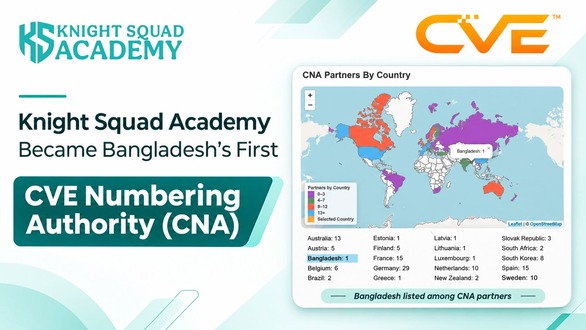
Knight Squad Academy now serves as Bangladesh’s first CVE Numbering Authority
Daily Cyber security update for 18.11. 2026

Japan’s “Fugaku” supercomputer went offline after cyberattack

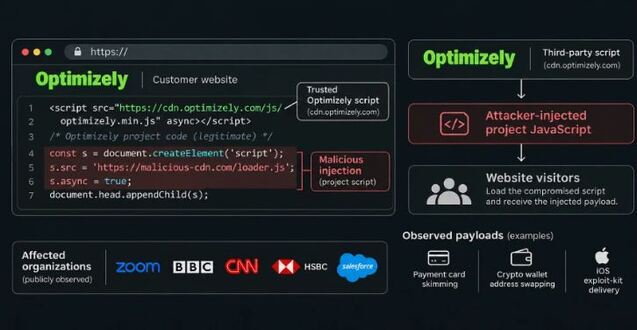
Hijacked Optimizely Scripts infect CNN, HSBC, BBC, Zoom, Salesforce sites with malware
Researcher Uncover 150 M Kik Profile Images Publicly Accessible Database

The messaging platform said it may have been “abused in conjunction with specific spam messages.” Internal researchers on the WhatsApp Security Team have been credited with discovering and reporting the issue.
WhatsApp spokesperson told that the vulnerability was discovered while disrupting a scam campaign. “We believe a scammer was using it to make their scam message seem more credible,” the spokesperson added.
WhatsApp also addressed two other flaws:
CVE-2026-102769 : An SQL injection vulnerability in WhatsApp for Android prior to version 2.26.35.74 that occurred when a recipient tapped on a specially crafted “order details” message sent from an unofficial client, causing locally-stored WhatsApp files to be deleted.
CVE-2026-44908: A security issue in WhatsApp’s certificate checking system for Meta AI’s secure computing setup affects WhatsApp for iOS before 2.26.24.72, WhatsApp Business for iOS and WhatsApp for Mac Desktop before v2.26.23.72, WhatsApp for Android before v2.26.23.74, and WhatsApp Business for Android before v2.26.23.70.
CVE-2026-102769 can leak one bit of information using timing if the user is online when they get the harmful message.
It “leaked one bit of information asked by the attacker about the user’s chat database via an induced-crash delivery receipt timing side channel,” WhatsApp added. There is no evidence the vulnerability has been exploited in the wild.
Successful use of CVE-2026-44908 could let someone bad inside Meta’s system bypass the hardware root of trust. This would happen using a Versioned Chip Endorsement Key (VCEK) certificate that isn’t signed by the hardware maker’s key.
“Any such VCEK Cert would first have to be published to the third-party binary transparency ledger used by WhatsApp Private Processing,” WhatsApp noted. “The ledger shows that every published VCEK certificate chains to the hardware root of trust, confirming no exploitation.”
WhatsApp advises users to update their apps and devices for better protection. The company also said it works hard to improve its systems and appreciates the help from the bug bounty community in making the platform safe.