 InfoSecBulletin Cybersecurity for mankind

The Fugaku supercomputer at Japan’s RIKEN Center for Computational Science is now offline because of a security incident. The organization says that between November 10 and 13, an unauthorized party exploited the public dashboard displaying Fugaku’s operational status to gain access to multiple internal servers.
The research center hasn’t figured out how the intruder got in, but RIKEN found that the intruder got into some servers to put malware that aimed at user data.
Daily Cyber security update for 18.11. 2026

Japan’s “Fugaku” supercomputer went offline after cyberattack

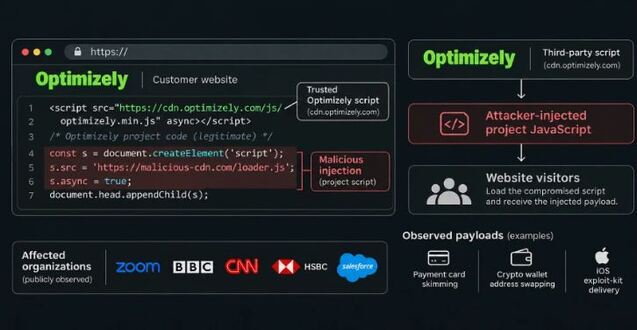
Hijacked Optimizely Scripts infect CNN, HSBC, BBC, Zoom, Salesforce sites with malware
Researcher Uncover 150 M Kik Profile Images Publicly Accessible Database

Months-old flaw led to a global Microsoft outage: said Microsoft

OWASP Top 10 Neocloud & AI Data Center Security Risks

Six 0-Days Discovered by Researchers Allow Unauthorized Access to Supermarket Fridge Systems

Daily Cyber security update for 14.11. 2026

Huge European telecom leak exposes clients of Swedbank, SEB, airBaltic, and other companies

PHP2Shell attack exploited a Check Point 0-day to deploy malware

Specifically, the organization says that the following details have been compromised:
Names, email addresses, and user IDs of 4,222 Fugaku users
Names and email addresses of 375 Rikyu users
SSH private keys and access keys stored on users’ computers
Research data files stored on users’ computers
The organization found that the attacker used some of the access keys to try to connect to other systems, but they did not find any proof of more unauthorized access or stolen research results.
The organization has not attributed the attack, and it’s still working to determine the exact intrusion method.
RIKEN’s Center for Computational Science operates the two supercomputers, making them available to researchers in academia and industry sectors.
Fugaku is a supercomputer that started being shared in March 2021. It has 537 petaflops and is used for finding new drugs, predicting severe weather, and simulating how viruses spread in the air. Rikyu is another supercomputer with 64 petaflops, and it is used for AI research.
In response to the incident, RIKEN shut down Fugaku on November 14, disabled users’ login keys, and asked users to revoke and replace any credentials they had stored on the supercomputer. RIKEN said Fugaku operations will resume only after it has ensured that it’s safe to do so.
Related news:
10 PB of Data allegedly breach from China’s Tianjin Supercomputer Center