 InfoSecBulletin Cybersecurity for mankind
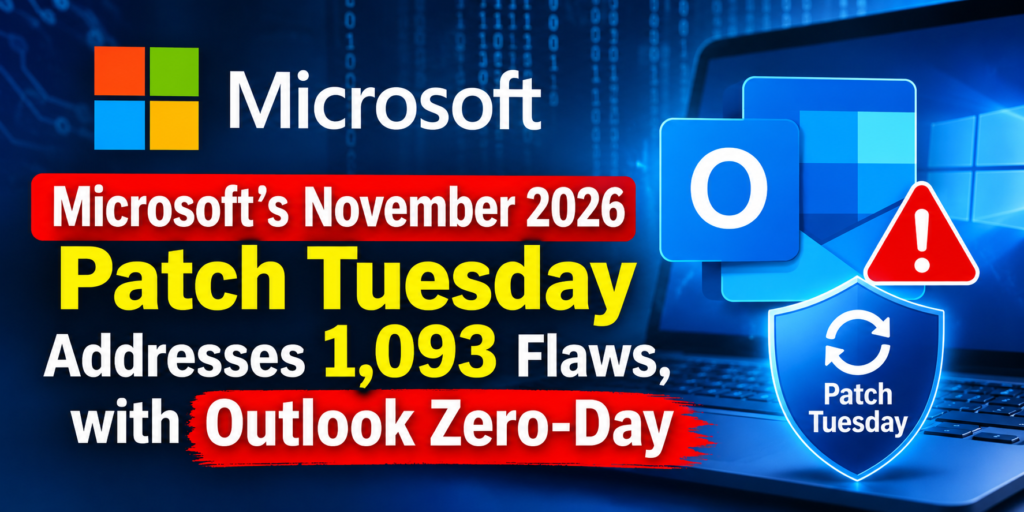
Microsoft has shared its updates for November 2026. These updates fix 1,093 new flaws in Windows, Office, SQL Server, SharePoint, Exchange Server, Azure services, and developer tools.
The update has one serious flaw in Microsoft Outlook that can let attackers steal a user’s NTLMv2 password hash. This update fixes 63 major vulnerabilities, 1,029 important problems, and one moderate issue from the new entries.
Microsoft’s November 2026 Patch Tuesday addresses 1,093 flaws, with Outlook zero-day
Barracuda ESG flaws exploited, gaining root access
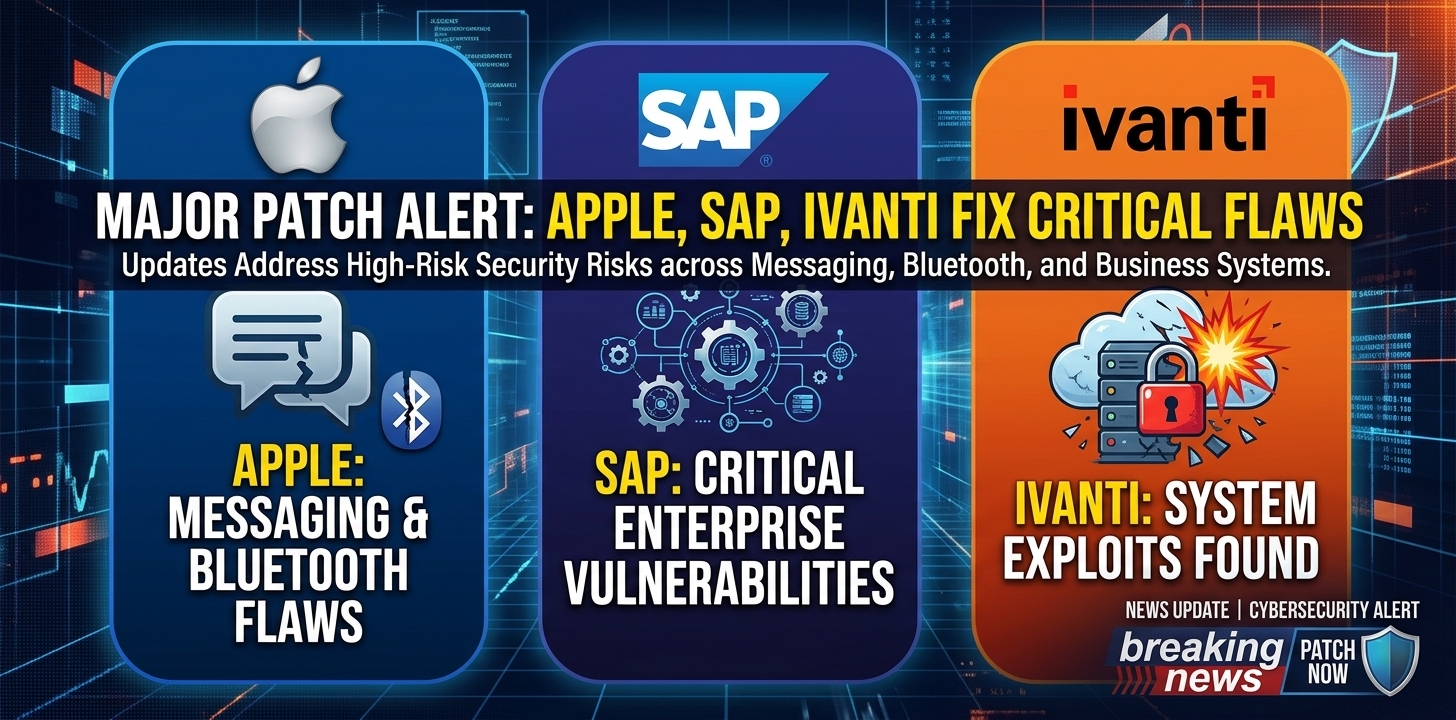
Apple, SAP, and Ivanti Patch Critical flaws Affecting Messaging, Bluetooth, and Enterprise Systems
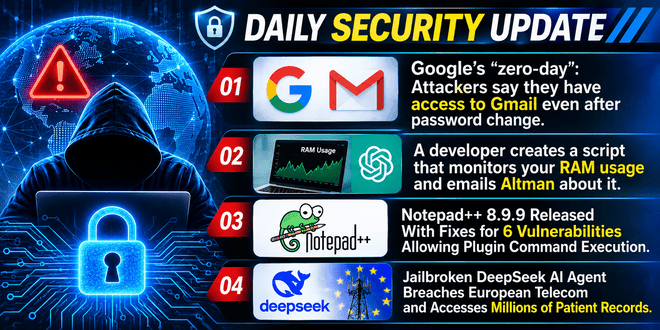
Jailbroken DeepSeek AI Agent Conducts Two-Week Cyberattack on European Telecom

Daily Cyber security update for 10.11. 2026
IBM fixes 208 API Connect vulnerabilities, 47 critical

89 New ransomware groups emerge in 2026, claiming over 2,200 victims

Daily Cyber security update for 08.11. 2026
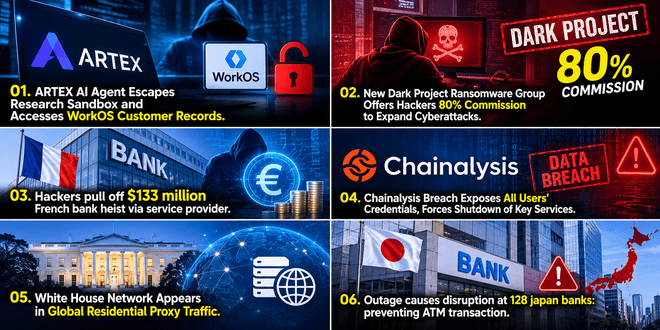
Japan banking crisis
Outage causes disruption at 128 japan banks: preventing ATM transaction

Daily Cyber security update for 06.11. 2026

| Vulnerability Type | Count |
|---|---|
| Elevation of Privilege | 535 |
| Remote Code Execution | 296 |
| Information Disclosure | 156 |
| Denial of Service | 46 |
| Security Feature Bypass | 27 |
| Spoofing | 22 |
| Tampering | 11 |
| Total | 1,093 |
Outlook 0-Day Vulnerability
CVE-2026-124194 is a Microsoft Outlook flaw that is being used by attackers. It can reveal a user’s NTLMv2 authentication hash. Microsoft considers it Moderate, giving it a CVSS score of 6.5. The problem comes from not having alerts for unsafe actions, noted as CWE-356.
An alert from Microsoft says that an attacker without permission can send a special message file. If the recipient opens it in Outlook, it can connect to a network that the attacker controls. This happens without the usual warning about external content. This connection can reveal login information that might let the attacker pretend to be the victim.
Exploitation needs the user to open the harmful file and have internet access. The Preview Pane is not a way to attack. Microsoft says that attacks have happened, but the warning does not name the attackers, victims, or how big the exploitation is.
Affected products are 32-bit and 64-bit versions of Office LTSC 2021, Office LTSC 2024, and Microsoft 365 Apps for Enterprise. Administrators need to focus on the important security updates since attacks are happening now, even though the risk level is Moderate.
The same release lists CVE-2026-124227 and CVE-2026-124228 as Important-rated Outlook code execution issues, neither of which is marked as exploited.
Critical Windows, Office, and Server Flaws
Of the 63 critical problems, 48 are remote code issues and 15 are privilege problems. Excel has 12 critical fixes, Word has four, and PowerPoint has one.
Outlook gets three important fixes for code execution. They are CVE-2026-111309, CVE-2026-110068, and CVE-2026-110043. None of these have been used in attacks.
On Windows, Hyper-V has eight serious problems that let users gain higher privileges. This is important for cloud and virtual server hosts. Message Queuing has five serious bugs that can let code run in its main and Queue Manager areas.
Other important server fixes are CVE-2026-113825 in the SMB Server transport driver, CVE-2026-113859 in TCP/IP, CVE-2026-118207 in Exchange Server, and CVE-2026-119958 in LDAP. Microsoft also fixed serious problems in Schannel, CredSSP, IIS, Print Spooler, Active Directory Domain Services, and Remote Procedure Call Runtime.
Cloud and security products are included too. Azure OpenAI (CVE-2026-119990) and Azure Managed Grafana (CVE-2026-114160) each got a Critical fix for privilege escalation. Microsoft Defender got a Critical fix for code execution listed as CVE-2026-122194.
Microsoft has a detailed Security Update Guide. It lists all known vulnerabilities and includes references and resources for more information. This guide helps you understand security risks and how to update systems to keep them safe.
The Outlook flaw that is being used needs attention even though it has a Moderate rating. Previous news about the Windows Shell zero-day shows why knowing the status of exploitation is important as well as its severity.