 InfoSecBulletin Cybersecurity for mankind

Hackers took 19 gigabytes of secret documents and revealed government IDs in a cyber spying effort that broke into military, government, and legislative groups in Thailand and the Philippines. The operation, named RedOps, took place from August to September 2026 and had five confirmed attacks. Researchers also saw spying on over 30 Indonesian government groups but found no proof that the attackers got into those networks.
The records show a focus on defense connections and military deals in the South China Sea. The attackers looked for public information about regional military teamwork before getting government documents that were not open to the public.
Operation "RedOps"
Hacker breach Gov.t, military network across Asia, 19 GB data stolen, Recon 30 orgs

Hacked 1Password: customer data and source code taken in GitHub breach
2 billion credentials exposed, including email, login, passwords
Cyberattack hit FIFA: hacker claims access to 12GB of data

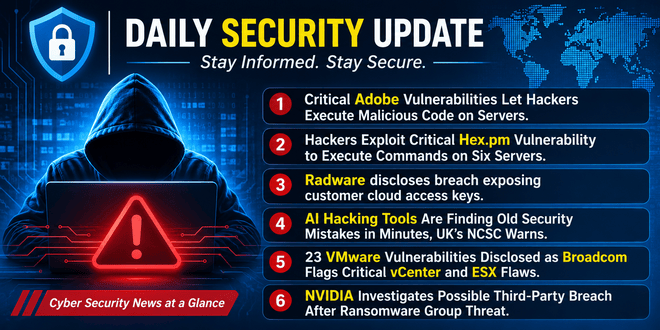
Daily Security Update: The Latest Global Cyber Threats, Attacks & Data Breaches
Reuters Exclusive
Alice Huang-linked firms listed $270 million in AI servers in China

US CIA, ODNI cybersecurity incident exposed some unclassified data: NYT
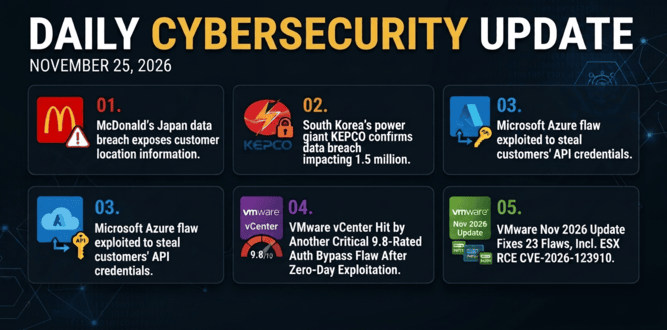
Daily Cyber security update for 24.11. 2026
GreyNoise blog post
Hackers compromise Check Point servers in 22 orgs across 17 countries

SideWinder APT Targets Bangladesh Gov.t Orgs Via Spear-Phishing Campaign

The stolen files had government records and military plans, while another breach revealed details on national strategy and budget. Analysts from SOCRadar found bad tools used in the campaign. One tool allowed the operators to send commands to a hacked JasperReports server and get back results.
The researchers tracked the group as WeaveLotus and assessed Vietnamese state sponsorship with moderate confidence, but said the evidence was not conclusive. The team cited Vietnamese-language comments in scripts, activity consistent with UTC+7 working hours and the group’s choice of targets.
Military and Gov.t Networks Breach
At a military group in Thailand, researchers think the attackers got in through CVE-2024-36401, a serious weakness in GeoServer.
The same flaw led to another U.S. federal agency being hacked, as noted by CISA. In Thailand, the hackers used the broken server to get into a Directus content management system that let them access files without logging in. They downloaded around 31,418 files that added up to 575 MB, including files on logistics, disaster response, and military work.
The biggest confirmed transfer was from a Thai government group. They logged into a public JasperReports server using the default username and password and accessed a separate document management system that used it.
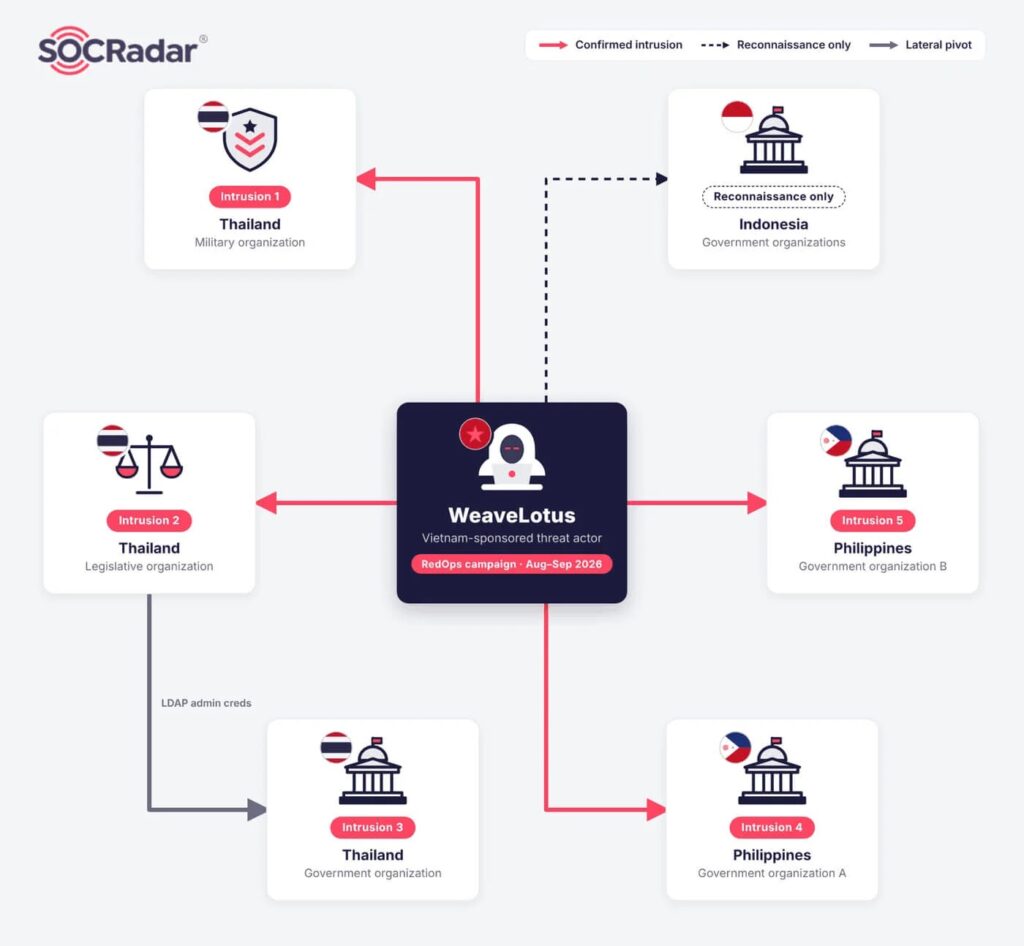
Researchers checked around 19 GB of stolen data with transfer logs. The data included meeting agendas, spending records, appointments, and asset disclosure results.
They got 349,782 records about policies, financial plans, and budget spending. In the Philippines, a weak osTicket setup leaked staff usernames, email addresses, and password codes.
Lesson Learn From RedOps
The targeting shows a broader trend of spying by Southeast Asian governments, but just because the targets are similar doesn’t mean the same group did it.
SOCRadar assessed a direct link to OceanLotus, also known as APT32, with low confidence. Unlike the OceanLotus supply chain attack involving FireAnt MetaKit, RedOps relied on exposed applications and weak configurations rather than a tampered software update.
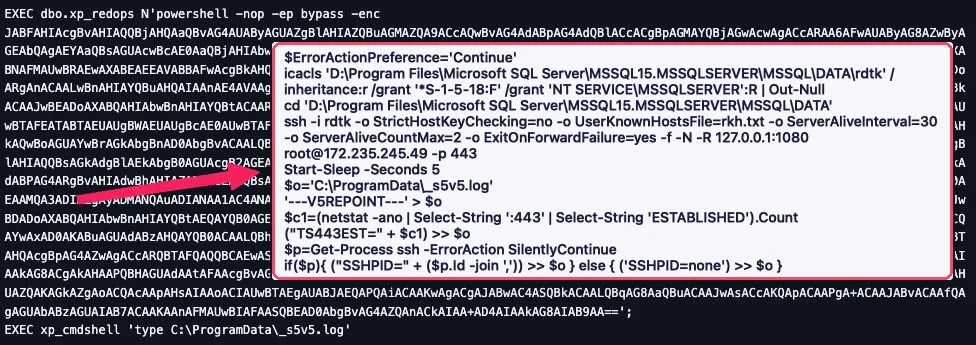
Researchers did not observe known APT32 malware in the campaign. Security teams should prioritize patching exposed GeoServer and osTicket instances, replacing default JasperReports credentials, disabling debug mode in production Laravel applications and checking whether sensitive file APIs allow anonymous access.