InfoSecBulletin Cybersecurity for mankind
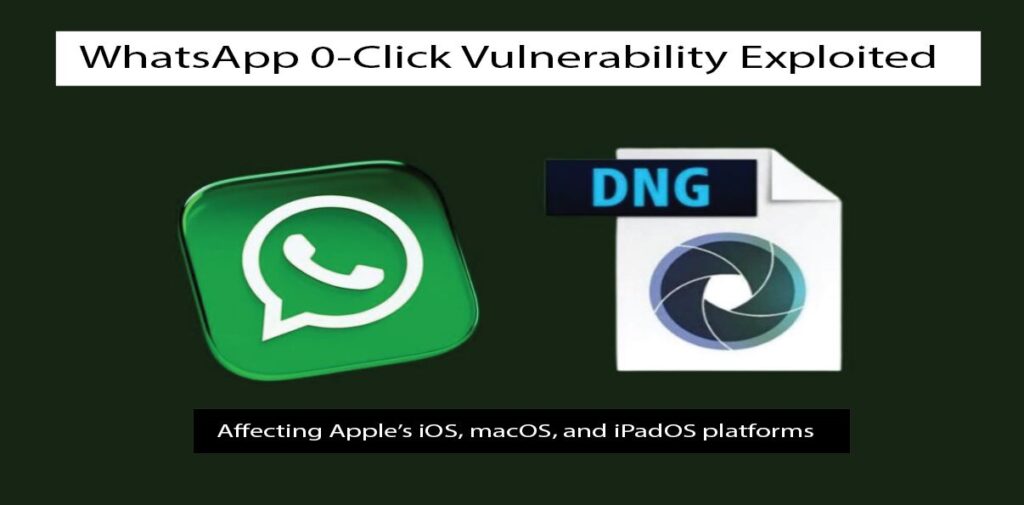
Security researchers found a zero-click vulnerability in WhatsApp that lets remote code execution (RCE) on iOS, macOS, and iPadOS. The attack chain uses two vulnerabilities, CVE-2025-55177 and CVE-2025-43300, to compromise a device without user interaction.
Researchers from DarkNavyOrg demonstrated a “zero-click” exploit that targets WhatsApp. This attack involves sending a specially crafted Digital Negative (DNG) file to a victim’s account, automatically triggering the vulnerability upon receipt without any action needed from the victim.
PHP shares new RCE flaw (CVE 2026-115560) with no patch but mitigation

US banks faced unauthorized access by AI agents in customer accounts: Axios reports

Atlassian patched 176 flaw in Jira and Confluence: Fortinet Urges to Patch Flaws Affecting FortiOS, FortiManager

Hacker claim to access Rajasthan Police data: 70,000 records allegedly exposed

Update now! PHP2Shell: Critical PHP vulnerabilities patched

Trump says data centres should pay dividends to local community

Hackers Actively Exploiting Palo Alto VPN Flaw Via CVE-2026-0257

DeepSeek AI banned by U.S. Government; federal agencies must remove all related tools
CISA, NSA and NIST Publish New 10 AI Agent Control Guidelines
Claude AI Cracks 25-Year NSA Cryptography Number Mystery in Just 30 Minutes
WhatsApp: How are attacks carried out?
CVE-2025-55177 is a serious flaw in WhatsApp’s message handling. DarkNavyOrg reports that the issue arises from insufficient validation, preventing verification of whether an incoming message is from a legitimate device. This allows attackers to send messages that seem credible, evading security checks and delivering harmful content.
The second vulnerability, CVE-2025-43300, occurs after a message is delivered. It affects WhatsApp’s DNG file parsing library. An attacker can create a faulty DNG image that causes memory corruption and allows for remote code execution when processed by WhatsApp.
Researchers shared a proof-of-concept exploit featuring a script that automates connecting to WhatsApp, creating a distorted DNG, and sending the payload to a target phone number, enabling silent device compromises.
WhatsApp: Vulnerability exploited via malicious DNG file:
The zero-click RCE vulnerability threatens WhatsApp users on Apple devices like iPhones, Macs, and iPads. If exploited, it can allow an attacker full control over a device, enabling access to sensitive data and the ability to monitor communications and install malware.
The stealthy nature of the attack allows a device to be compromised without visible signs. This reveals ongoing security issues linked to complex file formats and cross-platform messaging apps.
Weaknesses in file parsers are often exploited for remote code execution (RCE) because they handle untrusted data. While this is not a new tactic, it is especially worrying for platforms with billions of users. Cybercriminals can now launch mass campaigns that infect thousands of devices quickly.
Responsible disclosure and quick security updates are crucial now. Users need to realize that installing updates promptly isn’t just routine; it’s a key prevention method.
At the same time, the discovery of this vulnerability highlights a larger issue: messaging apps are turning into “digital operating systems,” aggregating data, files, and communication functions. As more capabilities are added, the attack surface also increases. Therefore, the security of these apps is not just a matter of protecting personal conversations, but a foundation for digital privacy and trust on the internet.
DarkNavyOrg is still analyzing a vulnerability linked to Samsung (CVE-2025-21043). WhatsApp users should keep their apps and operating systems updated to get the latest security fixes. WhatsApp and Apple are expected to fix these critical vulnerabilities in future updates.