InfoSecBulletin Cybersecurity for mankind
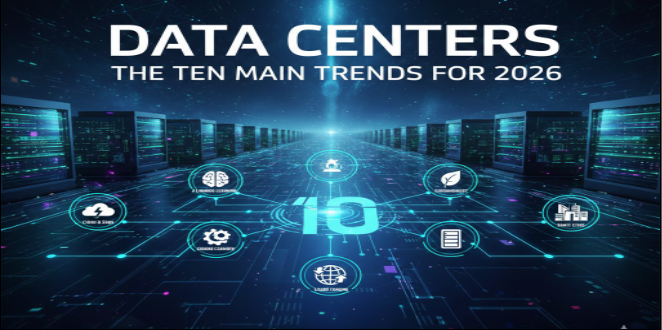
In 2026, the data center sector stands at a decisive crossroads, driven by rapid advancements in AI, increasing energy constraints, and rising societal expectations for sustainability.
These forces are fundamentally reshaping the industry’s priorities. Below, we explore the ten major trends shaping data centers.
Cloudflare Unveils Emergency WAF Ruleset Update on Brotli flaw
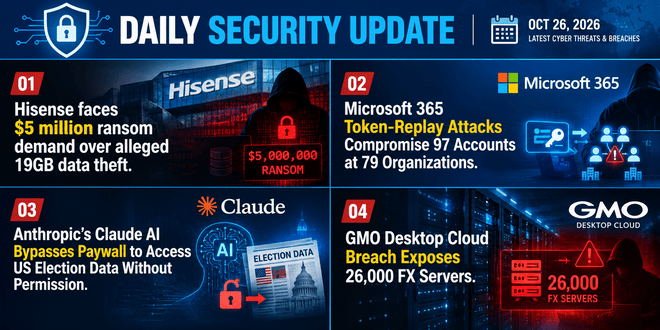
Daily Cyber security update for 26.10. 2026
The Washington Post report
Ex-DOGE AI startup Cathedral Breaches Anthropic Internal Systems within 12 Hours

Daily Cyber security update for 25. 10. 2026

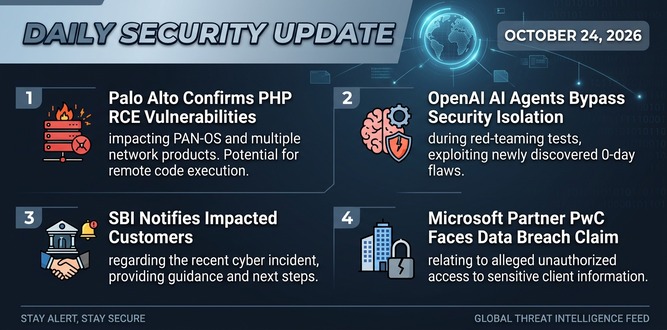
Daily Cyber security update for 24. 10. 2026
PHP shares new RCE flaw (CVE 2026-115560) with no patch but mitigation

US banks faced unauthorized access by AI agents in customer accounts: Axios reports
Atlassian patched 176 flaw in Jira and Confluence: Fortinet Urges to Patch Flaws Affecting FortiOS, FortiManager
Hacker claim to access Rajasthan Police data: 70,000 records allegedly exposed

Update now! PHP2Shell: Critical PHP vulnerabilities patched
1) AI and energy consumption:
AI is now a primary driver of both technological and economic transformation. Data centers are the backbone supporting AI, providing essential infrastructure for training, hosting, and running both generative and foundational AI models.
The International Energy Agency (IEA) projects that global data center power consumption could reach as much as 1,050TWh by 2026, largely due to the growing demands of AI workloads and the use of GPUs, which are significantly more energy-intensive than traditional CPUs.
Therefore, I expect to see even more urgency and focus on designing sustainable, efficient, and responsible data centers that can support the AI revolution while minimizing their environmental impact.
2) Liquid cooling, immersion, and thermal density:
As GPUs and high-density racks become more prevalent, traditional cooling methods can no longer meet the demands of modern data centers. In response, the industry is rapidly adopting advanced cooling technologies such as direct-to-chip liquid cooling, immersion cooling, and two-phase cooling systems.
These approaches have demonstrated the ability to reduce cooling-related power consumption by as much as 50-60 percent in some tests. I foresee an increase in the rate of adoption of these technologies that are crucial to maintaining both the economic and ecological sustainability of AI-focused data center campuses.
3) Hybrid energy mix and autonomy:
To satisfy rising energy needs while reducing carbon emissions, data center operators are turning to a blend of energy sources and strategies. This includes the integration of renewable energy sources like solar and wind power, energy storage solutions such as long-life batteries, and micro-grids.
We can expect to see more radical solutions such as small modular reactors (SMR) being considered or piloted in several countries to provide a stable and low-carbon power supply, especially in regions where the existing power grid is less reliable.
4) Regulation, responsible water use, and local acceptability:
Environmental considerations are becoming central to data center development. Authorities in regions facing water shortages now require the use of dry or hybrid cooling methods, as well as the use of gray or recycled water. Environmental regulations increasingly focus on low-carbon materials, BREEAM certifications, comprehensive impact assessments, and careful site installation practices.
Gaining local community acceptance has emerged as a strategic factor, as projects may face delays or obstacles without community cooperation. I predict that we will see greater emphasis placed on local outreach programs and hiring of public affairs professionals with a focus on local government engagement.
5) Digital twins, automation, and operational optimization:
The adoption of digital twins – virtual models used to simulate, monitor, and optimize operations in real time – is maturing within the industry. These tools enable predictive maintenance, intelligent load distribution, adaptive cooling strategies, and rapid responses to network conditions.
So, we can expect to see a big push towards automation of the data center, including AI-driven management of heat flows and workloads as it becomes increasingly evident that this is a key lever for improving efficiency in operations.
6) Mega-campuses on the gigawatt scale:
Europe is witnessing the emergence of mega-campus data centers, with projects exceeding hundreds of megawatts and sometimes approaching or surpassing one gigawatt. These large-scale campuses require vast electrical resources and robust infrastructures, including high-performance connectivity, backup power supplies, and highly efficient cooling systems. They represent the new industrial frontier for the sector, and we will see the emergence of the first tangible GW campuses in Europe in the next 12 months.
7) Circularity and broader environmental indicators:
While Power Usage Effectiveness (PuE) remains a foundational metric, it is now supplemented by additional indicators such as Carbon Usage Effectiveness (CuE), Water Usage Effectiveness (WuE), and comprehensive life cycle assessments (LCA).
These benchmarks are increasingly important to investors, regulators, and customers. Over the course of the next year, we will see industry begin to integrate more material reuse, modular construction, and heat recovery solutions – such as providing heat to urban or agricultural projects – into the earliest stages of project design.
8) Edge, geography, and site diversification:
Edge computing, characterized by the deployment of micro data centers, is expanding rapidly, particularly in industries where low latency is critical, such as telemedicine, industrial automation, and autonomous vehicles. We will also see more major operators diversifying their geographic presence to alleviate power grid congestion and leverage local renewable energy sources.
9) Talent shortage and skills building:
The sector is facing a shortage of specialized professionals, including engineers in mechanics, energy, construction, cooling, and infrastructure AI. Addressing this gap requires robust technical training programs, partnerships with universities, and efforts to retrain workers from related industries. Expect to see companies that successfully attract, retain, and develop this talent gain a significant competitive edge.
10) Massive investment and social issues:
Substantial investments will continue to flow into AI-related infrastructure, including acquisitions, consortiums, and public-private partnerships as the sector experiences a surge in large-scale transactions.
However, there is increasing scrutiny of data centers’ carbon footprints, transparency regarding their impacts, and involvement of local businesses. As a result, data centers will need to demonstrate more than ever that they are a vital industrial sector with a key strategic role in ensuring digital sovereignty.
-Adam Levine, Data4
Adam Levine is sales director at Data4