InfoSecBulletin Cybersecurity for mankind

Microsoft has revealed a serious flaw in Windows BitLocker, known as CVE-2026-45585. The flaw was made public on May 19, 2026. No one has confirmed it is being used, but Microsoft says it is “Exploitation More Likely,” to be exploited, so quick action is needed.
The flaw is known as a Security Feature Bypass and has a high seriousness level of Important. Security audit services
Daily Cyber security update for 25. 10. 2026

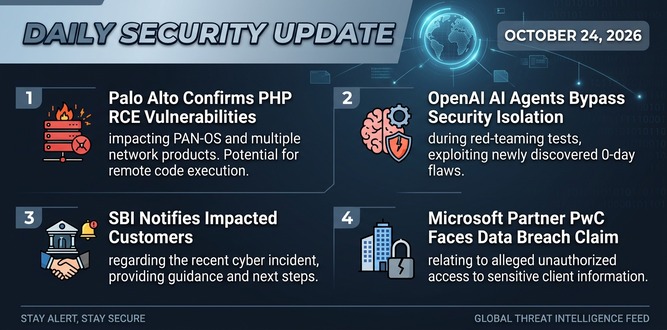
Daily Cyber security update for 24. 10. 2026
PHP shares new RCE flaw (CVE 2026-115560) with no patch but mitigation

US banks faced unauthorized access by AI agents in customer accounts: Axios reports

Atlassian patched 176 flaw in Jira and Confluence: Fortinet Urges to Patch Flaws Affecting FortiOS, FortiManager

Hacker claim to access Rajasthan Police data: 70,000 records allegedly exposed

Update now! PHP2Shell: Critical PHP vulnerabilities patched

Trump says data centres should pay dividends to local community

Hackers Actively Exploiting Palo Alto VPN Flaw Via CVE-2026-0257

DeepSeek AI banned by U.S. Government; federal agencies must remove all related tools

It is located in the Windows Recovery Environment (WinRE) and is linked to an important exploit chain called YellowKey, created by researcher Nightmare-Eclipse and shared on GitHub.
A successful attacker can take advantage of this problem to bypass BitLocker Device Encryption on the storage device, getting access to encrypted data without needing user passwords or decryption keys.
The flaw only affects Windows 11, Windows Server 2022, and Windows Server 2025.
No update is out yet; Microsoft has provided a guide with several steps to help while they work on a security fix.
Microsoft’s Mitigation Steps
Microsoft has provided a six-step mitigation procedure targeting the WinRE image directly:
To address the risk, the following mitigations have been outlined:
Mount the WinRE image on each device.
Mount the system registry hive of the mounted WinRE image.
Modify BootExecute by removing “autofstx.exe” value from Session Manager’s BootExecute REG_MULTI_SZ value.
Save and unload Registry hive.
Unmount and commit the updated WinRE image.
Reestablish BitLocker trust for WinRE.
Security teams running Windows 11 or Server 2022/2025 should focus on the WinRE fixing steps and apply TPM+PIN rules right away, before an official update comes out.