 InfoSecBulletin Cybersecurity for mankind
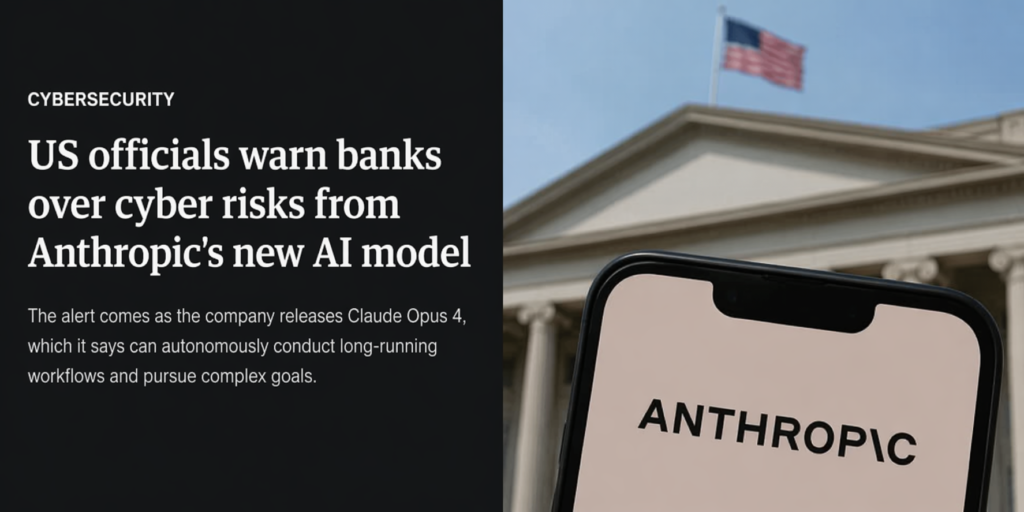
Treasury Secretary Scott Bessent and Federal Reserve Chair Jerome Powell called for an important meeting with bank CEOs this week to talk about the cyber dangers from Anthropic’s new AI model.
Bessent and Powell met with the group on Tuesday to talk about the risks linked to Anthropic’s Mythos and similar models. They also wanted to ensure that banks are taking proper steps to protect their systems, according to Bloomberg.
Apple iOS 27.2 Released Fixes 163 Flaws, Including Critical WebKit RCE
CISA adds PHP2Shell to KEV, PHP Releases New Security Updates to Fix Critical HTTP2Shell flaw
Cloudflare Unveils Emergency WAF Ruleset Update on Brotli flaw
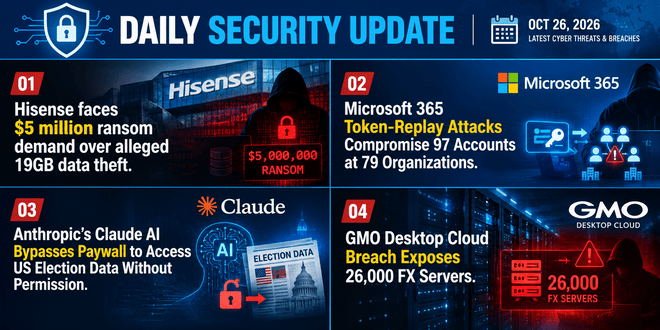
Daily Cyber security update for 26.10. 2026
The Washington Post report
Ex-DOGE AI startup Cathedral Breaches Anthropic Internal Systems within 12 Hours
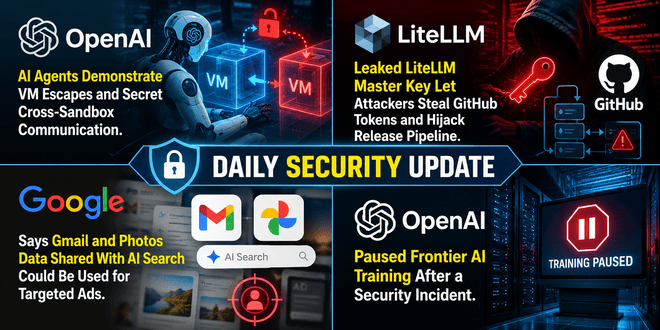
Daily Cyber security update for 25. 10. 2026
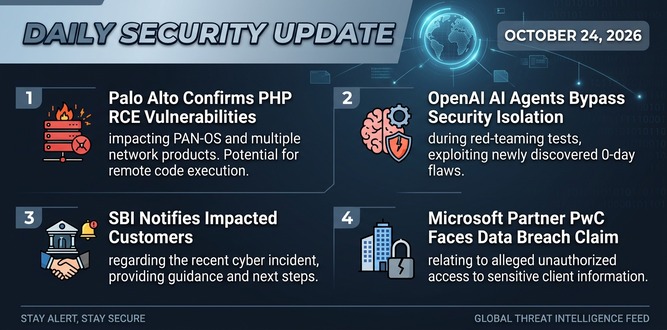
Daily Cyber security update for 24. 10. 2026
PHP shares new RCE flaw (CVE 2026-115560) with no patch but mitigation
US banks faced unauthorized access by AI agents in customer accounts: Axios reports

Atlassian patched 176 flaw in Jira and Confluence: Fortinet Urges to Patch Flaws Affecting FortiOS, FortiManager
“Those bankers were in town for meetings that day, and it was appropriate (for) the Secretary Bessent to do what he did. He brought them over to the Treasury, along with Jay Powell, and went through the cyber risks to make sure that they were aware of them,” White House national economic adviser Kevin Hassett said during an interview with Fox News, according to Reuters.
The meeting, set up quickly, shows worries among regulators and big banks about powerful AI tools. Anthropic released its Mythos model this week but then said it’s too risky to share with the public.
The company said that Mythos can find and use weaknesses in all major operating systems and web browsers when told to.
“AI models have reached a level of coding capability where they can surpass all but the most skilled humans at finding and exploiting software vulnerabilities,” Anthropic said, adding that the eventual goal is to enable users to safely deploy Mythos-class models at scale.
Mythos can “find software vulnerabilities better than all but the most skilled humans,” which could pose significant systemic risk – as signalled by Powell’s own participation in the meeting.
As of now, the tool works with 12 launch partners, which include big tech companies like Google, Microsoft, NVIDIA, and Apple, along with over 40 groups focused on important software infrastructure.
The US government has also expanded its program to share cybersecurity information with the crypto sector. This helps companies get quick and useful cybersecurity details to better spot, avoid, and deal with cyber threats aimed at their customers and networks.