InfoSecBulletin Cybersecurity for mankind
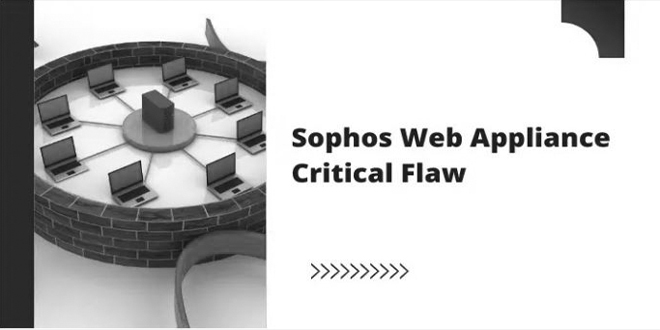
Sophos has released a new security advisory that has fixed 3 of its significant vulnerabilities, allowing threat actors to execute arbitrary code injection on Sophos Web Appliance (SWA).
CVE(s):
- CVE-2023-1671 – Pre-Auth Command Injection
- CVE-2022-4934 – Post-Auth Command Injection
- CVE-2020-36692 – Reflected XSS via POST method
CVE-2023-1671 – Pre-Auth Command Injection in Sophos Web Appliance
CVSS Score: 9.8 (Critical)
US banks faced unauthorized access by AI agents in customer accounts: Axios reports

Atlassian patched 176 flaw in Jira and Confluence: Fortinet Urges to Patch Flaws Affecting FortiOS, FortiManager

Hacker claim to access Rajasthan Police data: 70,000 records allegedly exposed

Update now! PHP2Shell: Critical PHP vulnerabilities patched

Trump says data centres should pay dividends to local community

Hackers Actively Exploiting Palo Alto VPN Flaw Via CVE-2026-0257

DeepSeek AI banned by U.S. Government; federal agencies must remove all related tools

CISA, NSA and NIST Publish New 10 AI Agent Control Guidelines
Claude AI Cracks 25-Year NSA Cryptography Number Mystery in Just 30 Minutes

Bypassing firewalls, AI Agents Accessed Indian ‘ Data Without Permission: CERT-In
CVSS Vector: CVSS:3.1/AV:N/AC:L/PR:N/UI:N/S:U/C:H/I:H/A:H
This vulnerability exists on the warn-proceed handler, allowing threat actors to execute arbitrary code. An external security researcher reported it through the Sophos Bug Bounty Program.
Vulnerable Products:
Sophos Web Appliance 4.3.10.4 and older versions
CVE-2022-4934 – Post-Auth Command Injection in Sophos Web Appliance
CVSS Score: 7.2 (High)
CVSS Vector: CVSS:3.1/AV:N/AC:L/PR:H/UI:N/S:U/C:H/I:H/A:H
This vulnerability exists on the exception wizard handler, allowing administrators to execute arbitrary code. An external security researcher reported it through the Sophos Bug Bounty Program.
Vulnerable Products:
Sophos Web Appliance 4.3.10.4 and older versions
CVE-2020-36692 – Reflected XSS via POST method in Sophos Web Appliance
CVSS Score: 5.4 (Medium)
CVSS Vector: CVSS:3.1/AV:N/AC:L/PR:L/UI:R/S:C/C:L/I:L/A:N
This vulnerability exists on the report scheduler, allowing threat actors to execute Javascript code on the victim’s browser. To exploit this vulnerability, a threat actor must trick a victim into submitting a malicious form on any compromised website.
In contrast, the victim is logged on to Sophos Web Appliance. An external security researcher reported it through the Sophos Bug Bounty Program.
Vulnerable Products:
Sophos Web Appliance 4.3.10.4 and older versions
Recommendations:
- Sophos has released patches to fix these vulnerabilities, which no longer need customer interaction since they are automatically updated.
- Sophos has also requested to keep Sophos Web Appliance protected from exposing to the internet
Release Notes:
| Work Order | Description |
| NSWA-1689 | Resolved an XSS vulnerability in the report scheduler (CVE-2020-36692). |
| NSWA-1756 | Resolved a vulnerability in the exception wizard (CVE-2022-4934). |
| NSWA-1763 | Resolved a vulnerability in the warning page handler (CVE-2023-1671). |