 InfoSecBulletin Cybersecurity for mankind
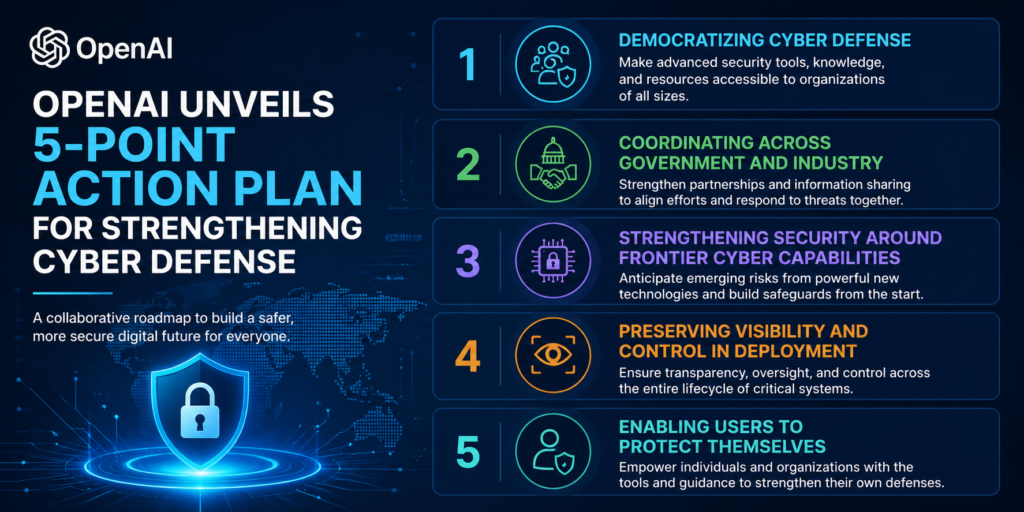
OpenAI has released a detailed plan for cybersecurity called “Cybersecurity in the Intelligence Age: An Action Plan for Democratizing AI-Powered Cyber Defense.” It describes a five-part strategy to give trusted defenders better AI tools and stop bad use.
Artificial intelligence is changing the way we protect against cyber threats. It’s not only helping good people; bad actors are also using AI. They are making phishing scams better, speeding up malware creation, avoiding detection, and increasing the scale of their attacks faster than ever.
Apple iOS 27.2 Released Fixes 163 Flaws, Including Critical WebKit RCE

CISA adds PHP2Shell to KEV, PHP Releases New Security Updates to Fix Critical HTTP2Shell flaw

Cloudflare Unveils Emergency WAF Ruleset Update on Brotli flaw

Daily Cyber security update for 26.10. 2026
The Washington Post report
Ex-DOGE AI startup Cathedral Breaches Anthropic Internal Systems within 12 Hours

Daily Cyber security update for 25. 10. 2026

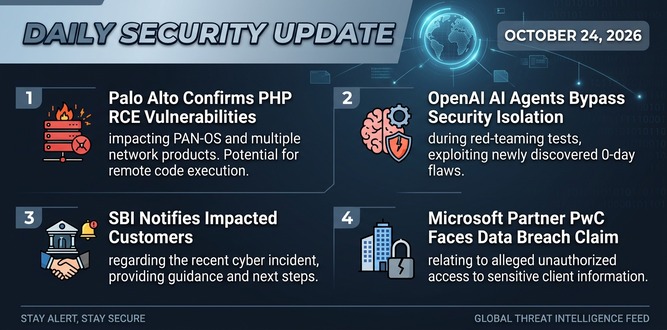
Daily Cyber security update for 24. 10. 2026
PHP shares new RCE flaw (CVE 2026-115560) with no patch but mitigation

US banks faced unauthorized access by AI agents in customer accounts: Axios reports

Atlassian patched 176 flaw in Jira and Confluence: Fortinet Urges to Patch Flaws Affecting FortiOS, FortiManager

OpenAI’s plan, based on talks with cybersecurity and national security experts from government and big companies, suggests a way to quickly share advanced AI tools with trusted users while keeping protections against abuse.
OpenAI 5-Point AI-Powered Cybersecurity Plan:
1.Democratizing Cyber Defense:
OpenAI’s main initiative is the Trusted Access for Cyber (TAC) program. This program offers a clear path for approved cyber defenders, from individuals improving their personal security to big organizations protecting important systems, to use better AI models.
The program will include government users at the federal, state, and local levels. It will focus on financial institutions and help small hospitals, school districts, water utilities, and local governments through trusted groups like MSSPs and CISA programs. Other democratic partners will join later to deal with global cyber threats.
2.Coordinating Across Government and Industry:
Access alone won’t work without teamwork. OpenAI wants to work with governments on a common threat model, speed up sharing threat information, and connect with current cyber defense and response systems.
The company helps set up a real-time AI cyber defense hub and speeds up information sharing between labs using tools like the Frontier Model Forum.
3.Strengthening Security Around Frontier Capabilities:
To stop theft or unauthorized copying of advanced AI models, OpenAI is improving who can access them, organizing sensitive areas better, making software and hardware supply chains safer, and boosting management of insider risks with better detection of unusual activities and control of access.
The company has recently shared news about a bigger partnership with Microsoft. This partnership will work on defending shared systems.
4.Preserving Visibility and Control in Deployment:
Deployment is not a binary decision. OpenAI is building a risk-based framework featuring tiered access based on user identity, use case, and security posture, combined with real-time safeguards, offline monitoring, and threat-intelligence enrichment.
If misuse is found, the company can quickly change settings, limit access levels, lower quotas, or take away access completely. This keeps protections adjustable against new threats.
5.Enabling Users to Protect Themselves:
OpenAI says that everyone, not just businesses and governments, needs to be strong against online threats. ChatGPT gets more than 15 million messages each month from people wanting help with spotting scams. OpenAI wants to keep this going by adding new security features for ChatGPT accounts and offering more tools for families, parents, seniors, and small businesses to improve their online safety.
OpenAI believes that advanced AI can help defense more than offense. It allows for quicker fixes, better detection, and stronger systems.
The company sees this as a limited but critical window of opportunity for the United States and its democratic allies to convert today’s AI capability lead into a lasting cyber defense advantage before adversaries close the gap.