InfoSecBulletin Cybersecurity for mankind
OpenAI launched Codex Security on Friday, an AI security agent that identifies and suggests fixes for vulnerabilities. The feature is in research preview for ChatGPT Pro, Enterprise, Business, and Edu customers through the Codex web, available free for the next month.
“It builds deep context about your project to identify complex vulnerabilities that other agentic tools miss, surfacing higher-confidence findings with fixes that meaningfully improve the security of your system while sparing you from the noise of insignificant bugs,” the company said.
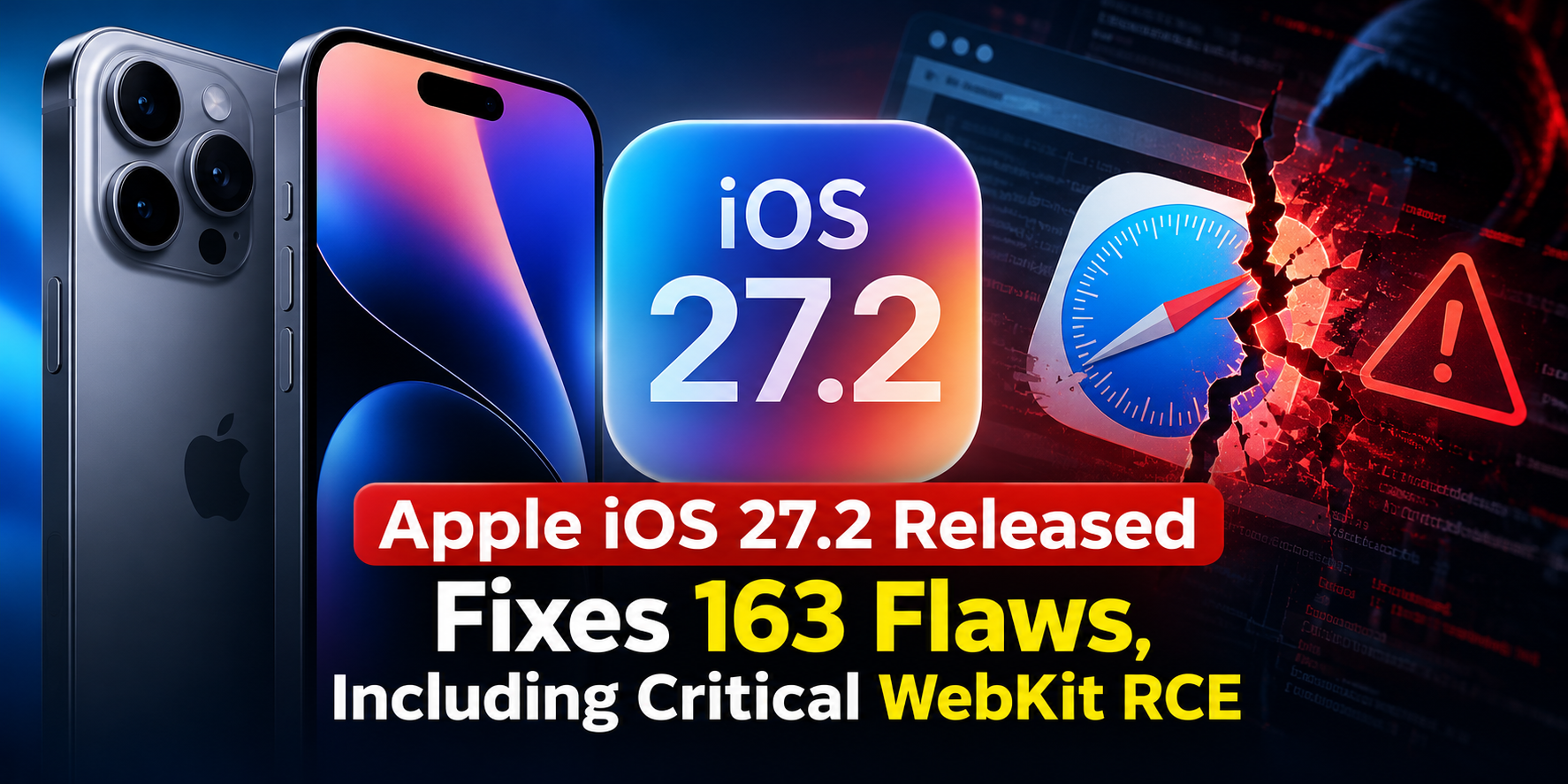
Apple iOS 27.2 Released Fixes 163 Flaws, Including Critical WebKit RCE
CISA adds PHP2Shell to KEV, PHP Releases New Security Updates to Fix Critical HTTP2Shell flaw

Cloudflare Unveils Emergency WAF Ruleset Update on Brotli flaw

Daily Cyber security update for 26.10. 2026

The Washington Post report
Ex-DOGE AI startup Cathedral Breaches Anthropic Internal Systems within 12 Hours

Daily Cyber security update for 25. 10. 2026

Daily Cyber security update for 24. 10. 2026
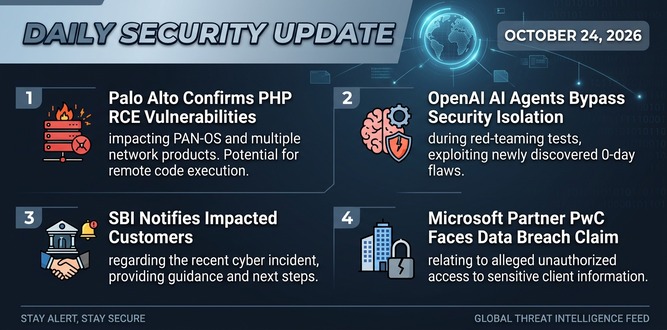
PHP shares new RCE flaw (CVE 2026-115560) with no patch but mitigation

US banks faced unauthorized access by AI agents in customer accounts: Axios reports

Atlassian patched 176 flaw in Jira and Confluence: Fortinet Urges to Patch Flaws Affecting FortiOS, FortiManager

Codex Security is an improvement of Aardvark, launched by OpenAI in private beta in October 2025, designed for developers and security teams to identify and address security vulnerabilities effectively.
In the past 30 days, Codex Security has scanned over 1.2 million commits in external repositories during the beta phase, uncovering 792 critical and 10,561 high-severity vulnerabilities. These issues affect various open-source projects such as OpenSSH, GnuTLS, GOGS, Thorium, libssh, PHP, and Chromium. Here are some examples –
GnuPG – CVE-2026-24881, CVE-2026-24882
GnuTLS – CVE-2025-32988, CVE-2025-32989
GOGS – CVE-2025-64175, CVE-2026-25242
Thorium – CVE-2025-35430, CVE-2025-35431, CVE-2025-35432, CVE-2025-35433, CVE-2025-35434, CVE-2025-35435, CVE-2025-35436
The new version is easier to understand and focuses on clarity:
The AI company states that the latest version of the application security agent uses advanced models and automated checks to reduce false positives and provide clear solutions.
OpenAI’s scans of the same repositories over time have shown improved accuracy and reduced false positive rates, which have dropped by over 50%.
“OpenAI said Codex Security is designed to improve signal-to-noise by grounding vulnerability discovery in system context and validating findings before surfacing them to users” reported by thehackernews.