 InfoSecBulletin Cybersecurity for mankind
Apple released security updates to fix a serious vulnerability exploited in zero-day attacks on Google Chrome users. CVE-2025-6558 is a security vulnerability caused by improper validation of untrusted input in the ANGLE (Almost Native Graphics Layer Engine). This open-source graphics layer manages GPU commands and converts OpenGL ES API calls to Direct3D, Metal, Vulkan, and OpenGL.
Remote attackers can exploit this vulnerability to execute arbitrary code in the browser’s GPU process using specially crafted HTML pages, which might allow them to break out of the sandbox protecting browser processes from the OS.
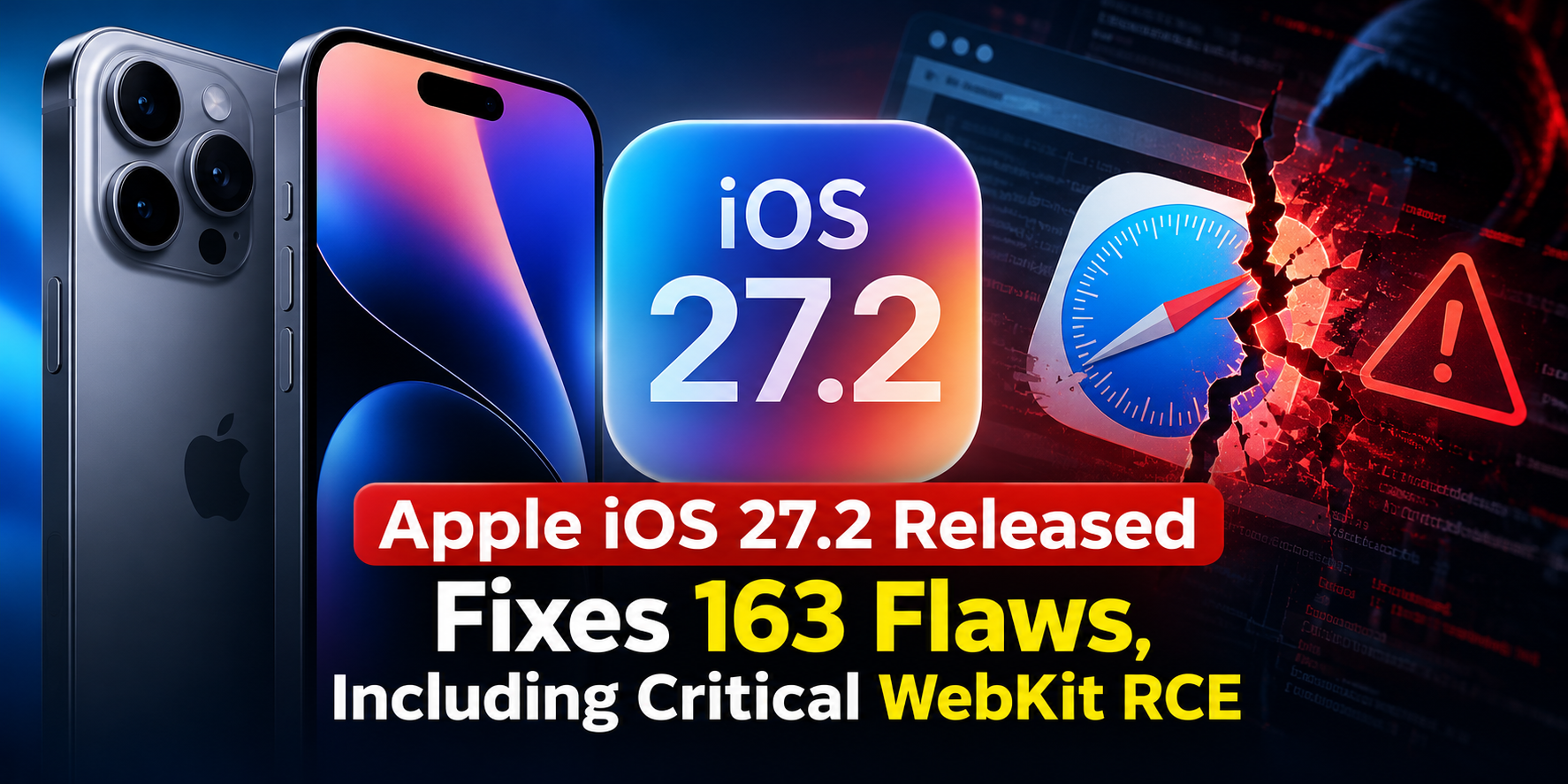
Apple iOS 27.2 Released Fixes 163 Flaws, Including Critical WebKit RCE
CISA adds PHP2Shell to KEV, PHP Releases New Security Updates to Fix Critical HTTP2Shell flaw

Cloudflare Unveils Emergency WAF Ruleset Update on Brotli flaw

Daily Cyber security update for 26.10. 2026

The Washington Post report
Ex-DOGE AI startup Cathedral Breaches Anthropic Internal Systems within 12 Hours
Daily Cyber security update for 25. 10. 2026

Daily Cyber security update for 24. 10. 2026
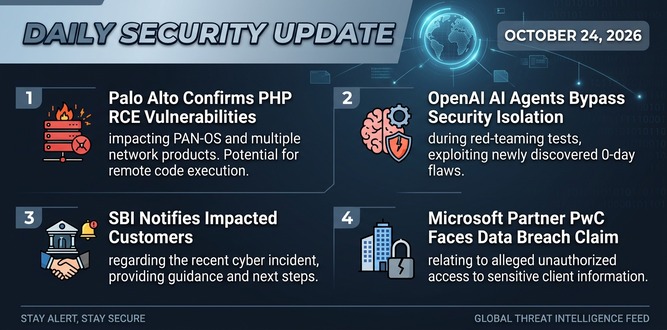
PHP shares new RCE flaw (CVE 2026-115560) with no patch but mitigation

US banks faced unauthorized access by AI agents in customer accounts: Axios reports

Atlassian patched 176 flaw in Jira and Confluence: Fortinet Urges to Patch Flaws Affecting FortiOS, FortiManager

Vlad Stolyarov and Clément Lecigne of Google’s Threat Analysis Group (TAG), a team of security experts dedicated to defending Google customers against state-sponsored attacks, discovered CVE-2025-6558 in June and reported it to the Google Chrome team, who patched it on July 15 and tagged it as actively exploited in attacks.
While Google has yet to provide further information on these attacks, Google TAG frequently discovers zero-day flaws exploited by government-sponsored threat actors in targeted campaigns aimed at deploying spyware on devices of high-risk individuals, including dissidents, opposition politicians, and journalists.
On Tuesday, Apple issued security updates for WebKit to fix the CVE-2025-6558 vulnerability.
iOS 18.6 and iPadOS 18.6: iPhone XS and later, iPad Pro 13-inch, iPad Pro 12.9-inch 3rd generation and later, iPad Pro 11-inch 1st generation and later, iPad Air 3rd generation and later, iPad 7th generation and later, and iPad mini 5th generation and later
macOS Sequoia 15.6: Macs running macOS Sequoia
iPadOS 17.7.9: iPad Pro 12.9-inch 2nd generation, iPad Pro 10.5-inch, and iPad 6th generation
tvOS 18.6: Apple TV HD and Apple TV 4K (all models)
visionOS 2.6: Apple Vision Pro
watchOS 11.6: Apple Watch Series 6 and later
“Processing maliciously crafted web content may lead to an unexpected Safari crash,” Apple explained when describing the impact of CVE-2025-6558 successful exploitation. “This is a vulnerability in open source code and Apple Software is among the affected projects.”
On July 22, the U.S. cyber defense agency also listed this security bug as being exploited in attacks, urging federal agencies to update their software by August 12.
BOD 22-01 requires federal agencies to secure their systems, but CISA urges all network defenders to quickly patch the CVE-2025-6558 vulnerability.
“These types of vulnerabilities are frequent attack vectors for malicious cyber actors and pose significant risks to the federal enterprise,” the cybersecurity agency warned last week.
Apple has fixed five zero-day vulnerabilities that were exploited in targeted attacks this year. These include one in January (CVE-2025-24085), one in February (CVE-2025-24200), one in March (CVE-2025-24201), and two in April (CVE-2025-31200 and CVE-2025-31201).