InfoSecBulletin Cybersecurity for mankind

Apache Software Foundation released Apache HTTP Server version 2.4.61 to fix a serious source code disclosure vulnerability (CVE-2024-39884). This flaw could expose sensitive server information to malicious actors.
The CVE-2024-39884 vulnerability is caused by a problem in how old content-type configurations are managed. The “AddType” directive and similar settings, when used in certain situations, may accidentally expose the source code of files meant to be processed, including server-side scripts, configuration files, or other sensitive data.
Daily Cyber security update for 24. 10. 2026
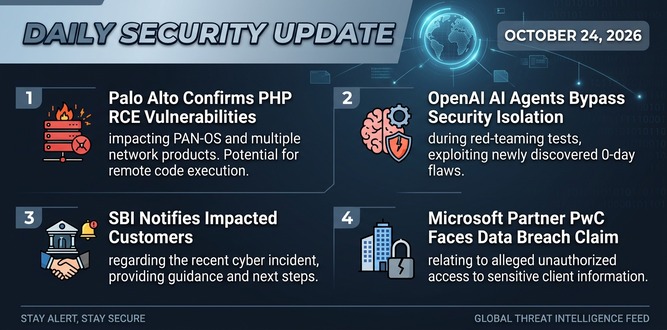
PHP shares new RCE flaw (CVE 2026-115560) with no patch but mitigation

US banks faced unauthorized access by AI agents in customer accounts: Axios reports

Atlassian patched 176 flaw in Jira and Confluence: Fortinet Urges to Patch Flaws Affecting FortiOS, FortiManager

Hacker claim to access Rajasthan Police data: 70,000 records allegedly exposed

Update now! PHP2Shell: Critical PHP vulnerabilities patched

Trump says data centres should pay dividends to local community

Hackers Actively Exploiting Palo Alto VPN Flaw Via CVE-2026-0257

DeepSeek AI banned by U.S. Government; federal agencies must remove all related tools

CISA, NSA and NIST Publish New 10 AI Agent Control Guidelines

While source code disclosure might seem like a technical concern, the implications can be far-reaching. Attackers could exploit this vulnerability to:
Gain a deeper understanding of the server environment: This could lead to more advanced cyberattacks aimed at exploiting specific software versions or configurations.
Identify vulnerabilities in the revealed code: This may result in additional attacks, possibly compromising the entire server or connected systems.
Steal sensitive data: If the code is exposed, it could lead to severe consequences.
The Apache team advises all users to upgrade from version 2.4.60 to 2.4.61. This update fixes a source code disclosure flaw and other vulnerabilities and bugs found in the previous version.
To learn about the vulnerabilities fixed in Apache HTTP Server 2.4.61, visit the official security advisory on the Apache website. Also, enhance your security by using web application firewalls, intrusion detection systems, and regular vulnerability scanning to protect against new threats.