InfoSecBulletin Cybersecurity for mankind
Threat actors are exploiting 3 new Windows security flaws in their attacks to get SYSTEM or higher administrator access. Since the beginning of the month, a security expert called “Chaotic Eclipse” or “Nightmare-Eclipse” has shared proof-of-concept exploit code for all three security problems.
Two of the flaws, called BlueHammer and RedSun, are in Microsoft Defender that let a user gain more privileges. The third one, named UnDefend, lets a regular user stop updates for Microsoft Defender.
Apple iOS 27.2 Released Fixes 163 Flaws, Including Critical WebKit RCE
CISA adds PHP2Shell to KEV, PHP Releases New Security Updates to Fix Critical HTTP2Shell flaw

Cloudflare Unveils Emergency WAF Ruleset Update on Brotli flaw

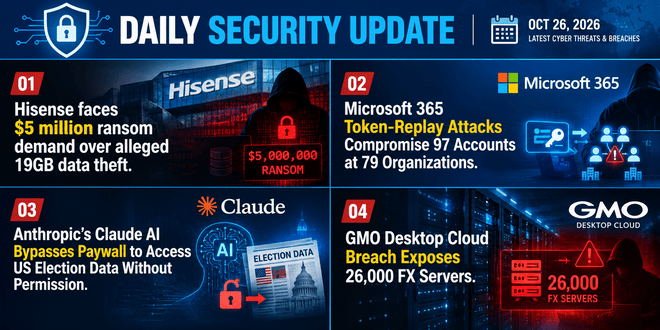
Daily Cyber security update for 26.10. 2026
The Washington Post report
Ex-DOGE AI startup Cathedral Breaches Anthropic Internal Systems within 12 Hours

Daily Cyber security update for 25. 10. 2026

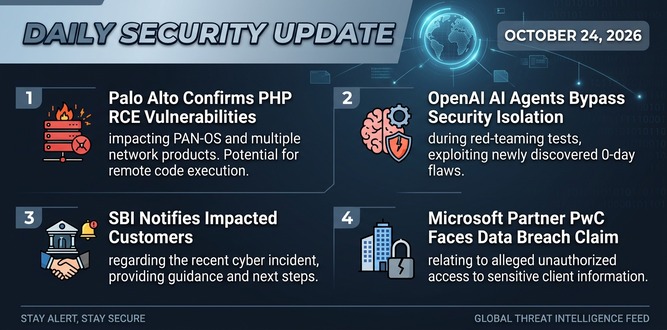
Daily Cyber security update for 24. 10. 2026
PHP shares new RCE flaw (CVE 2026-115560) with no patch but mitigation

US banks faced unauthorized access by AI agents in customer accounts: Axios reports

Atlassian patched 176 flaw in Jira and Confluence: Fortinet Urges to Patch Flaws Affecting FortiOS, FortiManager

At the time of the leak, the security flaws these exploits targeted were considered zero-days by Microsoft’s definition, since they had no official patches or updates to address them.
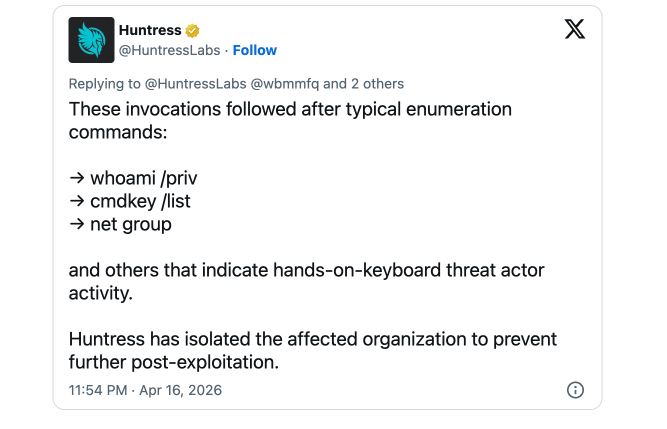
Huntress Labs security researchers saw all three zero-day exploits being used in real life on Thursday. The BlueHammer flaw has been used since April 10.
They also spotted UnDefend and RedSun exploits on a Windows device that was breached using a compromised SSLVPN user, in attacks showing evidence of “hands-on-keyboard threat actor activity.”
“The Huntress SOC is observing the use of Nightmare-Eclipse’s BlueHammer, RedSun, and UnDefend exploitation techniques,” the researchers said.
Patch Status and Mitigations:
Attackers can use the RedSun exploit to get SYSTEM privileges on Windows 10, Windows 11, and Windows Server 2019 and newer. This can happen when Windows Defender is on, even after the April Patch Tuesday updates.
“When Windows Defender realizes that a malicious file has a cloud tag, for whatever stupid and hilarious reason, the antivirus that’s supposed to protect decides that it is a good idea to just rewrite the file it found again to it’s original location,” the researcher explained. “The PoC abuses this behaviour to overwrite system files and gain administrative privileges.”
“Microsoft has a customer commitment to investigate reported security issues and update impacted devices to protect customers as soon as possible,” a Microsoft spokesperson told Bleeping Computer earlier this week when contacted for more information on the disclosure issues reported by the anonymous researcher.
“We also support coordinated vulnerability disclosure, a widely adopted industry practice that helps ensure issues are carefully investigated and addressed before public disclosure, supporting both customer protection and the security research community.”