 InfoSecBulletin Cybersecurity for mankind

The government and Bangladesh Telecommunication Regulatory Commission (BTRC) have received credible information that some companies of Bangladesh Internet Service Providing (ISP) sector are trying to destroy the networks and businesses of rival ISPs through DDoS (Distributed Denial of Service) attacks organized from abroad according to Faiz Ahmad Taiyeb adviser (Ministry of Posts, Telecommunications & ICT) Government of Bangladesh.
He said, We have received the names of the responsible companies and Punitive measures are coming against the owners of companies involved in criminal activities, they will not get a chance in the new licensing process and he threatned involved companies current licenses may also be canceled.
Hackers Actively Exploiting Palo Alto VPN Flaw Via CVE-2026-0257

DeepSeek AI banned by U.S. Government; federal agencies must remove all related tools
CISA, NSA and NIST Publish New 10 AI Agent Control Guidelines
Claude AI Cracks 25-Year NSA Cryptography Number Mystery in Just 30 Minutes

Bypassing firewalls, AI Agents Accessed Indian ‘ Data Without Permission: CERT-In
MITRE ATT&CK v20 Unveils 9 New Attack Techniques On AI Exploits, MFA Bypass, and CAPTCHA Evasion

Hackers Exploit Fortinet Flaws to Deploy Stealthy PEERSTITCH Malware on FortiGate Firewalls

Hacker stole Meta GitHub repos; Stole Source Code

Urgent patch! Zoom,NVIDIA and IBM Patch 41 Security flaws

Microsoft patches record braking 1411 flaws; 2 zero days
According to the Cyber Security Act of Bangladesh, illegal entry, hacking, or intentional disruption of service to any network is a serious crime.
On the other hand, many ISP companies are in the process of renewing licenses or transferring shares – the main reason for this is huge arrears. Those who have purchased bandwidth from government or private companies and shifted to other ITCs or IIGs without paying will not have their licenses renewed.
In addition, some companies closely associated with the former government have committed check bouncing fraud by issuing fake checks to government institutions in the name of crores of taka in debt.
He said, Preparations are underway to file legal action and cases against these serious financial crimes. No license will be renewed while the dues are unpaid.
He requested all ISPs in the country to:
🔹 Quickly set up anti-DDoS and install load-balancers.
🔹 Make appropriate investments in network security.
and Stop targeted unfair behavior to stop or limit competition.
He advised, do not hide the names of DDoS attackers rather, the victims should come together and file a case, if you file a case, the government will be able to provide institutional support to curb the crime.
BTRC will catch the attackers, and you will also invest adequately to secure your own infrastructure. By working together, we will make the internet service sector of Bangladesh more orderly and secure, he added.
Secretery general of Internet provider association of Bangladesh (ISPAB) Nazmul Karim Bhuiyan said, “We do not trace any ISP institiution till now to involve such crime but we still monitoring the situation. It attack may happen from the top tier”
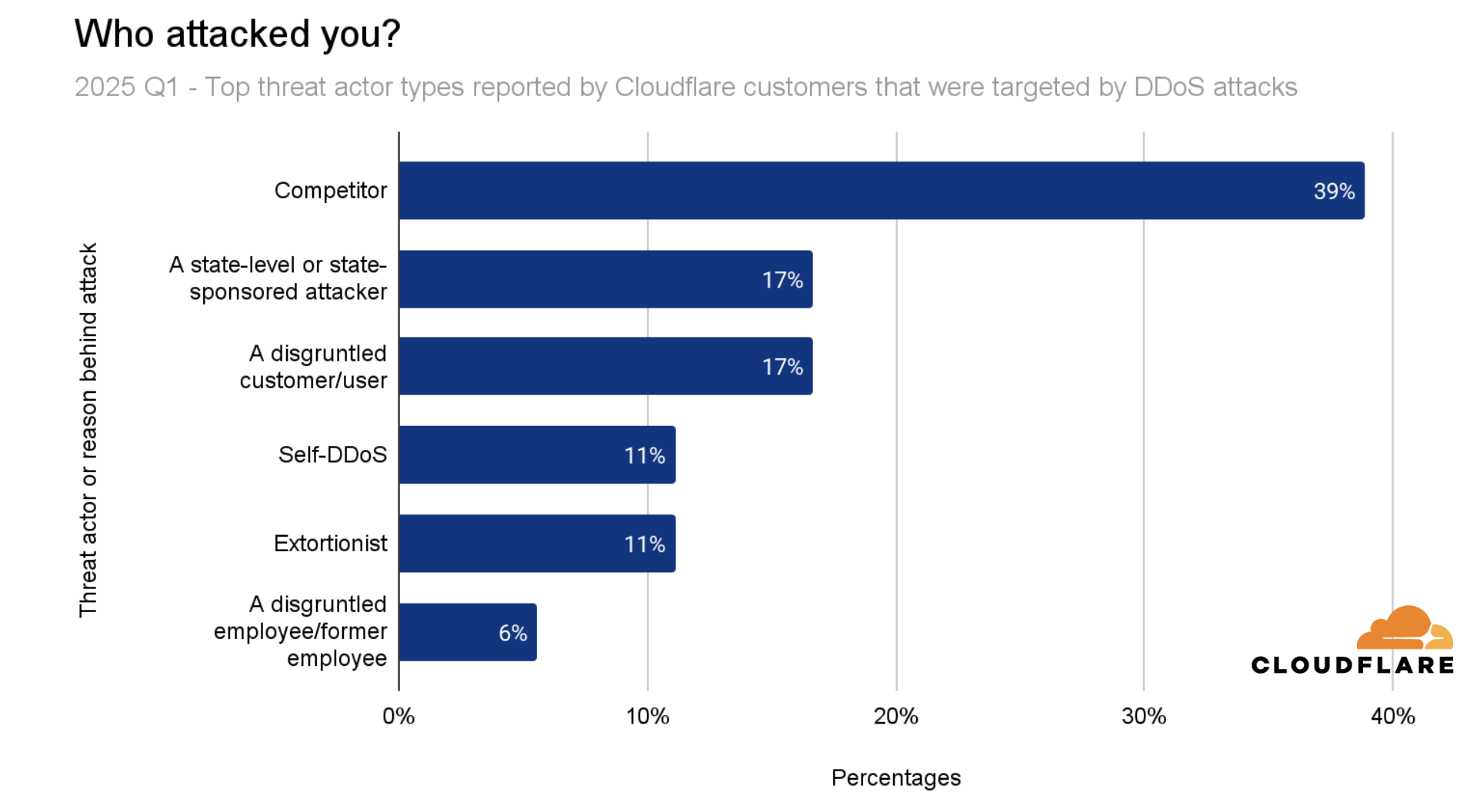
Accroding to the cloud flare Q1 2025 report, business competitors are the number one threat actor behind the attacks (39%), which is similar to last quarter as Q4 2024.
In the meantime, Radware customer faced a 20 gb DDoS attack per month in Bangladesh as per the officials.
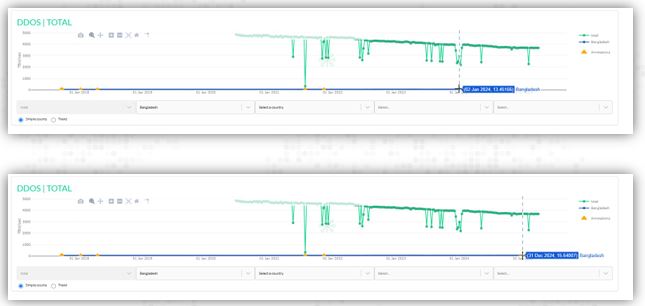
Bangladesh cybersecurity watchdog BGD e-GOV CIRT reports titled “BANGLADESH CYBER THREAT LANDSCAPE, 2024” that in 2024, hacktivists mainly used DDoS attacks to disrupt targeted operations. The frequency of these attacks remained steady throughout the year, with January seeing 13.45 Tbit/sec and December at 15.64 Tbit/sec.
According to published report on (8, November-2024) titled “DDoS Storm Hits Bangladesh: Cyberattacks Surge 105%” Bangladesh was spotlighted as one of the countries experiencing the steepest rise in cyber incidents worldwide, with a reported 105% increase from the second to the third quarter of 2024. This surge in incidents highlights the country’s growing cybersecurity challenges, placing it second only to Japan (108%) and closely followed by France (130%) in percentage growth.
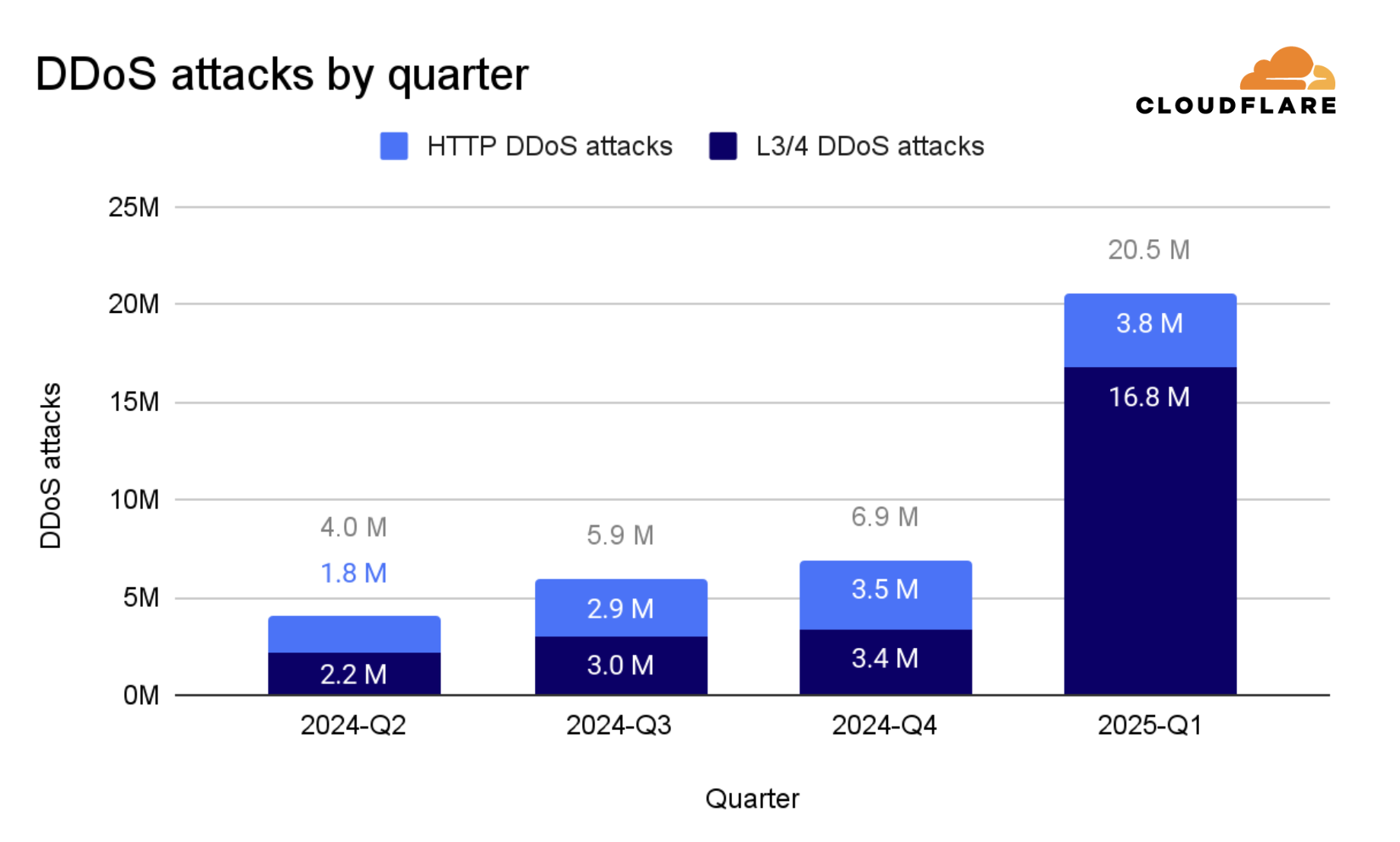
Source: Cloudflare
Cloudflare reported blocking 20.5 million DDoS attacks in the first quarter of 2025 alone, a 358% year-over-year increase. This volume equates to an average of over 227,000 attacks per day across their network for that period. They also noted that in 2024, they blocked an average of 4,870 attacks every hour.