InfoSecBulletin Cybersecurity for mankind

A newly found vulnerability (CVE-2025-7206) in the D-Link DIR-825 router firmware version 2.10 poses a significant risk to home and business networks. Discovered by security researcher iC0rner, it enables remote attackers to crash the router’s web interface without needing authentication, which could lead to remote code execution or denial-of-service attacks.
“The manipulation of the argument Language leads to stack-based buffer overflow,” the CVE description writes, giving the issue a CVSS score of 9.8.
Daily Cyber security update for 25. 10. 2026

Daily Cyber security update for 24. 10. 2026
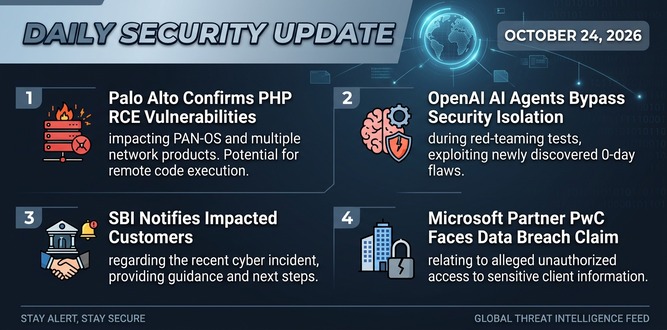
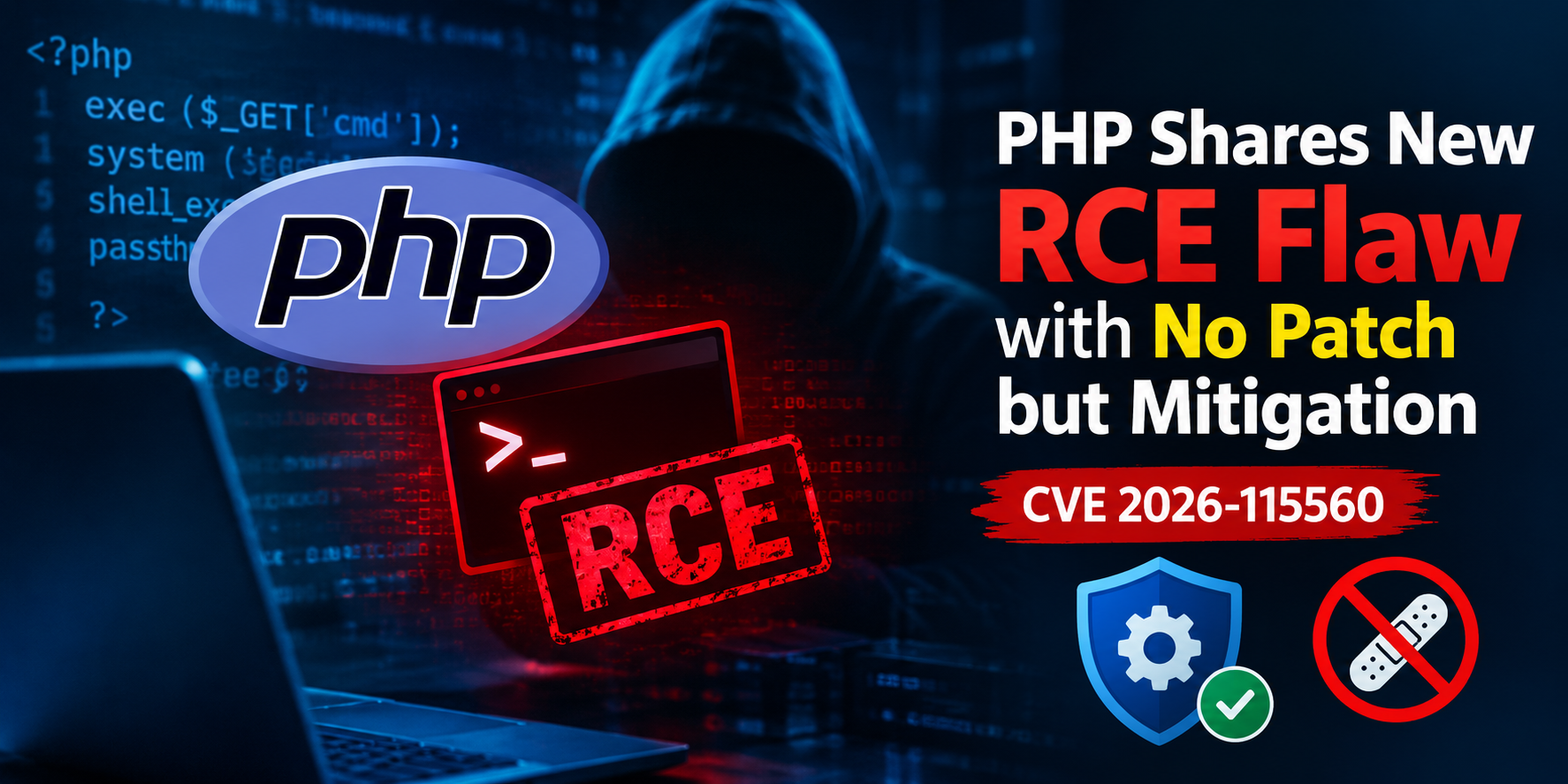
PHP shares new RCE flaw (CVE 2026-115560) with no patch but mitigation
US banks faced unauthorized access by AI agents in customer accounts: Axios reports

Atlassian patched 176 flaw in Jira and Confluence: Fortinet Urges to Patch Flaws Affecting FortiOS, FortiManager

Hacker claim to access Rajasthan Police data: 70,000 records allegedly exposed

Update now! PHP2Shell: Critical PHP vulnerabilities patched

Trump says data centres should pay dividends to local community

Hackers Actively Exploiting Palo Alto VPN Flaw Via CVE-2026-0257

DeepSeek AI banned by U.S. Government; federal agencies must remove all related tools

The flaw lies in the switch_language.cgi part of D-Link’s web server (httpd). Here’s its operation:
An attacker sends a maliciously long Language parameter via the CGI script.
This parameter is stored in non-volatile memory (nvram).
When the router later renders any ASP page (e.g., login.asp) that includes a JavaScript reference like
“<script type=“text/javascript” src=“lang_<% CmoGetCfg(“language“,”none“); %>.js”></script>”
the system attempts to dynamically fetch and parse the language file name.
The stored Language value flows through several internal functions — sub_40bFC4, v65, v61, v69, and eventually v67.
No proper bounds checking is applied, allowing an out-of-bounds write to occur.
This causes a segmentation fault, crashing the router’s httpd service.
“If the overflow length is insufficient, it will also affect the program’s execution,” the researcher noted, implying that partial corruption may also lead to instability or unpredictable behavior.
To exploit the flaw:
Set a long Language parameter via switch_language.cgi.
Access any page such as login.asp that references the dynamic language JavaScript.
The overflow is triggered in the background, crashing the process.
This is a zero-click attack vector once the initial parameter is set — the user merely needs to visit a common router page for the crash to occur.
The D-Link DIR-825 is widely used in residential, small business, and public Wi-Fi environments. While this vulnerability currently causes a segmentation fault (crash), any stack-based buffer overflow could potentially lead to remote code execution (RCE) in future exploit chains.