InfoSecBulletin Cybersecurity for mankind

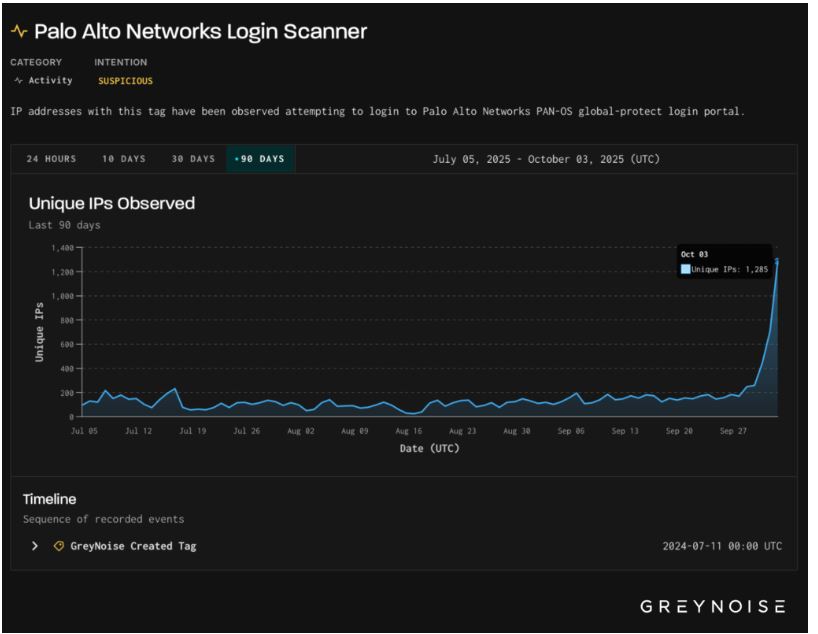
On October 3, 2025, GreyNoise noted a 500% increase in scans aimed at Palo Alto Networks login portals, the highest activity level in three months. Researchers found that more than 1,285 IPs scanned Palo Alto portals, an increase from the typical 200. They noted that 93% of these IPs were suspicious, while 7% were malicious.
Critical cPanel, GitLab AI Gateway and Dell CSM Flaws Enable RCE And Admin Hijacking

Nearly 100,000 email addresses exposed in first AI-related data breach in Singapore

Hackers Exploit Zimbra Mail Servers: TeamViewer patched 5 critical flaws

Google Warns of Hackers Actively Exploiting Citrix 0-Day Flaws

CISA Warns Critical MikroTik RouterOS Flaw While Cisco SD-WAN Zero-Day Exploited in Attacks

Apple Zero-Day Exploited: Pentagon Data Breach Reportedly Exposes Sensitive Data of 3 Million People

JadePuffer Agentic AI targets and destroys Azure’s cloud resources

“InfoSecCon-2026: Bangladesh’s Cybersecurity Leaders Unite to Shape a Safer Digital Future”

Microsoft Patches CVSS 10.0 Azure AI Foundry Vulnerability Allowing Privilege Escalation

AWS is unable to restore access to Bahrain, one UAE cloud data zone after war damage

Most originated from the U.S., with smaller clusters in the U.K., Netherlands, Canada, and Russia. GryNoise targeted specific traffic aimed at Palo Alto login portals, organized into separate scanning clusters.
The scans focused on emulated Palo Alto profiles in U.S. and Pakistan systems, showing organized reconnaissance efforts.
GreyNoise discovered that recent scanning of Palo Alto resembles Cisco ASA activity, indicating regional clustering and shared TLS fingerprints related to infrastructure in the Netherlands. Both utilized similar tools, hinting at potential shared infrastructure or operators. This overlap occurs after a surge in Cisco ASA scanning before two zero-day vulnerabilities were revealed.
“Both Cisco ASA and Palo Alto login scanning traffic in the past 48 hours share a dominant TLS fingerprint tied to infrastructure in the Netherlands. This comes after GreyNoise initially reported an ASA scanning surge before Cisco’s disclosure of two ASA zero-days.” reads the report published by Grey Noise. “In addition to a possible connection to ongoing Cisco ASA scanning, GreyNoise identified concurrent surges across remote access services. While suspicious, we are unsure if this activity is related. “
GreyNoise observed in July that increases in Palo Alto scans sometimes happened before new flaws appeared within six weeks; The experts are monitoring if the latest surge signals another disclosure.
“GreyNoise is developing an enhanced dynamic IP blocklist to help defenders take faster action on emerging threats.” concludes the report.