InfoSecBulletin Cybersecurity for mankind

Palo Alto Networks released a security advisory about a DoS vulnerability in its PAN-OS software, particularly in the Advanced DNS Security feature. The vulnerability, identified as CVE-2026-0229, has a CVSSv4 score of 6.6 and may allow unauthenticated attackers to cause firewalls to restart repeatedly, leading to maintenance mode.
The vulnerability highlights the fragility of specialized security features when faced with malformed data. By sending a “maliciously crafted packet,” an attacker can trigger a system crash without ever logging in.
Cloudflare Unveils Emergency WAF Ruleset Update on Brotli flaw

Daily Cyber security update for 26.10. 2026

The Washington Post report
Ex-DOGE AI startup Cathedral Breaches Anthropic Internal Systems within 12 Hours

Daily Cyber security update for 25. 10. 2026

Daily Cyber security update for 24. 10. 2026
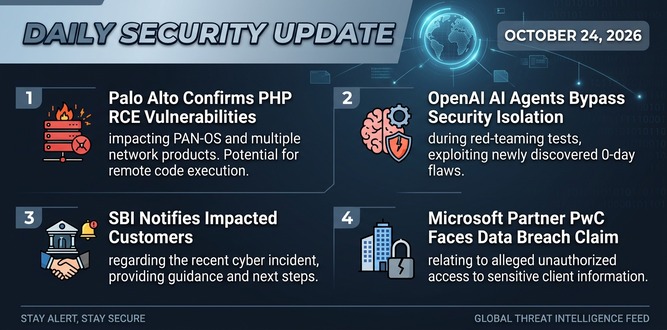
PHP shares new RCE flaw (CVE 2026-115560) with no patch but mitigation

US banks faced unauthorized access by AI agents in customer accounts: Axios reports

Atlassian patched 176 flaw in Jira and Confluence: Fortinet Urges to Patch Flaws Affecting FortiOS, FortiManager

Hacker claim to access Rajasthan Police data: 70,000 records allegedly exposed

Update now! PHP2Shell: Critical PHP vulnerabilities patched

The vulnerability comes from the way the ADNS feature handles certain network packets. The advisory explains the mechanism of the attack simply: “A denial-of-service (DoS) vulnerability in the Advanced DNS Security (ADNS) feature of Palo Alto Networks PAN-OS® software enables an unauthenticated attacker to initiate system reboots using a maliciously crafted packet.”.
Not all Palo Alto Networks firewalls are vulnerable; the risk depends on specific configurations.
ADNS Enabled: The firewall must have the Advanced DNS Security feature turned on.
Spyware Profile: It must also have a spyware profile configured with actions set to “block, sinkhole, or alert (i.e., any non-allow value)”.
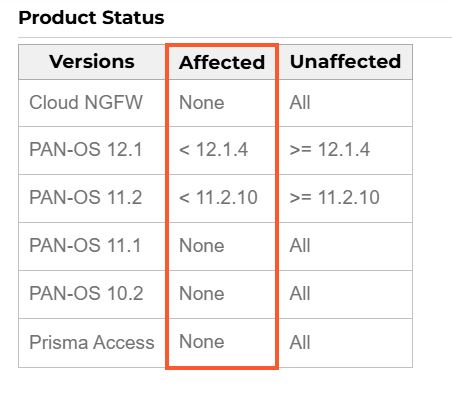
If these conditions are met, the system is vulnerable. Fortunately, Cloud NGFW and Prisma Access are not impacted by this issue. Palo Alto Networks has issued patches for the affected PAN-OS versions.
Administrators should check their software version and apply the following updates:
PAN-OS 12.1: Upgrade to 12.1.4 or later (Affected: < 12.1.4).
PAN-OS 11.2: Upgrade to 11.2.10 or later (Affected: < 11.2.10).
Versions 11.1, 10.2, and Prisma Access are completely unaffected.