InfoSecBulletin Cybersecurity for mankind
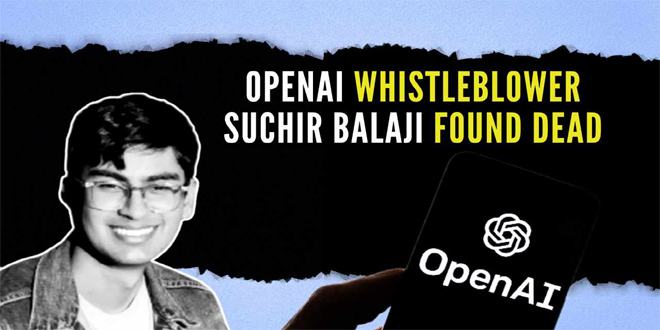
A whistleblower from OpenAI, Suchir Balaji, an Indian-American ex-researcher at OpenAI who criticized the company’s practices, was found dead in his San Francisco apartment on November 26. Anandabazar said, Primarily the police suspect it to be a case of suicide.
Balaji, who left OpenAI in August after four years, was a key figure voicing concerns about using copyrighted materials to train generative AI models like ChatGPT.
Anthropic unveils “OSS Scanner” Free AI Vulnerability Scanner for Open-Source Projects

Rise on RCE Exploits Targeting Hikvision Camera Flaw

FortiBleed Attack Compromised 80,000+ Devices, SonicWall Patches 4 SMA1000 Flaws CVSS 10

Critical Atlassian & IBM Flaws Expose Files and Enable Remote Code Execution

Citrix NetScaler SAML 0-Day Flaw Under Attack

Major Danish university breached, 200,000 users at risk

Microsoft’s X account hijacked to promote Clippy crypto scam

Critical cPanel, GitLab AI Gateway and Dell CSM Flaws Enable RCE And Admin Hijacking

Nearly 100,000 email addresses exposed in first AI-related data breach in Singapore

Hackers Exploit Zimbra Mail Servers: TeamViewer patched 5 critical flaws

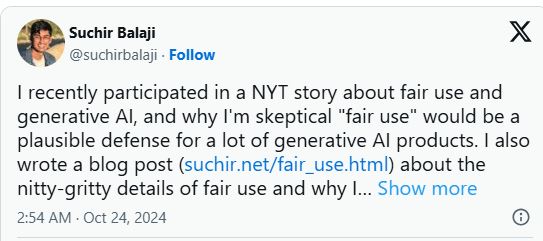
“I recently participated in a New York Times story about fair use and generative AI, and why I’m sceptical ‘fair use’ would be a plausible defence for a lot of generative AI products. I also wrote a blog post about the nitty-gritty details of fair use and why I believe this,” Balaji had written on X.
In an interview with the New York Times, Balaji criticized OpenAI’s data collection methods as harmful. He stated, “If you believe what I believe, you must leave the company,” highlighting his worries about GPT-4 being trained on vast amounts of internet data.
Balaji expressed concerns that generative AI could create outputs that compete with the original copyrighted works it was trained on. In a blog post referenced by the Chicago Tribune, he stated, “No known factors support ChatGPT being a fair use of its training data.”.” He noted that this issue extended beyond OpenAI, saying, “Fair use and generative AI is a much broader issue than any one product or company.”

Lawsuits against OpenAI, including from The New York Times, allege that the company violates copyright laws. Balaji is mentioned in court documents as having important information relevant to the cases.
OpenAI has repeatedly denied these allegations, according to a statement reported by the Chicago Tribune, the company said, “We see immense potential for AI tools like ChatGPT to deepen publishers’ relationships with readers and enhance the news experience.”
In the past two years, numerous individuals and businesses have sued AI companies like OpenAI, claiming they used copyrighted material without permission for training. In December, The New York Times filed a lawsuit against OpenAI and Microsoft, alleging they used millions of the Times’ articles to develop competing chatbots. Both companies deny the allegations.