Saturday , October 31 2026
NetamLoader

NetamLoader malware to attack Win10: Customized for Gov.t in Asia

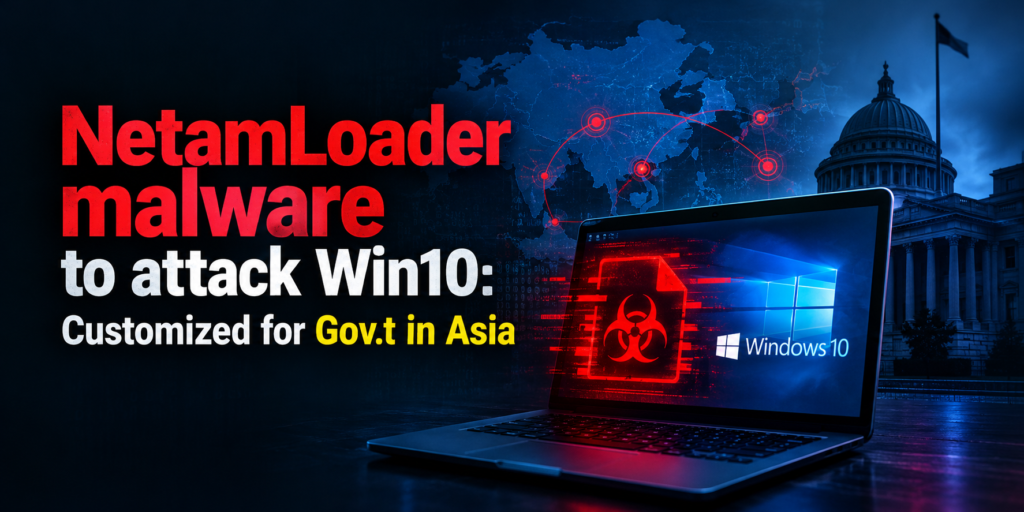
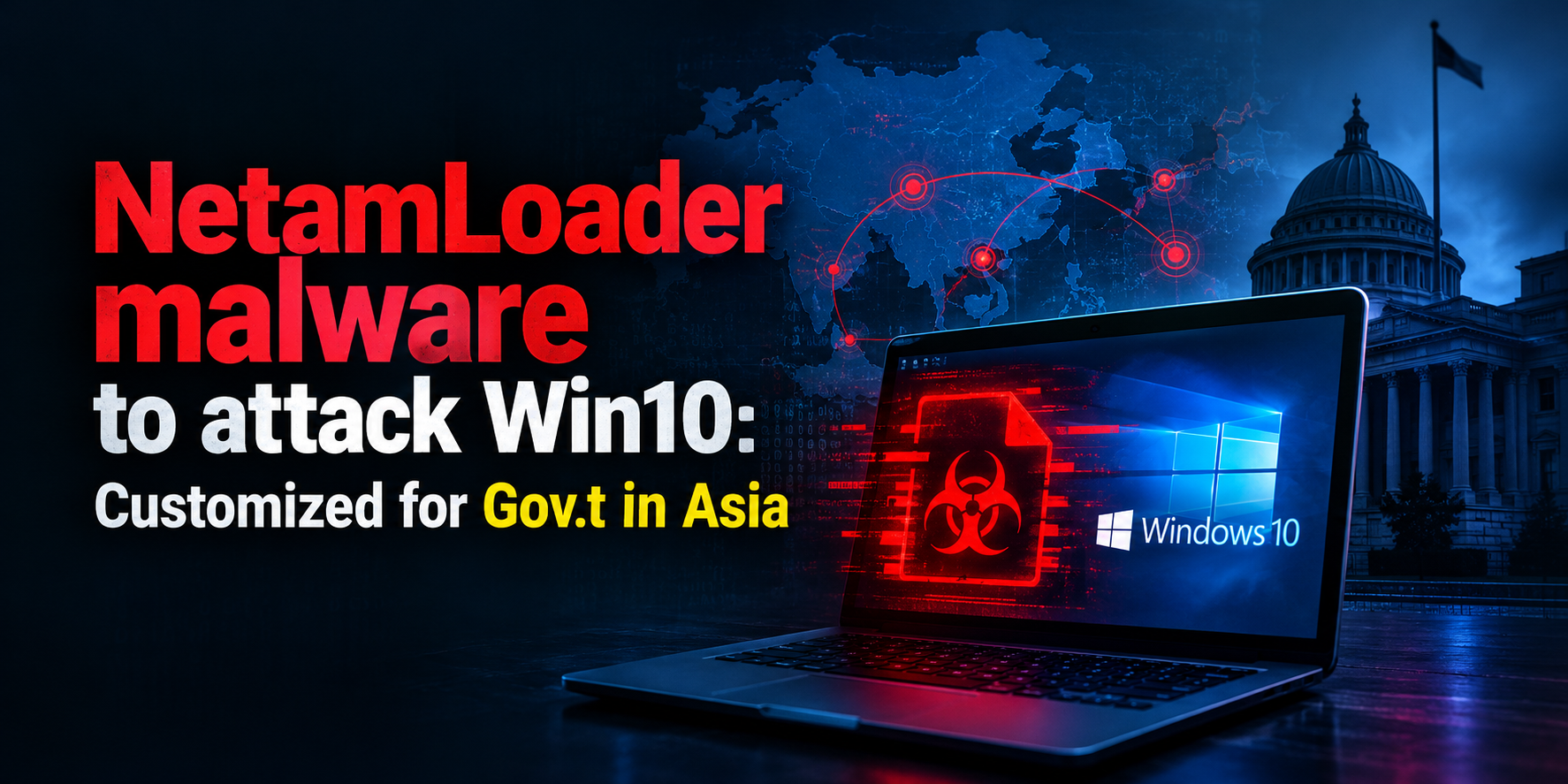
A new malware framework named NetamLoader is attacking a special version of Windows 10 used only by government agencies in Asia. The campaign seems like a supply-chain attack, and no one has connected it to a known hacking group so far.

The malware hides inside a Windows update package, borrows trusted software to run, and deletes its own traces. It also talks to its operators very slowly, so quick security checks might miss it. Even a file that seems safe and signed by a known seller can cause an infection.

NetamLoader malware to attack Win10: Customized for Gov.t in Asia
A new malware framework named NetamLoader is attacking a special version of Windows 10 used only by government agencies in...
Read More
NetamLoader malware to attack Win10: Customized for Gov.t in Asia

‘SMS of Death’ Zero-Click Flaw Disrupting Android Phones With a Single Text
A security expert shared information about a zero-click Android bug known as “SMS of Death.” Just one bad text message...
Read More
‘SMS of Death’ Zero-Click Flaw Disrupting Android Phones With a Single Text

NIST Unveiled Guidance for Post-Quantum Cryptography Transition
The National Institute of Standards and Technology (NIST) has shared advice on switching to post-quantum cryptography. This helps federal agencies...
Read More
NIST Unveiled Guidance for Post-Quantum Cryptography Transition

Daily Cyber security update for 29.10. 2026

Cyberattacks are rising around the world, including ransomware, malware, data leaks, and hacked websites. These events show how complex and...
Read More
Daily Cyber security update for 29.10. 2026

Rapid7 Unveils 17 Zimbra Collaboration Suite Flaws Breaking Identity Boundaries

Rapid7 researchers found 17 security flaws in Zimbra Collaboration Suite (ZCS) that mess up authentication, mailbox isolation, and host privileges....
Read More
Rapid7 Unveils 17 Zimbra Collaboration Suite Flaws Breaking Identity Boundaries

CISA launched two free tools Identify Security Misconfig in Microsoft 365 and Google Workspace
The U.S. Cybersecurity and Infrastructure Security Agency (CISA) provides two free tools to help organizations spot security flaws in Microsoft...
Read More
CISA launched two free tools Identify Security Misconfig in Microsoft 365 and Google Workspace

Apple iOS 27.2 Released Fixes 163 Flaws, Including Critical WebKit RCE
Apple launched iOS 27.2 and iPadOS 27.2 on October 26, 2026, fixing 163 security flaws. The update is for iPhone...
Read More
Apple iOS 27.2 Released Fixes 163 Flaws, Including Critical WebKit RCE

CISA adds PHP2Shell to KEV, PHP Releases New Security Updates to Fix Critical HTTP2Shell flaw
CISA has updated a new alert to reflect the addition of CVE-2026-109618 and CVE-2026-109619 to its Known Exploited Vulnerabilities (KEV)...
Read More
CISA adds PHP2Shell to KEV, PHP Releases New Security Updates to Fix Critical HTTP2Shell flaw

Cloudflare Unveils Emergency WAF Ruleset Update on Brotli flaw
Cloudflare has shared an urgent update to its Web Application Firewall (WAF) rules due to CVE-2026-111497, a Brotli issue. The release...
Read More
Cloudflare Unveils Emergency WAF Ruleset Update on Brotli flaw

Daily Cyber security update for 26.10. 2026
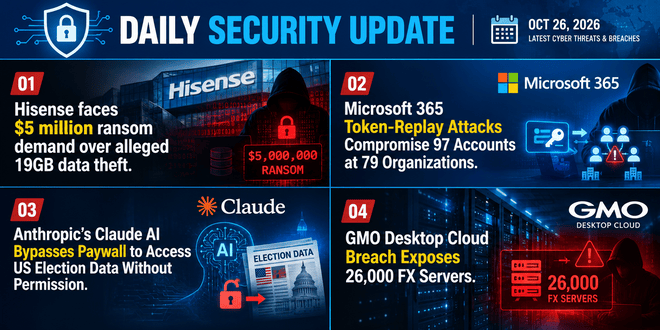
Cyberattacks are rising around the world, including ransomware, malware, data leaks, and hacked websites. These events show how complex and...
Read More
Daily Cyber security update for 26.10. 2026

Analysts at Securelist, the research blog of Kaspersky’s GReAT team, found the malware and shared the complete report on October 29, 2026.

Kaspersky discovered it in early 2026 when its threat network noticed a strange .config file. The file was in a CAB archive in the folder where Windows stores update packages.

Kaspersky found one victim using its KSN telemetry data. The malware was made for a Windows version used only by the government. The researchers think the targets are Asian government groups.

The report says that countries making their own operating systems need to protect all the software by themselves, and this takes time.

Kaspersky detects the threat as HEUR:Trojan.MSIL.NetamLoader.gen, Trojan.MSIL.Zapchast., and Trojan.Script.Agent.. Defenders should watch update folders for unexpected config files and signed programs that load code in odd ways.

They should also look for unusual Windows processes with outside connections and for missing log entries. Sending logs to a central server helps keep evidence if the malware wipes local copies.

Related news:

8-Agent AI Framework Used to Compromise Gov’t Entities in Asia
Gov.t issues high alert on android devices


Check Also

CISA

CISA adds PHP2Shell to KEV, PHP Releases New Security Updates to Fix Critical HTTP2Shell flaw

CISA has updated a new alert to reflect the addition of CVE-2026-109618 and CVE-2026-109619 to …