InfoSecBulletin Cybersecurity for mankind

A recent phishing attack aimed at FortiClient Endpoint Management Server (EMS) has used trusted admin systems to quietly install a new password thief on company devices.
In May 2026, Arctic Wolf researchers found a group of bad actions using CVE-2026-35616, a flaw in FortiClient EMS that allows improper access.
CISA, NSA and NIST Publish New 10 AI Agent Control Guidelines
Claude AI Cracks 25-Year NSA Cryptography Number Mystery in Just 30 Minutes

Bypassing firewalls, AI Agents Accessed Indian ‘ Data Without Permission: CERT-In
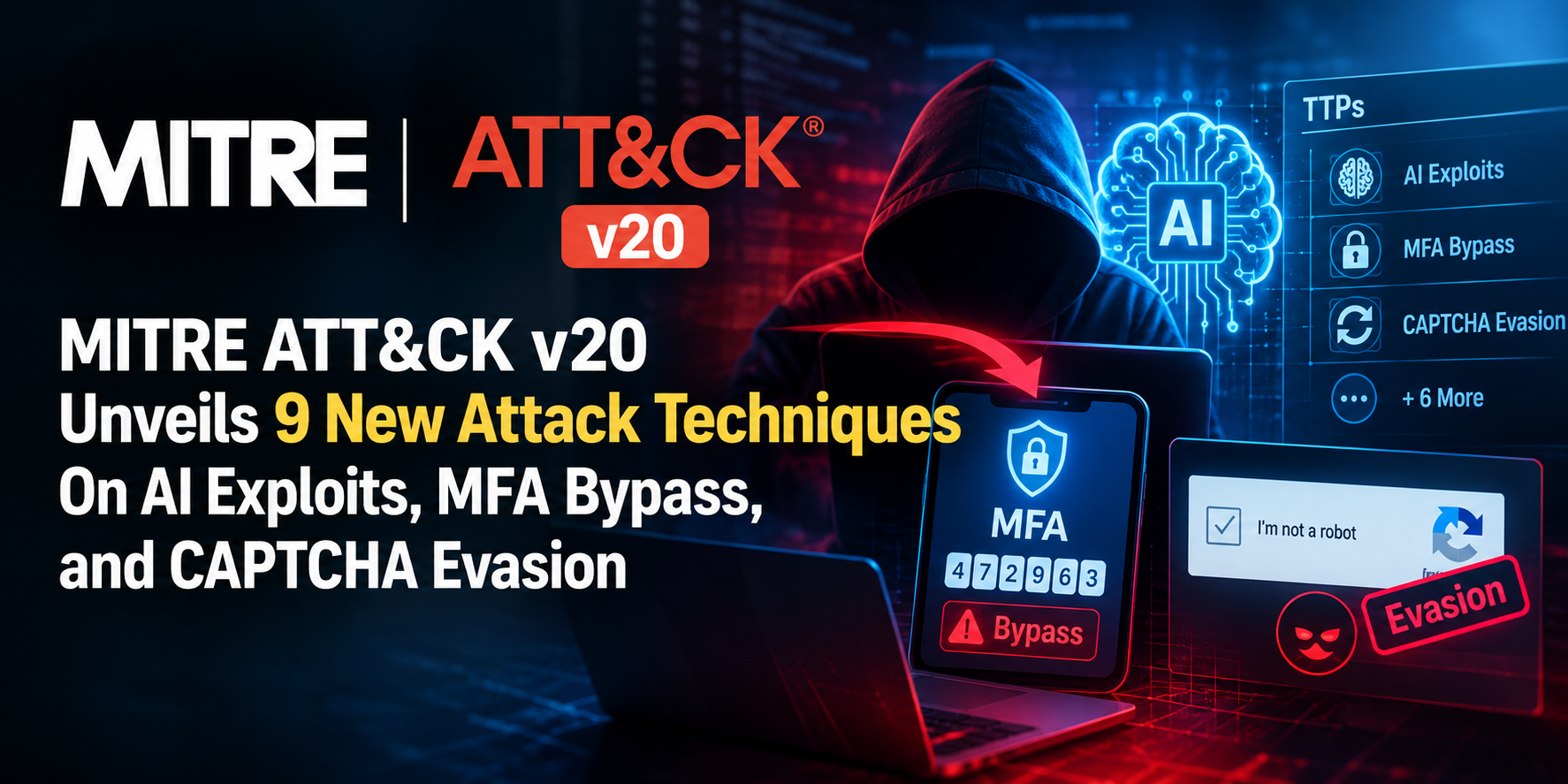
MITRE ATT&CK v20 Unveils 9 New Attack Techniques On AI Exploits, MFA Bypass, and CAPTCHA Evasion
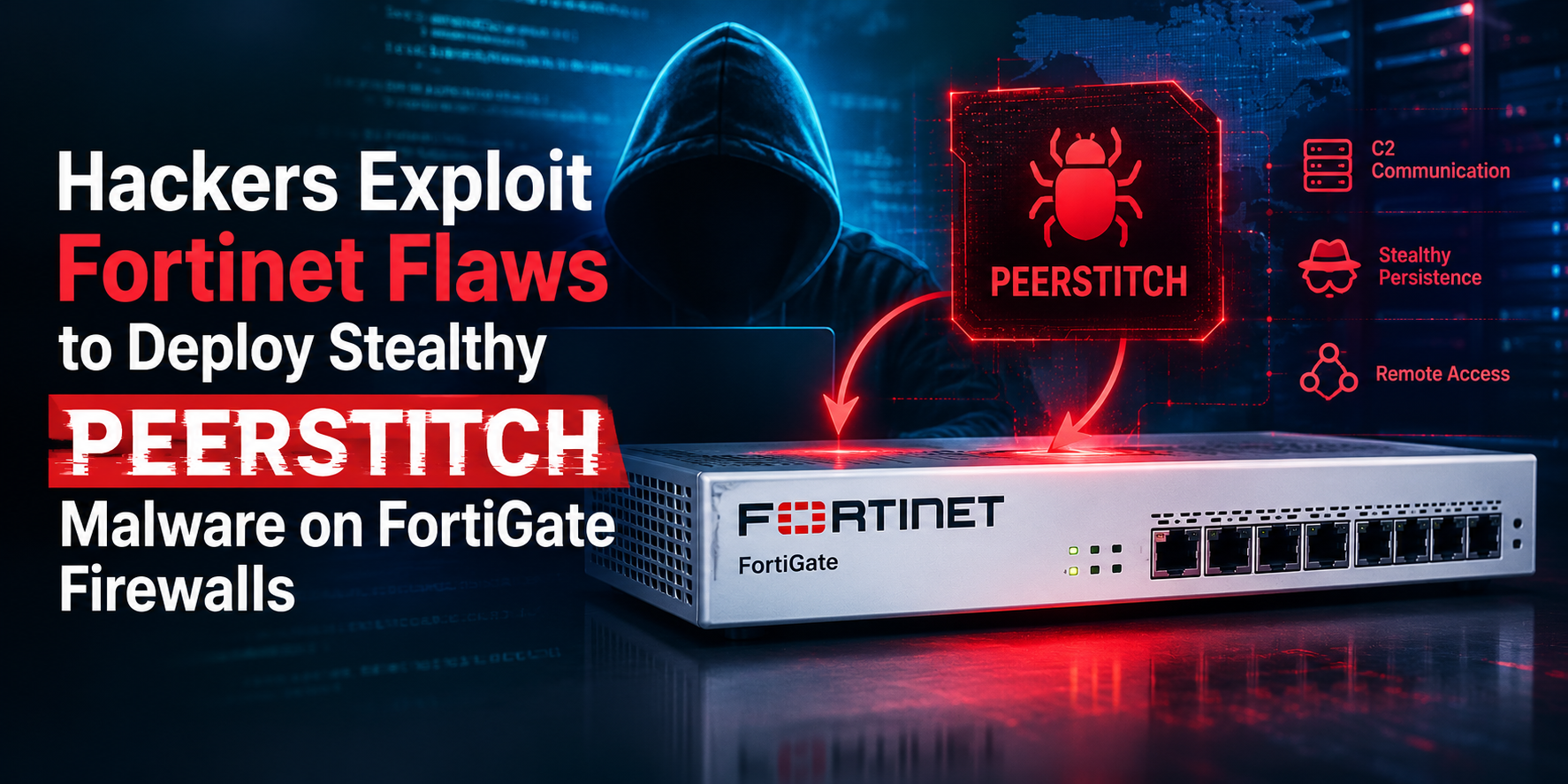
Hackers Exploit Fortinet Flaws to Deploy Stealthy PEERSTITCH Malware on FortiGate Firewalls
Hacker stole Meta GitHub repos; Stole Source Code
Urgent patch! Zoom,NVIDIA and IBM Patch 41 Security flaws
Microsoft patches record braking 1411 flaws; 2 zero days
Anthropic unveils “OSS Scanner” Free AI Vulnerability Scanner for Open-Source Projects
Rise on RCE Exploits Targeting Hikvision Camera Flaw

Attackers Abused FortiClient’s Own Infrastructure
After the attackers got into the EMS settings, they changed the Remote Access Profile and endpoint rules to add harmful scripts that targeted all managed devices.
FortiClient EMS lets scripts run when a VPN tunnel is set up with on_connect commands. Attackers misused this real feature.
When affected endpoints are connected via an IPsec tunnel, fortitray.exe launched .cmd script files with GUID-based filenames stored within FortiClient’s standard VPN logging path:
C:\Program Files\Fortinet\FortiClient\logs\Trace\scripts\{GUID}.cmd
These scripts decoded and executed a base64-encoded PowerShell payload that downloaded the malicious executable, ran it silently, waited 90 seconds, and exfiltrated output via HTTP POST to a threat-actor-controlled VPS at 83[.]138.53[.]110.
The observed process lineage was:
fortitray.exe or ipsec.exe → cmd.exe → powershell.exe → FortiEndpoint_Patch.exe
Initial exploitation was also linked to login events from multiple Tor exit node IPs, including 185[.]220.101.15 and 192[.]42.116.14, within hours of the API authentication bypass.
EKZ Infostealer – Credential Harvesting Tool
The downloaded file, hidden as FortiEndpoint_Patch.exe, is a Windows program made with MinGW. It is linked to Arctic Wolf and called EKZ Infostealer, named after certain symbols found in its code. This tool was first seen in May 2026 and has not been recorded before.
EKZ aims at both Chromium browsers (like Chrome and Edge) and Gecko browsers (like Firefox, LibreWolf, and Thunderbird). For Chromium browsers, it finds where they are installed in the registry, copies itself into the browser’s Application\ folder to pass a check, and uses IElevator::DecryptData to get the v20 AES-256 master key to decrypt account databases.
Indicators of Compromise
| Indicator | Type | Description |
|---|---|---|
83[.]138.53[.]110 |
IP Address | Threat-actor-controlled C2/payload host |
185[.]220.101.15 |
IP Address | Tor exit node used for login |
192[.]42.116.14 |
IP Address | Tor exit node used for login |
0da123adf9251957a4b850a3f6bd6a753dd4892be176a84a18450e899534cc5e |
SHA-256 | EKZ Infostealer (FortiEndpoint_Patch.exe) |
FortiEndpoint_Patch.exe / p.exe |
Filename | Malicious credential stealer binary |
hxxp[:]//83.138.53[.]110/dl/p.exe |
URL | Payload delivery URL |
Mitigations
Patch immediately — Upgrade FortiClient EMS to a fixed version addressing CVE-2026-35616
Restrict management port access — Limit network access to EMS port 8013 to trusted IP ranges only
Audit VPN script configurations — Review on_connect and script directives within Remote Access Profiles for unauthorized entries
Hunt for IOCs — Search endpoint logs for GUID-named .cmd files in FortiClient’s logs\Trace\scripts\ path and anomalous fortitray.exe process chains
Rotate browser credentials — Treat all credentials and session cookies on managed endpoints as potentially compromised
Organizations using FortiClient EMS should see this as an urgent issue. If one EMS is compromised, it can lead to problems for all managed endpoints.