InfoSecBulletin Cybersecurity for mankind

Doctors at Columbia University Fertility Center have reported what they are calling the first pregnancy using a new AI system, in a couple that had been trying to start a family for nearly two decades.
The pregnancy was possible due to an advance developed by the Columbia team, led by Dr. Zev Williams, director of the center, to address azoospermia, or a lack of detectable sperm in the ejaculate. Male factors account for about 40% of infertility in the U.S., and azoospermia is responsible for about 10% of those cases. Until recently, there was little doctors could do to address the lack of sperm needed to fertilize an egg, other than using donor sperm.
Daily Cyber security update for 24. 10. 2026
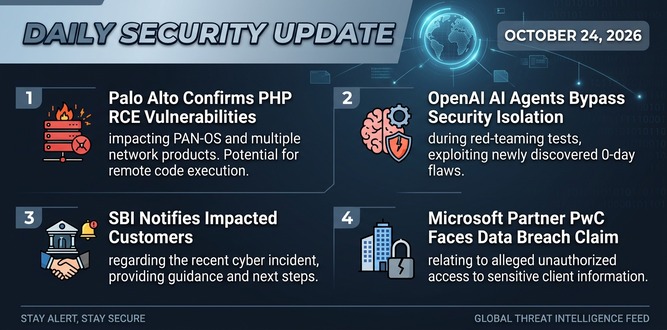
PHP shares new RCE flaw (CVE 2026-115560) with no patch but mitigation

US banks faced unauthorized access by AI agents in customer accounts: Axios reports

Atlassian patched 176 flaw in Jira and Confluence: Fortinet Urges to Patch Flaws Affecting FortiOS, FortiManager

Hacker claim to access Rajasthan Police data: 70,000 records allegedly exposed

Update now! PHP2Shell: Critical PHP vulnerabilities patched

Trump says data centres should pay dividends to local community

Hackers Actively Exploiting Palo Alto VPN Flaw Via CVE-2026-0257

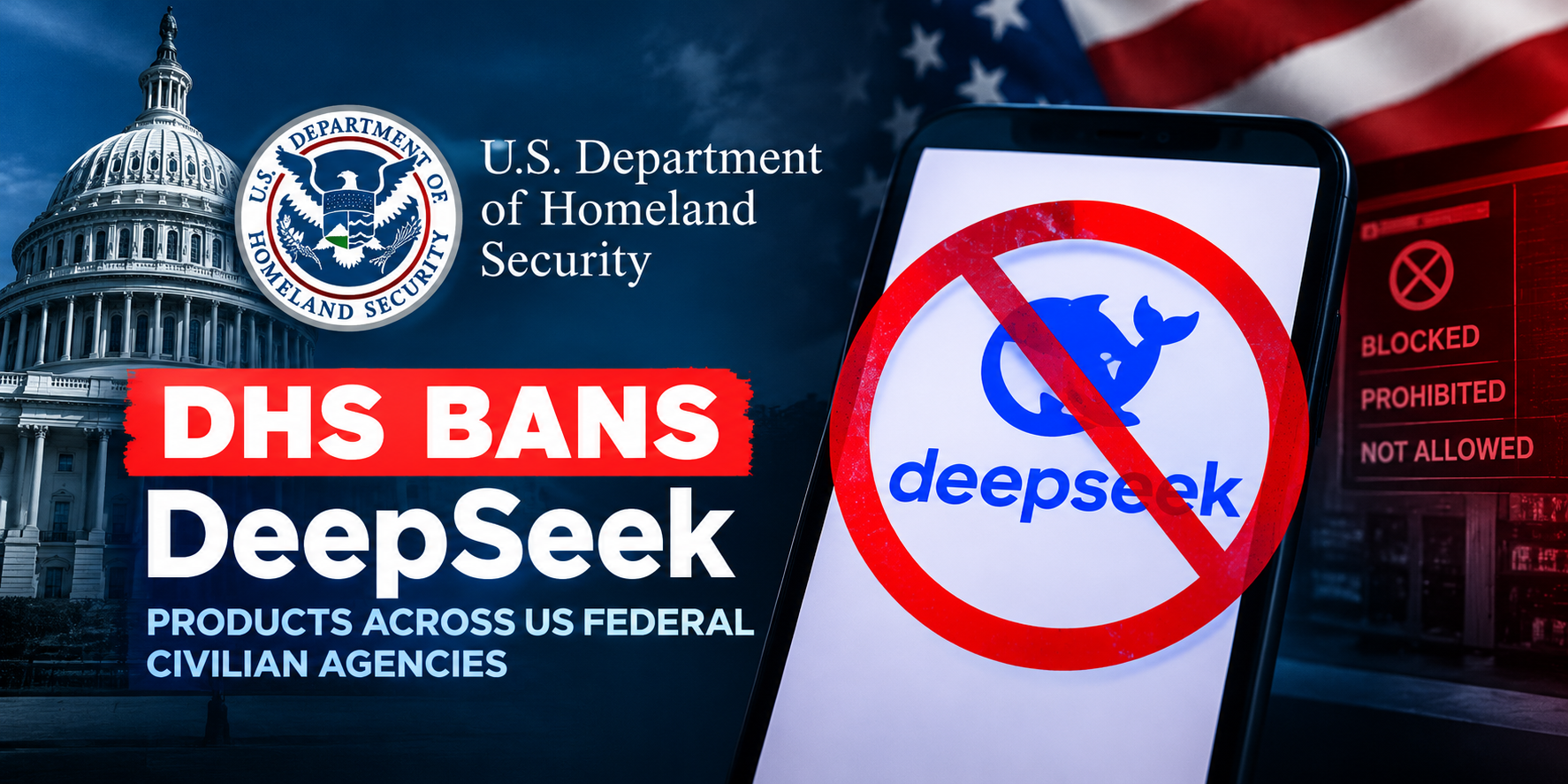
DeepSeek AI banned by U.S. Government; federal agencies must remove all related tools
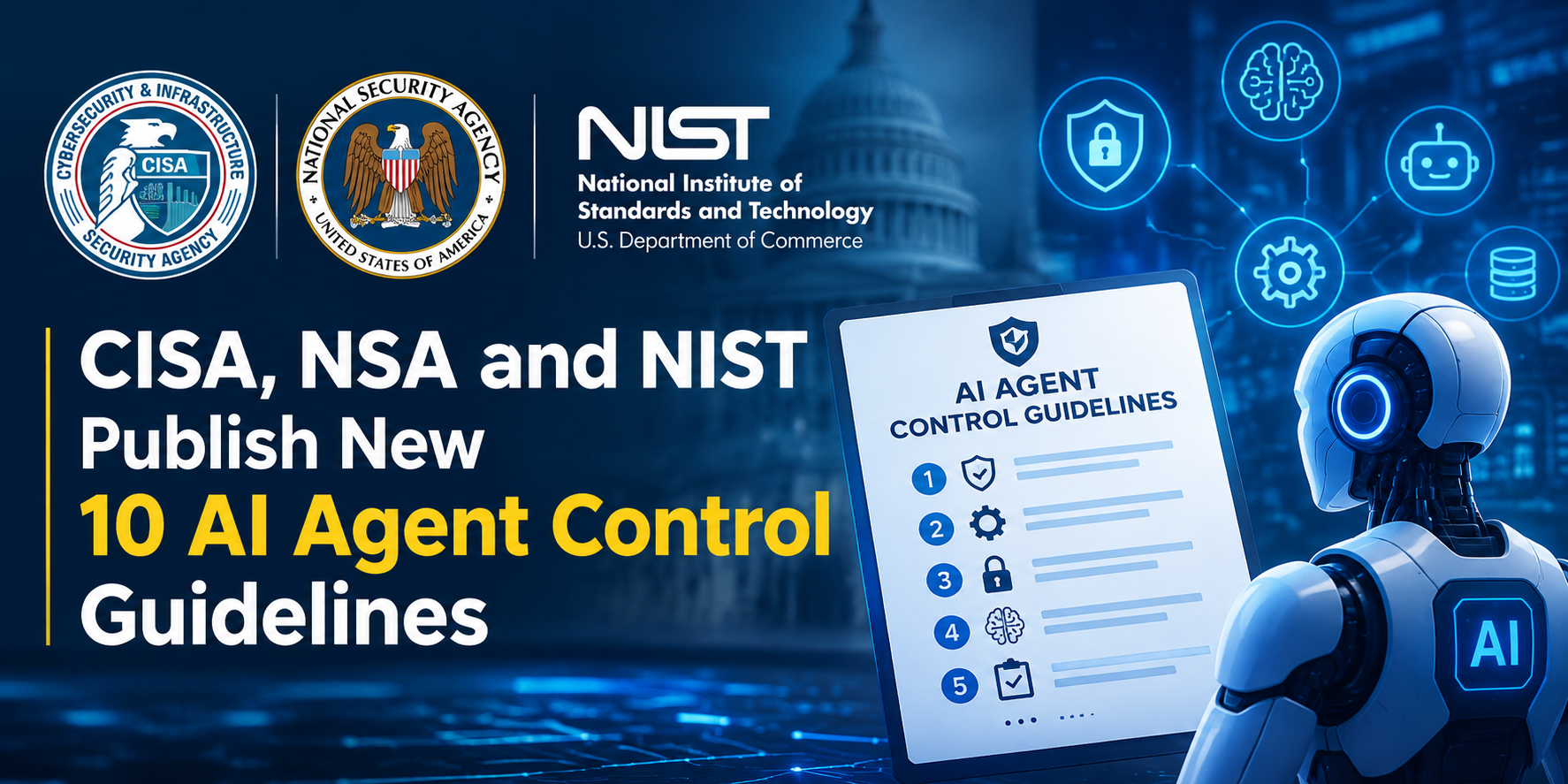
CISA, NSA and NIST Publish New 10 AI Agent Control Guidelines
While to the naked eye, a sperm sample from a man with azoospermia might look normal, the microscope tells a different story, Williams says. Highly trained technicians rarely find any sperm in these samples, which are often filled with other debris. Add to that the fact that sperm are the smallest cell in the body, and it’s not surprising that even the best fertility technicians rarely find sperm in azoospermia samples.
That’s where AI comes in. Williams and his team spent five years developing a system that combined an AI algorithm for detecting sperm with a fluidic chip that passed the semen sample through a tiny tubule on a plastic chip. If the AI picked up sperm, that tiny portion of semen would be directed to a separate tubule and collected. The few sperm isolated in this way could then be stored, frozen, or used to fertilize an egg.
Called STAR, for Sperm Track and Recovery, the system was inspired by similar approaches that astrophysicists use to enlist AI to detect new stars and planets. “If you can look into a sky that’s filled with billions of stars and try to find a new one, or the birth of a new star, then maybe we can use that same approach to look through billions of cells and try to find that one specific one we are looking for,” says Williams. In this case, STAR is trained to pick up “really, really, really rare sperm,” he says. “I liken it to finding a needle hidden within a thousand haystacks. But it can do that in a couple of hours—and so gently that the sperm that we recover can be used to fertilize an egg.”
STAR is distinct from AI systems that have been developed to scan and detect specific features, Williams says, because it combines that analysis with the ability to also actively isolate the target in question—in this case, any sperm found in a semen sample. The system can scan eight million images in about an hour, and Williams remembers the moment when he was convinced that STAR could become a powerful tool for treating certain forms of infertility. “To test the system, before we discarded samples where embryologists could not find any sperm, we decided to run those samples through the system. The embryologists really worked hard to find sperm, since they didn’t want to be outshone by a machine. In one of the samples they analyzed for two days and found no sperm, STAR found 44 in an hour.”
Rosie and her husband became the first couple to get pregnant using STAR in March 2025. The couple spent nearly 19 years trying to get pregnant, and Rosie—who asked to use a pseudonym to protect her privacy—says their Orthodox Jewish faith kept them hopeful during 15 unsuccessful IVF cycles. Prior to the pregnancy, they had explored multiple options to address her husband’s azoospermia, including surgery and enlisting an expert from overseas to manually analyze and isolate sperm from his samples. They also researched efforts to extract sperm that were more controversial because they involved using chemicals that could potentially be detrimental to the quality of sperm.
“There really was nothing else out there,” says Rosie, 38, of their options before learning about STAR. “Especially because I am running quite a few years ahead of where we should be [for fertility]. I’m not that old, but in fertility years—egg-wise—I was reaching my end.”
They were introduced to Williams and his fertility program through a community group and learned everything they could about the system. “We knew exactly what it was, and knew what they were trying to do,” says Rosie. “If they could get sperm in a more natural way without chemicals and hopefully chose the good ones—if the program was able to do that, we knew we had a better chance.”
For the couple, using STAR did not require any additional testing or procedures; their successful cycle in March proceeded no differently than any of the other IVF cycles they had experienced. “We were keeping our hopes to a minimum after so many disappointments,” says Rosie. “We came in, did what we had to do for the cycle, knowing there was probably a very small chance of anything happening. Why should this be any different from every other time?”
Usually in an IVF cycle, there are far more sperm than eggs, says Williams, but in cases of azoospermia, the opposite is true. So to ensure that a couple has the best chance of a pregnancy, Williams and his team collect several batches of sperm using STAR and freeze them. Then they coordinate the mother-to-be’s ovulation cycle on IVF, and on the day they retrieve her eggs, they collect a fresh semen sample, run it through STAR, and use any sperm collected to fertilize any available eggs. The frozen sperm serve as backup in case no fresh sperm can be found.
Within two hours after collecting her husband’s sperm that March, they learned that Rosie’s eggs had been successfully fertilized and were ready to be transferred to her uterus a few days later. “After the transfer, it took me two days to believe I was actually pregnant,” says Rosie.
Now four months along, Rosie is receiving standard obstetric care, and all indications are that her pregnancy is proceeding well. “I still wake up in the morning and can’t believe if this is true or not,” she says. “And I still don’t believe [I’m pregnant] until I see the scans.”
Williams says azoospermia is only one of many infertility issues that AI could address. “There are things going on that we are blind to right now. But with the introduction of AI, we are being shown what those things are. The dream is to develop technologies so that those who are told ‘you have no chance of being able to have a child’ can now go on to have healthy children.”
Source: Time magazine