InfoSecBulletin Cybersecurity for mankind

The researchers discovered Fire Ant’s new tactic after finding an active GRE (Generic Routing Encapsulation) tunnel interface on a Cisco IOS XR router that could not be explained by a running configuration or commit history. According to incident response company Sygnia, The threat actor moved from attacking VMware hypervisors to breaking into Cisco routers, TACACS authentication servers, and Linux management hosts.
Further checks showed that Fire Ant used special malware on the devices. This allowed it to stay hidden by using a fake system service that worked only during certain hours.
Hackers Exploit Fortinet Flaws to Deploy Stealthy PEERSTITCH Malware on FortiGate Firewalls

Hacker stole Meta GitHub repos; Stole Source Code

Urgent patch! Zoom,NVIDIA and IBM Patch 41 Security flaws

Microsoft patches record braking 1411 flaws; 2 zero days
Anthropic unveils “OSS Scanner” Free AI Vulnerability Scanner for Open-Source Projects

Rise on RCE Exploits Targeting Hikvision Camera Flaw

FortiBleed Attack Compromised 80,000+ Devices, SonicWall Patches 4 SMA1000 Flaws CVSS 10

Critical Atlassian & IBM Flaws Expose Files and Enable Remote Code Execution

Citrix NetScaler SAML 0-Day Flaw Under Attack

Major Danish university breached, 200,000 users at risk

The malware selectively suppressed syslog messages to hide tunnel-related information from legitimate administrators, established outbound Telnet connections to Fire Ant infrastructure, and supported interactive shell access with no logging.
The attackers used their admin access to collect data from several routers and send the resulting PCAP files to outside FTP servers. These captures might show internal layout, admin links, login processes, routing connections, and traffic shared with connected networks.
“This behavior shifts the router’s role from a transit device to a collection platform,” Sygnia explains.
“Once the actor controlled the router, the device became a vantage point for observing traffic moving through trusted network paths.”
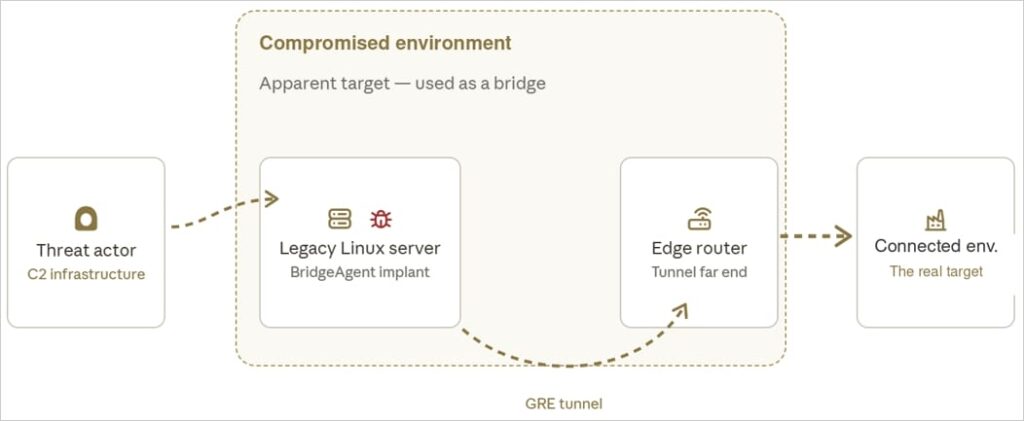
The hidden GRE tunnel linked one hacked router to an old Linux server, which Fire Ant used as a base and for spying. Attackers checked systems in important areas, like those linked to key infrastructure, using ports often used for SSH, web services, SMB/RPC, and RDP.
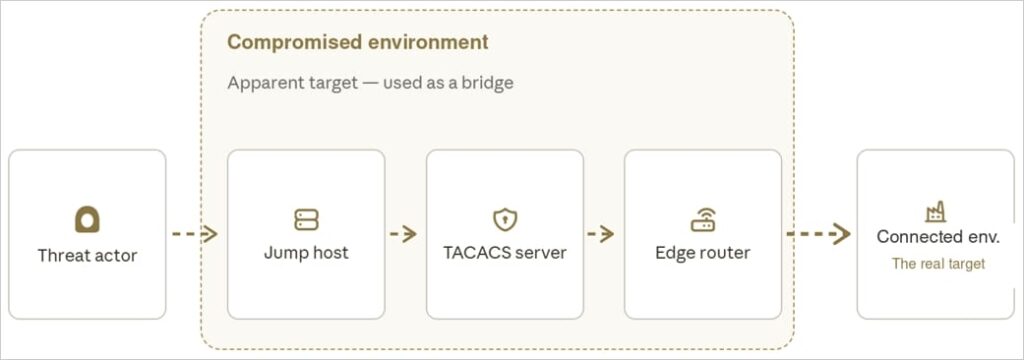
Sygnia thinks that Fire Ant’s goal was to break into a trusted system at a first victim and then use it to find ways to get into important connected networks, a strategy they call “target behind the target.”
The researchers also found a new backdoor named ‘BridgeAgent,’ which Fire Ant hid as a normal Zabbix monitoring tool. The backdoor remains as a main systemd service and allows TLS reverse shells and more payloads to run on the hacked host.
Sygnia states that Fire Ant works closely with UNC3886, a Chinese spying group noted by Google. But, researchers mention there are differences in filenames, paths, and how things are set up.
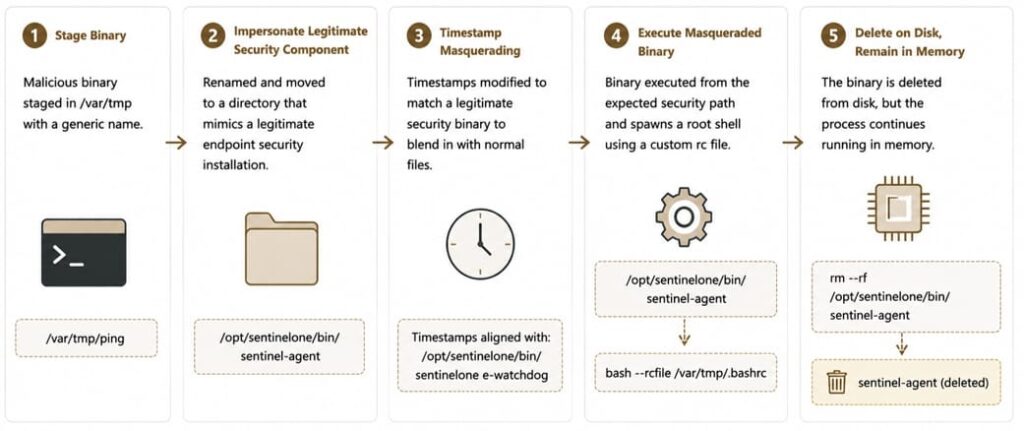
The researchers said that Fire Ant changes system logs and records. It even alters file timestamps to hide evidence that could help investigators. They pointed out that logs taken from affected systems need to be checked against other data.
Sygnia’s report gives a long list of signs that something is wrong (IoCs), plus ways to look for and YARA rules to find Fire Ant activity.