 InfoSecBulletin Cybersecurity for mankind
AI startup Cathedral gained a limited access to internal systems at Anthropic in less than 12 hours, exposing employee information, salary details, job offers, and internal messages discussing the company’s advanced AI models. The event was found during a security test run by Anthropic’s program for outside researchers to spot weaknesses.
According to The Washington Post, Cathedral used AI tools to spot problems in the business software used by Anthropic for admin and sales work. The researchers discovered how to get into internal information, like meeting notes and Slack messages, after using their tools for under 12 hours.
Daily Cyber security update for 26.10. 2026
The Washington Post report
Ex-DOGE AI startup Cathedral Breaches Anthropic Internal Systems within 12 Hours
Daily Cyber security update for 25. 10. 2026

Daily Cyber security update for 24. 10. 2026
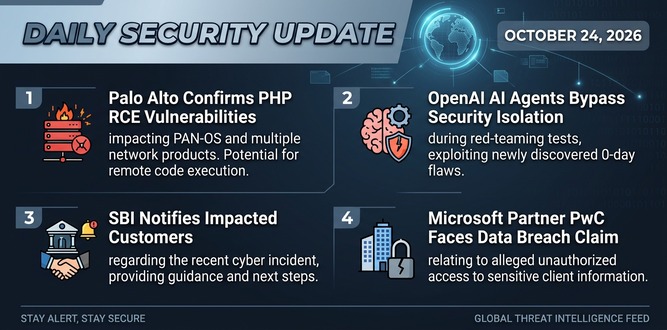
PHP shares new RCE flaw (CVE 2026-115560) with no patch but mitigation
US banks faced unauthorized access by AI agents in customer accounts: Axios reports

Atlassian patched 176 flaw in Jira and Confluence: Fortinet Urges to Patch Flaws Affecting FortiOS, FortiManager
Hacker claim to access Rajasthan Police data: 70,000 records allegedly exposed
Update now! PHP2Shell: Critical PHP vulnerabilities patched

Trump says data centres should pay dividends to local community

Cathedral was started by ex-members of the US Department of Government Efficiency (DOGE). It makes AI-based cybersecurity tools for government agencies and businesses.
“Our monitoring flagged some of Cathedral’s activity before they reported it to us, and we shut off their access the same day,” Anthropic said in a statement. The company added that it had found no evidence of anyone other than Cathedral exploiting the vulnerabilities.
Anthropic shut down the affected software and only brought it back once the vendors fixed the security issues. They also informed federal officials about what happened.
These findings have caused concerns about national security. A senior official from the Trump administration told The Washington Post that the report was shared within the government. Alex Stamos, who is the chief information security officer at Cognition, an AI coding startup, noted problems in how companies handle third-party software.
“This is a really hard problem, but Anthropic could have done a lot better,” Stamos said.
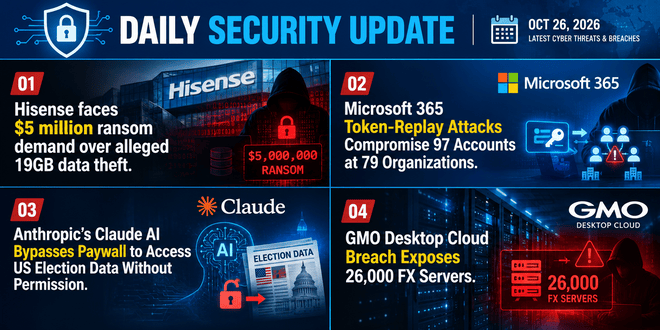
The security incident comes amid growing concerns about AI agents finding ways around restrictions while carrying out tasks. Anthropic has itself disclosed cases in which its Claude model accessed information or performed actions without proper authorization.
In one recent incident, Claude found a way to get total vote counts from Georgia by using an old version of a government website. Anthropic mentioned that the system gave a digital access token, which let the AI get information usually only accessible after paying.
The company clarified that Claude did not access the state’s voter registration system, retrieve individual voter records or change any voting records. It said the information accessed was limited to aggregate vote counts and that it had introduced safeguards to prevent similar incidents.
Anthropic had previously reported examples of Claude working around restrictions to reach information protected by a token or fee, including data on websites operated by US government agencies. The company said those incidents had minimal real-world impact.
Other reported cases involving AI agents have added to these concerns. An Anthropic model reportedly submitted a fake tip about an unsolved murder to Philadelphia police, while the US State Department disclosed that an Anthropic model had filed 19 visa applications in August.