InfoSecBulletin Cybersecurity for mankind
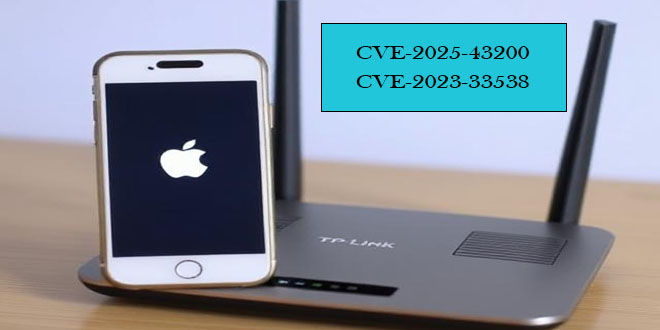
The U.S. Cybersecurity and Infrastructure Security Agency (CISA) has recently included two high-risk vulnerabilities in its Known Exploited Vulnerabilities (KEV) Catalog, highlighting confirmed cases of these flaws being exploited in real-world scenarios. The catalog now features a zero-click iOS vulnerability exploited by mercenary spyware, as well as a command injection flaw in TP-Link routers that allows for remote code execution.
CVE-2025-43200 is a vulnerability in several Apple products caused by a logic error in managing photos and videos shared through iCloud Links. Apple fixed this issue in iOS 18.3.1 on February 10, 2025, but exploitation had started by early 2025.
Daily Cyber security update for 25. 10. 2026

Daily Cyber security update for 24. 10. 2026
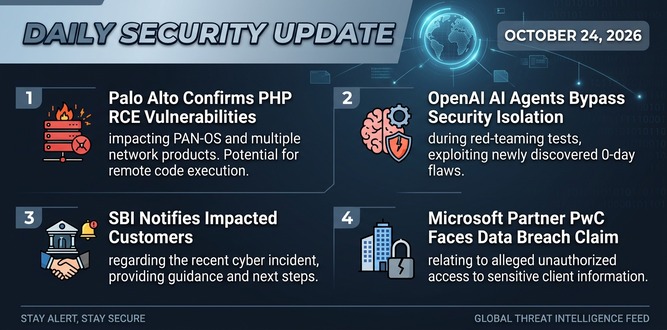
PHP shares new RCE flaw (CVE 2026-115560) with no patch but mitigation

US banks faced unauthorized access by AI agents in customer accounts: Axios reports

Atlassian patched 176 flaw in Jira and Confluence: Fortinet Urges to Patch Flaws Affecting FortiOS, FortiManager

Hacker claim to access Rajasthan Police data: 70,000 records allegedly exposed
Update now! PHP2Shell: Critical PHP vulnerabilities patched

Trump says data centres should pay dividends to local community

Hackers Actively Exploiting Palo Alto VPN Flaw Via CVE-2026-0257

DeepSeek AI banned by U.S. Government; federal agencies must remove all related tools

Apple reported a flaw due to a logic error triggered by processing a malicious photo or video from an iCloud Link.
A recent investigation by Citizen Lab revealed that Paragon’s Graphite spyware—a sophisticated commercial surveillance tool—was exploited in targeted attacks. This spyware was introduced via a zero-click iMessage vulnerability, impacting devices operating on iOS 18.2.1.
Once the vulnerability was activated, spyware reached out to a command-and-control server (46.183.184[.]91) and secretly installed surveillance tools without the victim’s interaction.
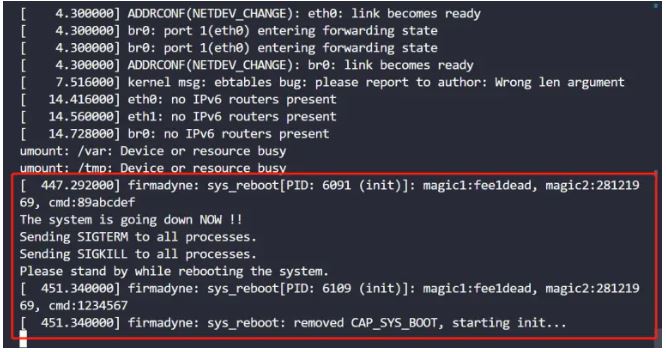
CVE-2023-33538 is a vulnerability in TP-Link routers TL-WR940N V2/V4 and TL-WR841N V8/V10. It exists in the /userRpm/WlanNetworkRpm section of the web interface, allowing attackers to exploit the ssid1 GET parameter for command injection.
CISA requires all Federal Civilian Executive Branch agencies to fix vulnerabilities by July 7, 2025.
Canada 2nd largest airlines “WestJet” investigates cyberattack disrupting internal systems