InfoSecBulletin Cybersecurity for mankind
Rising worries about the digital security of nongovernmental organizations in the Asia-Pacific region haven’t translated into robust adoption of basic measures, shows data from a survey of more than 1,500 regional NGOs.
Infoxchange, an Australian IT consultant for social issue organizations, said only about 4 in 10 NGOs have enabled multifactor authentication and that only 2 in 10 provide cybersecurity training to staff. Of the 1,589 NGOs across the region that participated in an Infoxchange survey, 1 in 6 disclosed experiencing a cybersecurity incident during the past year. One-third of Indonesian organizations reported experiencing an incident.
Daily Cyber security update for 24. 10. 2026
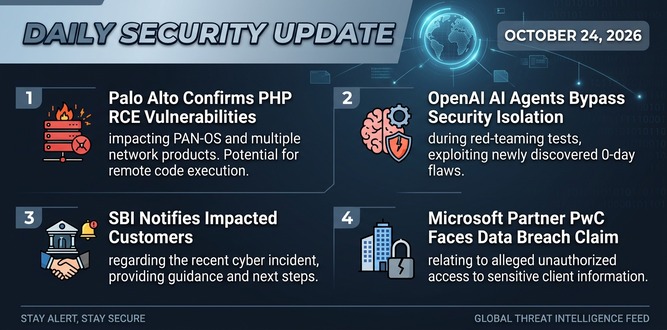
PHP shares new RCE flaw (CVE 2026-115560) with no patch but mitigation

US banks faced unauthorized access by AI agents in customer accounts: Axios reports

Atlassian patched 176 flaw in Jira and Confluence: Fortinet Urges to Patch Flaws Affecting FortiOS, FortiManager

Hacker claim to access Rajasthan Police data: 70,000 records allegedly exposed

Update now! PHP2Shell: Critical PHP vulnerabilities patched

Trump says data centres should pay dividends to local community

Hackers Actively Exploiting Palo Alto VPN Flaw Via CVE-2026-0257

DeepSeek AI banned by U.S. Government; federal agencies must remove all related tools

CISA, NSA and NIST Publish New 10 AI Agent Control Guidelines

NGOs can attract hackers for motives that include espionage, ideological opposition and plain theft of donor information. Cybersecurity firm Recorded Future in August said it had spotted a multiyear campaign by a Chinese state-sponsored group it dubbed RedAlpha targeting humanitarian organizations, think tanks and government agencies. The hackers displayed a particular interest in organizations located in Taiwan.
The World Economic Forum in a January 2022 report concluded that NGOs are easy targets for ransomware extortionists since they often lack funding for robust cyber defense. “The lack of funding makes it challenging for many organizations to recruit talented practitioners and implement much needed cybersecurity road maps.”
NGOs may also view cybersecurity as an overhead expense that should be kept down as much as possible given the imperative to spend donors’ money on fulfilling the mission.
Infoxchange’s survey shows Asia-Pacific NGOs taken together spend 3.4% of their operational expenditures on IT, and the foremost IT priorities for most of these organizations are website improvements, along with boosting social media and digital marketing and improving the digital capabilities of staff.
Just 35% of NGO decision-makers in the Asia-Pacific region treat the improvement of data protection and information security practices as a top priority, the survey found. Infoxchange CEO David Spriggs said these figures highlight “the urgent need to prioritize cybersecurity practices and invest in the necessary training and infrastructure to protect sensitive data.”