InfoSecBulletin Cybersecurity for mankind

About 76,000 WatchGuard Firebox security devices are publicly exposed and vulnerable to a serious issue (CVE-2025-9242) that could let remote attackers execute code without authentication.
Firebox devices serve as a central hub to manage traffic between internal and external networks, offering protection with policy management, security services, VPN, and real-time visibility via WatchGuard Cloud.
US banks faced unauthorized access by AI agents in customer accounts: Axios reports

Atlassian patched 176 flaw in Jira and Confluence: Fortinet Urges to Patch Flaws Affecting FortiOS, FortiManager

Hacker claim to access Rajasthan Police data: 70,000 records allegedly exposed

Update now! PHP2Shell: Critical PHP vulnerabilities patched

Trump says data centres should pay dividends to local community

Hackers Actively Exploiting Palo Alto VPN Flaw Via CVE-2026-0257

DeepSeek AI banned by U.S. Government; federal agencies must remove all related tools

CISA, NSA and NIST Publish New 10 AI Agent Control Guidelines
Claude AI Cracks 25-Year NSA Cryptography Number Mystery in Just 30 Minutes

Bypassing firewalls, AI Agents Accessed Indian ‘ Data Without Permission: CERT-In
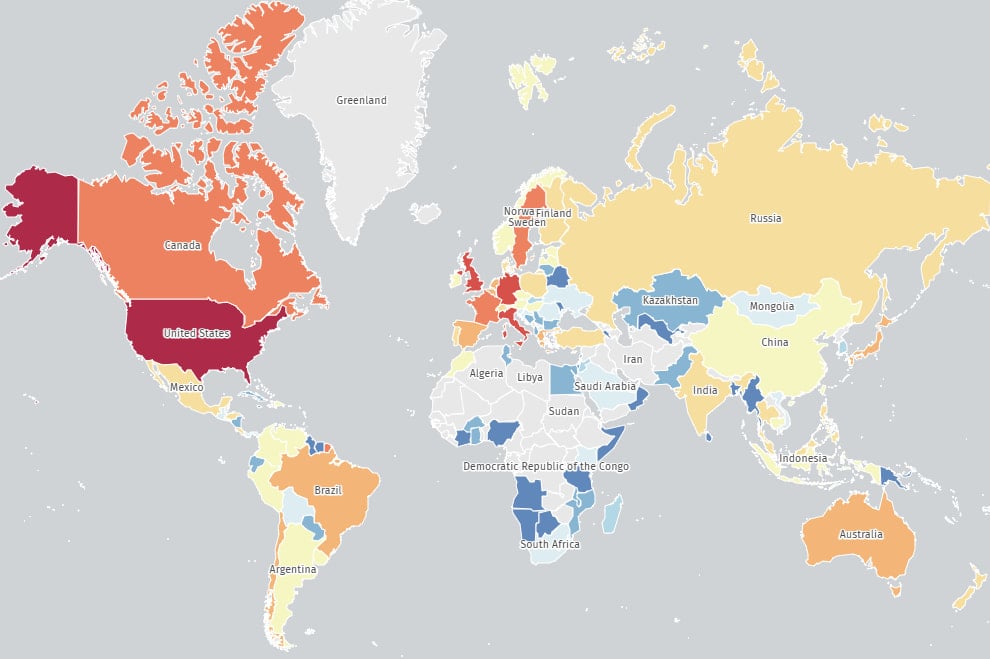
The Shadowserver Foundation reports 75,835 vulnerable Firebox appliances globally, primarily in Europe and North America.
The United States leads with 24,500 endpoints, followed by Germany with 7,300, Italy with 6,800, the United Kingdom with 5,400, Canada with 4,100, and France with 2,000.
WatchGuard reported CVE-2025-9242 on September 17, rating it a critical vulnerability with a score of 9.3. It involves an out-of-bounds write in the Fireware OS ‘iked’ process, which manages IKEv2 VPN negotiations.
The vulnerability can be exploited without authentication by sending crafted IKEv2 packets to weak Firebox endpoints, causing them to write data to incorrect memory locations.
Only Firebox appliances using IKEv2 VPNs with dynamic peers in specific versions are affected.
The vendor suggested an upgrade to one of the following versions:
2025.1.1
12.11.4
12.5.13
12.3.1_Update3 (B722811)
Version 11.x is no longer supported and won’t get security updates. Users should upgrade to a supported version.
Devices using Branch Office VPNs with static gateways can refer to the vendor’s documentation for a temporary workaround to secure connections using IPSec and IKEv2 protocols.
On October 19, The Shadowserver Foundation found 75,955 vulnerable Firebox firewalls. A representative informed BleepingComputer that the scan results are reliable and represent actual deployments, not honeypots.
No active exploitation of CVE-2025-9242 has been reported, but administrators should install the security updates promptly.