InfoSecBulletin Cybersecurity for mankind
Every American data center story these days follows almost the same pattern. Someone has the chips, someone has the cash, and then the project just waits for power. That’s why Oracle is funding its own gas power plant in the New Mexico desert for OpenAI, and why China avoided the wait by putting a data center off Shanghai, using wind and seawater for power. The solutions keep changing. The delay never changes.
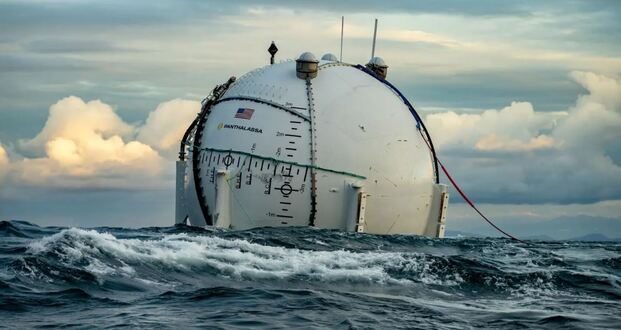
A startup that works on both sides of the Oregon-Washington border has taken a new approach: if the grid is the issue, don’t use the grid. Don’t use land either. Panthalassa makes wave-powered steel buoys that produce their own electricity in the ocean, have AI chips inside, and connect to the shore with a Starlink link. They don’t use anchors. No mooring. No underwater cable. On May 4, Peter Thiel invested $140 million in the company, which is said to be worth almost $1 billion.
Bypassing firewalls, AI Agents Accessed Indian ‘ Data Without Permission: CERT-In

MITRE ATT&CK v20 Unveils 9 New Attack Techniques On AI Exploits, MFA Bypass, and CAPTCHA Evasion

Hackers Exploit Fortinet Flaws to Deploy Stealthy PEERSTITCH Malware on FortiGate Firewalls

Hacker stole Meta GitHub repos; Stole Source Code

Urgent patch! Zoom,NVIDIA and IBM Patch 41 Security flaws

Microsoft patches record braking 1411 flaws; 2 zero days

Anthropic unveils “OSS Scanner” Free AI Vulnerability Scanner for Open-Source Projects

Rise on RCE Exploits Targeting Hikvision Camera Flaw

FortiBleed Attack Compromised 80,000+ Devices, SonicWall Patches 4 SMA1000 Flaws CVSS 10

Critical Atlassian & IBM Flaws Expose Files and Enable Remote Code Execution

The machine is a lollipop that works like a floating dam
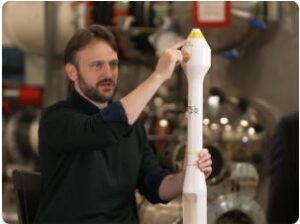
Picture a metal ball floating on the water with a long tube going down into the deep. That’s the whole machine: a big lollipop standing tall in the ocean. Panthalassa calls it Ocean-3, and CEO Garth Sheldon-Coulson explained how it works on CBS Sunday Morning in April. Each wave lifts the whole setup and then lets it drop. This movement pushes the water in the tube up into the ball, where it spins a turbine. The turbine runs a generator, and the same water keeps going through the machine to do it again. Sheldon-Coulson likes to compare it to a hydroelectric dam, but this one floats.
So there’s no fuel, no engine, and, according to the company, no direct emissions. There’s also nothing holding it in place. The node isn’t tethered to the seabed, carries no mooring lines, and never plugs into a power cable. It gets towed out of port lying flat, flips itself upright once it reaches open water, and then holds position using the hydrodynamic shape of its own hull, as Energy Digital describes it. “It’s like a little Roomba, except it’s enormous,” Sheldon-Coulson told CBS.
Wave power has always died at the cable
Wave energy has been said to be just five years away since the 1970s. The science behind it is not the problem; the ocean has huge amounts of energy available all the time, even more than solar energy. What has stopped many projects is everything else needed for the generator. Mooring systems constantly struggle against the sea. Also, the cable that runs back to shore is extremely expensive to install, keep in good shape, and fix when the sea causes damage. You can collect some of the cheapest energy available, but then the costs for the needed equipment to send it back add up quickly.
Panthalassa decides to cut the cable instead of paying for it. The electricity stays in the buoy. Chips inside the node use cold seawater to keep cool, and wave power is used right away to answer AI questions. A question is sent to a Starlink satellite, the chips process it, and the answer comes back the same way. The company says that satellite link is the only connection to the shore the system will ever need.
Panthalassa is not actually selling electricity. It is selling computing power, with electricity being a necessary part. This change avoids the issues that have caused wave-energy projects to fail for years. It’s a valid question if this creates new problems, and we will discuss it.
Peter Thiel does not usually back buoys
The funding round, announced on May 4, totals $140 million and was led by Thiel, as reported by GeekWire. The money will be used to complete a pilot factory near Portland. Before this, Panthalassa raised about $78 million in total, according to Data Center Dynamics. The list of investors sounds like a Silicon Valley reunion: John Doerr, Marc Benioff’s TIME Ventures, Max Levchin’s SciFi Ventures, and Super Micro all took part. Thiel’s own statement ended with six words you don’t often hear in marine engineering: “Panthalassa has opened the ocean frontier.”
Pilot Ocean-3 nodes head to the North Pacific first, around August 2026.
The company is older than the hype suggests. It was founded in 2016 as a public benefit corporation and spent nearly a decade quietly testing hardware, putting its Ocean-1 prototype in the water in 2021 and the larger Ocean-2 in 2024, per the funding announcement. The roughly 120-person team pulls from SpaceX, Tesla, Blue Origin, Boeing and NASA, among other places, and Sheldon-Coulson himself came out of hedge fund Bridgewater Associates before deciding the open ocean was the better trade.
There is also a money trend like this. Two months before Panthalassa’s round, Starcloud, a company from Washington state that wants to place data centers in space, got $170 million and became worth $1.1 billion, according to the GeekWire report. Orbit, seabed, open water: if the grid can’t power the machines, investors will back almost any site that can.
A 2-cent kilowatt-hour is a claim, not a price sheet
Now let’s talk about the asterisks, because there are some. The main focus in this story is cost. Panthalassa claims that, if they grow, their platform could make power for just $0.02 per kWh, as Data Center Dynamics says. This price would beat almost everything else out there, including gas. However, this is just a forecast from a company that has no working sites yet. Wave energy has a history of nice cost predictions that looked good until the ocean changed things.
The skeptics have a strong case, and places like CleanTechnica have talked about it. Satellite links are useful for small questions that need small answers, but they don’t work well for training advanced models that need many GPUs connected by fast wires. This limits the potential market to a small part of AI computing instead of the whole thing. Another big issue is keeping a free-floating machine stable. It needs to stay in one spot at sea during storms using its shape and software, which hasn’t been proven on a large scale. Plus, there are problems like saltwater damage, growths on the hull, and the expensive repairs needed for a generator that is far from shore, making things much harder.
Panthalassa’s answer is clear: just make it and place it in the water. They are already working on the Ocean-3 units, and Sheldon-Coulson told CBS he thinks they will be working offshore by August this year. The initial series will go to the North Pacific, and they aim for commercial use by 2027, according to the company.
The ocean is a big source of energy right now. Japan is taking electricity non-stop from the mix of fresh and salt water in Fukuoka. China has set up its servers on the ocean floor. This summer, if all goes well, a huge steel structure will begin handling chatbot questions somewhere in the North Pacific with just deep water underneath. If the 2-cent idea holds up in the real ocean, every power struggle we see may not be needed. If it doesn’t work, the Pacific ends up with a very costly toy. Either way, the solution comes quickly and via satellite.