InfoSecBulletin Cybersecurity for mankind

CISA warns government agencies to patch Oracle Identity Manager (CVE-2025-61757) due to potential zero-day exploitation. CVE-2025-61757 is a pre-authentication remote code execution vulnerability in Oracle Identity Manager, found by Searchlight Cyber analysts Adam Kues and Shubham Shahflaw.
The flaw stems from an authentication bypass in Oracle Identity Manager’s REST APIs, where a security filter can be tricked into treating protected endpoints as publicly accessible by appending parameters like ? WSDL or ;.wadl to URLpaths.
Daily Cyber security update for 24. 10. 2026
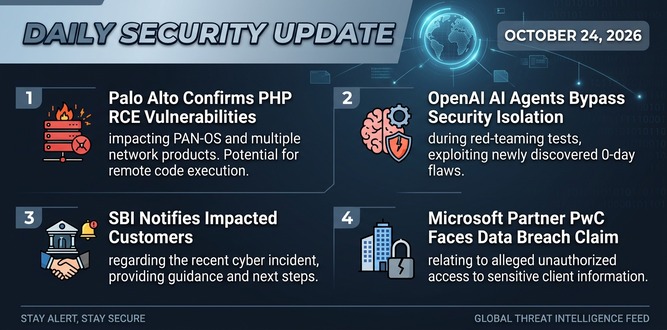
PHP shares new RCE flaw (CVE 2026-115560) with no patch but mitigation

US banks faced unauthorized access by AI agents in customer accounts: Axios reports

Atlassian patched 176 flaw in Jira and Confluence: Fortinet Urges to Patch Flaws Affecting FortiOS, FortiManager

Hacker claim to access Rajasthan Police data: 70,000 records allegedly exposed
Update now! PHP2Shell: Critical PHP vulnerabilities patched

Trump says data centres should pay dividends to local community

Hackers Actively Exploiting Palo Alto VPN Flaw Via CVE-2026-0257

DeepSeek AI banned by U.S. Government; federal agencies must remove all related tools

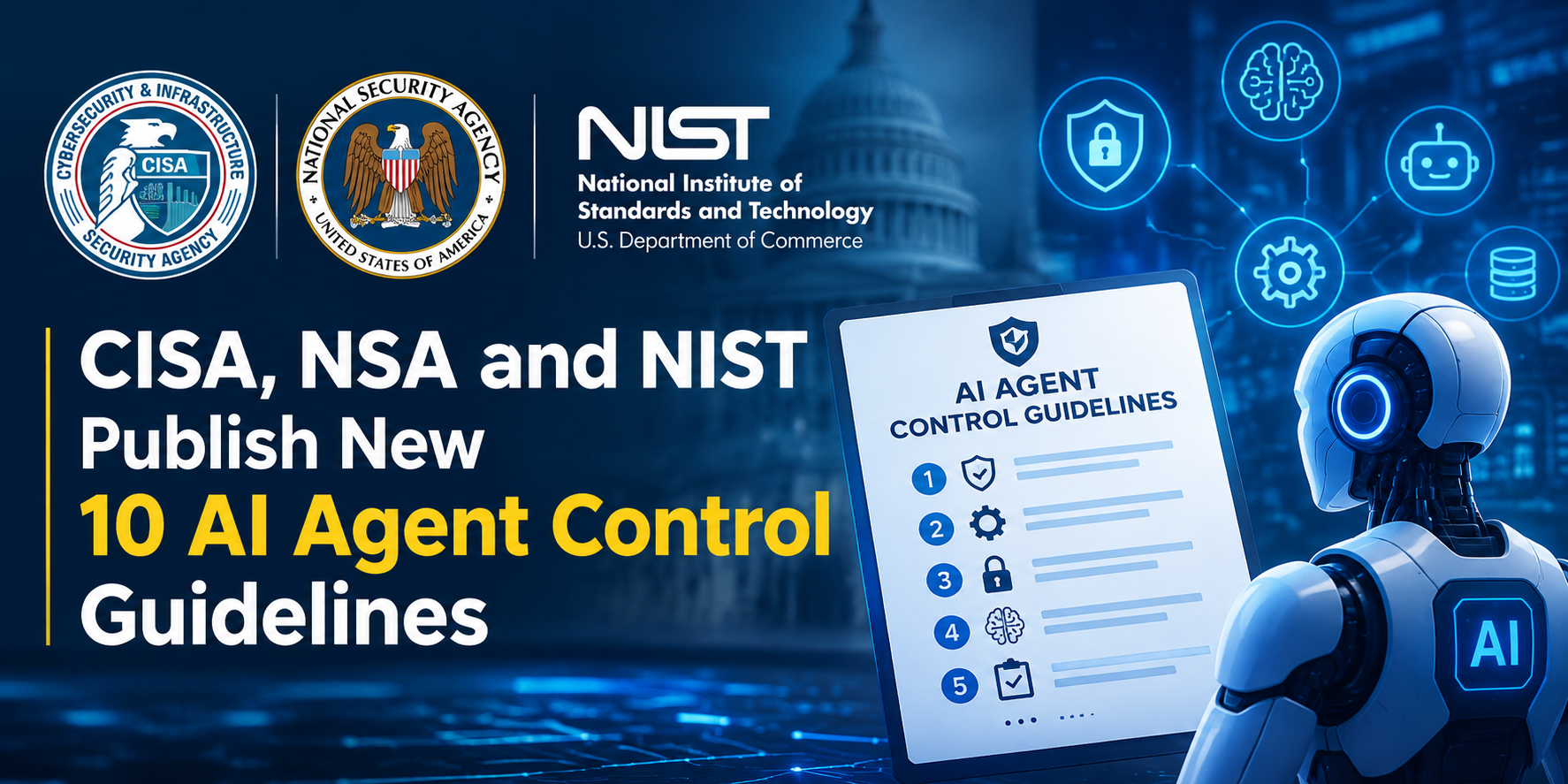
CISA, NSA and NIST Publish New 10 AI Agent Control Guidelines
If attackers gain unauthenticated access, they can access a Groovy script that usually doesn’t run any code. However, they can exploit it to execute harmful code during compilation using Groovy’s annotation-processing features.
Researchers exploited a chain of flaws to execute remote code on vulnerable Oracle Identity Manager instances. Oracle fixed the issue in their October 2025 security updates on October 21.
Yesterday, Searchlight Cyber released a technical report detailing the flaw and providing all the information required to exploit it.
“Given the complexity of some previous Oracle Access Manager vulnerabilities, this one is somewhat trivial and easily exploitable by threat actors,” warned the researchers.
CVE-2025-61757 exploited in attacks:
CISA has included the Oracle CVE-2025-61757 vulnerability in its list of known issues and has instructed Federal agencies to fix it by December 12.
“This type of vulnerability is a frequent attack vector for malicious cyber actors and poses significant risks to the federal enterprise,” warned CISA.
While CISA has not shared details of how the flaw was exploited, Johannes Ullrich, the Dean of Research for SANS Technology Institute, warned yesterday that the flaw may have been exploited as a zero-day as early as August 30.
“This URL was accessed several times between August 30th and September 9th this year, well before Oracle patched the issue,” explained Ullrich in an ISC Handler Diary.
“There are several different IP addresses scanning for it, but they all use the same user agent, which suggests that we may be dealing with a single attacker.”
According to Ullrich, the attackers sent HTTP POST requests to the endpoints that match the exploit from Searchlight Cyber.

The researcher found that the attempts originated from three IP addresses: 89.238.132[.]76, 185.245.82[.]81, and 138.199.29[.]153, but all utilized the same browser user agent, indicating Google Chrome 60 on Windows 10.
Source: Bleepingcomputer