InfoSecBulletin Cybersecurity for mankind
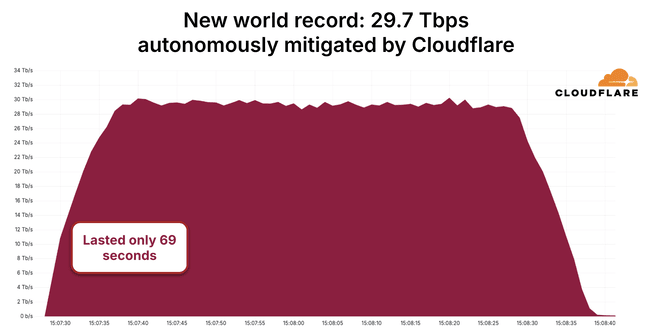
A new DDoS attack from the Aisuru botnet reached 29.7 Tbps, setting a world record. This surpasses the previous record of 22 Tbps, broken in Q3 2025 and mitigated by Cloudflare, signaling that multi-terabit attacks are now common for global defenders.
Cloudflare’s recent DDoS report shows that Aisuru conducted a massive network-layer attack, peaking at 29.7 Tbps and around 14.1 billion packets per second, surpassing the previous record of 22 Tbps.
Claude AI Cracks 25-Year NSA Cryptography Number Mystery in Just 30 Minutes

Bypassing firewalls, AI Agents Accessed Indian ‘ Data Without Permission: CERT-In

MITRE ATT&CK v20 Unveils 9 New Attack Techniques On AI Exploits, MFA Bypass, and CAPTCHA Evasion

Hackers Exploit Fortinet Flaws to Deploy Stealthy PEERSTITCH Malware on FortiGate Firewalls

Hacker stole Meta GitHub repos; Stole Source Code

Urgent patch! Zoom,NVIDIA and IBM Patch 41 Security flaws

Microsoft patches record braking 1411 flaws; 2 zero days

Anthropic unveils “OSS Scanner” Free AI Vulnerability Scanner for Open-Source Projects

Rise on RCE Exploits Targeting Hikvision Camera Flaw

FortiBleed Attack Compromised 80,000+ Devices, SonicWall Patches 4 SMA1000 Flaws CVSS 10

The attack employed a UDP “carpet bombing” method, targeting around 15,000 ports per second and randomizing packet details to bypass static filters and old scrubbing systems.
Cloudflare says its automated system quickly detected and filtered the traffic, keeping the target online and preventing visible customer impact.
29.7 Tbps DDoS Attack:
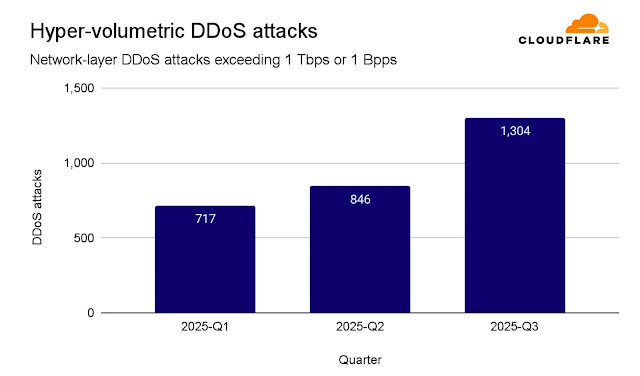
Aisuru is now the largest DDoS botnet with 1–4 million hacked devices worldwide. Since early 2025, Cloudflare has stopped 2,867 Aisuru attacks, with 1,304 occurring in Q3. This marks a 54% increase from the previous quarter, averaging nearly 14 large-scale attacks per day.
Parts of the botnet can be rented as “chunks” for attacks, allowing attackers to rent enough capacity to saturate backbone links or cripple national ISPs for only a few hundred to a few thousand dollars.
Cloudflare blocked 8.3 million DDoS attacks in Q3 2025, a 15% increase from last quarter and 40% from last year, totaling 36.2 million for 2025 so far, which is 170% of the total for all of 2024 with a quarter remaining.
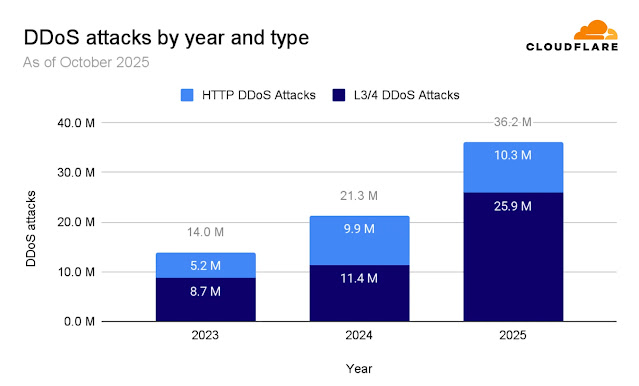
Network-layer DDoS attacks accounted for 71% of all attacks this quarter, increasing 87% from the previous quarter and 95% year-over-year. Meanwhile, HTTP-layer attacks dropped 41% quarter-over-quarter and 17% year-over-year, indicating a shift by attackers towards bandwidth exhaustion.
Incidents exceeding 100 million packets per second rose by 189% QoQ, while those above 1 Tbps increased by 227%. However, most of these attacks lasted less than 10 minutes, making it difficult for manual responses or on-demand mitigation to address them effectively.